
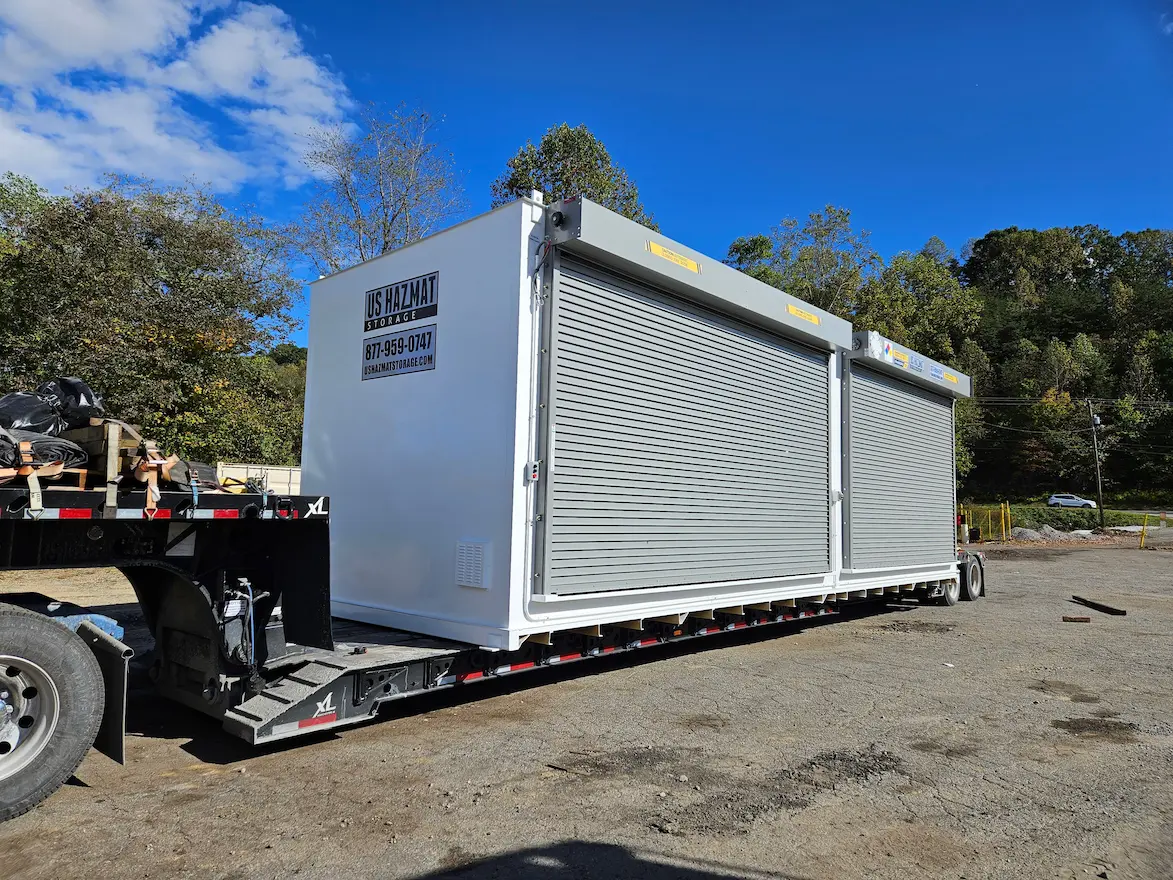
Hazmat storage buildings need to be designed as controlled systems, not improvised shelters. Outdoor chemical storage is rarely as simple as moving drums, totes, or containers outside to save indoor space. Weather, heat, rain, traffic, unauthorized access, incompatible materials, fire risk, and spill exposure can all turn a basic storage area into a serious safety and compliance problem.
For industrial teams, laboratories, manufacturers, utilities, maintenance departments, and field operations, outdoor hazardous chemical storage must support daily access while keeping materials organized, contained, and protected. A strong building helps prevent leaks from spreading, keeps incompatible materials separated, improves inspection readiness, and gives employees a safer place to store regulated products.
US Hazmat Storage helps organizations choose engineered storage solutions built around real chemical hazards, not generic storage assumptions. When outdoor environments are involved, the right structure can make the difference between a controlled storage program and a recurring compliance risk.
Why Outdoor Hazmat Storage Needs a Purpose-Built Building
Outdoor storage introduces conditions that indoor cabinets may not face. Rainwater can collect in containment areas. Sun exposure can affect temperature-sensitive materials. Forklift traffic can damage containers. Wind can affect signage, doors, and access points. Unauthorized personnel may enter storage areas if controls are weak.
That is why hazmat storage buildings should be selected based on the chemicals being stored, the facility layout, the climate, the volume of material, and the inspection expectations around the site.
A purpose-built building can help with:
- Spill containment
- Fire separation
- Chemical organization
- Access control
- Ventilation
- Weather protection
- Label visibility
- Employee safety
- Emergency response planning
- Long-term compliance documentation
A standard shed or repurposed container may look useful at first, but it usually lacks the safety features needed for regulated chemicals. Hazardous materials require a structure designed around containment, compatibility, and safe handling from the beginning.
Feature 1: Secondary Containment That Matches the Stored Materials
Secondary containment is one of the most important features of outdoor hazmat storage buildings. If a container leaks, the building should help keep that liquid from reaching soil, drains, walkways, equipment, or nearby work zones.
A well-designed containment system should account for:
- The largest container stored inside the building
- Total stored liquid volume
- Compatibility between the chemical and sump material
- Rainwater control for outdoor placement
- Ease of sump inspection
- Safe removal of accumulated liquids
- Separation between incompatible spill risks
- Protection from cracks, gaps, and uncontrolled drainage
Containment is not only about capacity. It is also about usability. If employees cannot easily inspect the sump, remove liquid, or identify a small leak, the system may fail operationally even if it looks adequate on paper.
| Containment Feature | Why It Matters |
| Leak-tight sump | Helps capture spills before they spread |
| Chemical-resistant liner | Reduces damage from corrosive or aggressive materials |
| Elevated grating | Keeps containers above accumulated liquid |
| Drainage planning | Supports safe removal of collected liquid |
| Weather management | Helps prevent rainwater from overwhelming the system |
For outdoor chemical storage, containment should be treated as part of the building’s core structure, not as an optional add-on.
Feature 2: Chemical Compatibility Planning and Separation
Chemical compatibility is one of the most common weak points in hazardous material storage. Two materials can be safe when stored separately but dangerous when they leak, mix, or react in the same containment area.
That is why hazmat storage buildings should support clear chemical separation. The layout should make it easy to group materials by hazard class, isolate incompatible substances, and reduce confusion during receiving, handling, and inspection.
A chemical compatibility chart can help teams separate:
- Acids from bases
- Oxidizers from flammables
- Corrosives from reactive metals
- Water-reactive chemicals from moisture exposure
- Organic peroxides from incompatible materials
- Toxic materials from general-use chemicals
- Flammable liquids from ignition-sensitive areas
The Safety Data Sheet for each product should guide storage decisions. Teams should review hazard classification, incompatibilities, required PPE, spill response, and storage conditions before assigning materials to a building.
| Stored Material | Common Concern | Storage Priority |
| Flammable liquids | Vapor ignition | Fire-rated construction, ventilation, ignition control |
| Corrosives | Container damage, surface corrosion | Compatible sump liners, separation, PPE |
| Oxidizers | Reaction with fuels or organics | Strict segregation from flammables |
| Toxic liquids | Exposure risk | Access control, labeling, spill readiness |
| Reactive chemicals | Unstable reaction conditions | SDS-based placement and strict separation |
A building is safer when its organization matches the chemistry inside it.
Feature 3: Weather-Resistant Construction for Outdoor Conditions
Outdoor environments expose storage buildings to conditions that can weaken basic structures over time. Heat, humidity, rain, wind, and industrial dust can affect doors, seals, labels, ventilation components, and stored materials.
Strong hazmat storage buildings should be built for exterior use, with construction that supports long-term durability.
Important weather-related features include:
- Heavy-duty steel construction
- Corrosion-resistant finishes
- Sealed roof and wall systems
- Weather-protected doors
- Raised floors or engineered bases
- Wind-resistant design where needed
- Protected ventilation openings
- Drainage planning around the building
- Durable signage placement
- Interior surfaces suited to chemical exposure
Weather protection is especially important for facilities that store drums, totes, or smaller containers outdoors for extended periods. A damaged roof, weak door seal, or corroded surface can create maintenance problems and increase spill or exposure risk.
Outdoor chemical storage should be able to stand up to both the climate and the industrial setting around it.
Feature 4: Ventilation That Supports Safer Storage
Ventilation helps reduce vapor accumulation and supports safer chemical storage conditions. This is especially important when storing flammable liquids, solvents, volatile chemicals, or materials with strong vapor hazards.
Not every building needs the same ventilation design. The right setup depends on the chemicals, quantities, temperature conditions, and whether materials are only stored or also dispensed inside the building.
Ventilation planning should consider:
- Natural or mechanical ventilation
- Airflow placement near vapor accumulation zones
- Exhaust direction away from people and ignition sources
- Weather protection for vents
- Electrical classification needs
- Heat buildup in outdoor environments
- Odor or vapor control
- Local code requirements
For hazmat storage buildings, ventilation should be selected based on actual chemical hazards. A building used for sealed containers of low-volatility materials may need a different system than one used for flammable solvents or dispensing operations.
When in doubt, SDS information and local authority review should guide the design.
Feature 5: Fire-Rated Options for Higher-Risk Materials
Fire risk is a major concern when storing flammable or combustible liquids. Outdoor placement can help separate materials from occupied structures, but distance alone may not be enough. Certain chemicals, quantities, or site conditions may require fire-rated construction.
Fire-rated hazmat storage buildings can support safer storage by adding protection between hazardous materials and surrounding operations. Depending on the application, this may include fire-rated walls, doors, insulation, ventilation components, and explosion relief features.
Fire-rated storage may be especially relevant for:
- Flammable liquids
- Combustible liquids
- Solvents
- Fuels
- Paints and coatings
- Aerosol-related materials
- Manufacturing chemicals
- Maintenance chemicals stored in larger quantities
Fire protection decisions should account for local fire code, material classification, separation distances, total volume, and emergency access. A building that stores flammables should never be evaluated only by capacity.
The better question is whether the structure reduces the specific fire risk created by the materials inside.
Feature 6: Access Control and Clear Hazard Communication
Outdoor storage areas can be harder to monitor than indoor rooms. They may sit near loading docks, yards, parking areas, service lanes, or temporary staging zones. Without clear access control, employees, vendors, or unauthorized personnel may enter areas they should avoid.
Strong hazmat storage buildings should include controlled access features such as:
- Lockable doors
- Clear hazard signage
- Restricted access procedures
- Posted PPE requirements
- Emergency contact information
- Visible container labels
- No smoking signs where applicable
- Defined entry and inspection rules
Hazard communication matters because employees need to understand what is stored, what risks are present, and what steps to take during routine handling or an incident.
Good signage does not replace training, but it reinforces the system every time someone approaches the building.
Feature 7: Interior Layout That Supports Hazmat Organization
A building can be engineered well and still create problems if the interior layout is confusing. Hazmat organization should make chemical storage easier to inspect, easier to access, and harder to misuse.
A practical layout should support:
- Grouping by hazard class
- Separation of incompatible materials
- Aisle space for safe movement
- Clear container labels
- Spill kit access
- PPE access when needed
- Inspection visibility
- Room for safe container handling
- Dedicated areas for full, partial, and waste containers
For outdoor hazmat storage buildings, interior organization is especially important because employees may access the building quickly during active operations. If everything looks mixed together, compliance becomes dependent on memory instead of structure.
A better system makes the right action obvious.
Feature 8: Practical Inspection and Maintenance Access
Inspections are easier when the storage system is designed for them. If employees cannot see the back row of containers, inspect the sump, check labels, or identify corrosion, problems can remain hidden until they become expensive.
A compliance-ready building should make routine inspection simple.
| Inspection Area | What to Check |
| Containers | Leaks, corrosion, bulging, missing labels |
| Sump | Liquid accumulation, debris, chemical residue |
| Doors | Locks, seals, hinges, closure |
| Ventilation | Obstructions, damage, airflow issues |
| Signage | Visibility, accuracy, weather damage |
| Interior layout | Incompatible materials, blocked access |
| Spill response | Kits, PPE, absorbents, disposal supplies |
Inspection logs should document dates, findings, corrective actions, and responsible personnel. This creates a stronger record for internal audits, insurance reviews, and regulatory inspections.
Feature 9: Equipment Compatibility With Daily Workflow
Outdoor chemical storage should protect materials without slowing down operations so much that employees begin bypassing the system. The building should fit how the facility actually works.
Before choosing a unit, teams should ask:
- Will drums, totes, pallets, or smaller containers be stored?
- Will forklifts access the building?
- Will employees dispense inside or only store sealed containers?
- How often will materials be moved?
- Is the building close enough for daily use but far enough for safety?
- Can spill response equipment be reached quickly?
- Is there enough space around the building for emergency access?
- Can the unit expand with future storage needs?
The best hazmat storage buildings support compliance and workflow at the same time. If the building is difficult to use, employees may stage chemicals outside it, leave containers in temporary areas, or mix materials that should stay separated.
Good design reduces that risk.
Choosing the Right Hazmat Storage Building for Your Site
Selecting a storage building starts with the materials, not the building catalog. The first step is to identify what chemicals are stored, how much is stored, what hazards are present, and how the materials are handled.
A practical selection process should include:
- Review every SDS.
- Group chemicals by hazard class.
- Identify incompatible materials.
- Confirm total storage volume.
- Decide whether indoor or outdoor storage is appropriate.
- Determine secondary containment needs.
- Evaluate fire-rated requirements.
- Review ventilation needs.
- Confirm site placement and access.
- Check local authority requirements before installation.
US Hazmat Storage helps facilities evaluate these details and choose storage systems that align with hazardous chemical storage requirements. From containment planning to fire-rated options, each solution should be matched to the actual risk profile of the site.
Build Outdoor Chemical Storage Around Control, Not Convenience
Outdoor storage can be a smart solution when indoor space is limited, chemical volumes increase, or hazardous materials need to be separated from daily operations. But it only works when the building is designed around containment, compatibility, access control, fire risk, ventilation, and inspection readiness.
The strongest hazmat storage buildings do more than hold containers. They create a safer system for organizing hazardous materials, reducing spill exposure, separating incompatible products, and giving employees a clear process to follow.
US Hazmat Storage supports industrial teams with engineered outdoor chemical storage solutions built for real compliance needs. If your facility needs a safer, more organized way to store hazardous materials outdoors, start by reviewing the chemicals, volumes, and hazards on-site. Then choose a building designed to protect your people, your property, and your operation.
FAQ
What are hazmat storage buildings used for?
They are used to store hazardous chemicals in controlled spaces with containment, access control, ventilation, and safety features.
Do outdoor hazmat buildings need secondary containment?
Yes, many outdoor chemical storage applications require containment to help control leaks, spills, and accumulated liquids.
Can incompatible chemicals be stored in the same building?
Only if they are properly separated according to SDS guidance, compatibility charts, and applicable storage requirements.
When should a hazmat storage building be fire-rated?
Fire-rated storage may be needed for flammable or combustible liquids, depending on volume, placement, and local code requirements.
What should be checked before choosing outdoor chemical storage?
Review SDS files, chemical compatibility, containment needs, ventilation, fire risk, site placement, and inspection requirements.
Are standard sheds acceptable for hazardous chemical storage?
Usually no. Standard sheds often lack engineered containment, ventilation, fire protection, chemical resistance, and compliance-ready access controls.