
Non-compliance with federal workplace safety standards can result in severe civil penalties, operational downtime, and serious facility hazards. The Occupational Safety and Health Administration (OSHA) enforces strict hazardous chemical storage requirements to protect personnel, mitigate workplace risks, and promote operational efficiency. Investing in compliant industrial chemical storage solutions safeguards your workforce while keeping your facility fully aligned with federal regulations.
Fundamentals of Hazardous Chemical Storage
Most OSHA hazardous chemical storage regulations are commonsense. Unfortunately, thousands of companies nationwide ignore these practices, resulting in undue damage and harm. OSHA safety standards require all employers to keep storage areas free of hazards, debris, clutter, and other materials that could lead to fire. Furthermore, OSHA recommends placing all hazardous materials at least 10 feet from exterior walls. Most importantly, employers must never store noncompatible materials together or in areas subject to rapid temperature fluctuations. OSHA also advises against stacking hazardous materials above eye level or in configurations that exceed a specific gravity of 1.5.
While not federally required, OSHA recommends industrial manufacturers adopt an employee safety training program to encourage vigilance and precautions in dealing with dangerous chemicals. OSHA also says that no more than 25 gallons of flammable liquids can be stored in a single room outside an approved safety cabinet. OSHA 1926.152 requires all portable tanks, not exceeding 660 gallons, shall be provided with emergency venting and other devices, as required by chapters III and IV of NFPA 30-1969, The Flammable and Combustible Liquids Code. Furthermore, OSHA requires at least one portable fire extinguisher, having a rating of not less than 20-B units, shall be located outside of, but not more than 10 feet from, the door opening into any room used for storage of more than 60 gallons of flammable liquids.
How Do You Properly Store Hazardous Materials?

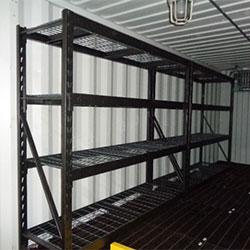
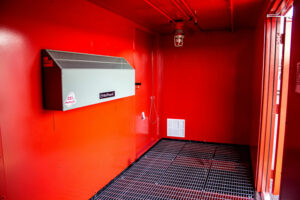
Hazardous materials can be stored in chemical totes and drums, which are then stored in safety cabinets or storage lockers. OSHA says manufacturers should never store chemical containers in egresses, areas of high foot traffic, window ledges, or uneven surfaces. All chemical containers should be kept closed when not in use or for dispensing. OSHA has also developed regulations for federally compliant chemical safety cabinet construction. All hazardous materials and dangerous chemicals should be stored in a safety cabinet comprised of No. 18 gauge steel sheeting with a three-latch door arrangement. The chemical storage locker’s joints must be riveted, welded, or made tight by some other method. While ventilation is not federally required, mechanical ventilation can prevent the toxic buildup of flammable gases and vapors that lead to flashover events.
What Are Some Examples of Common Hazardous Chemicals?
Understanding hazardous materials classification encourages safe chemical storage. Below is a list of the most common hazardous chemicals found on the jobsite. Larger quantities of hazardous materials must be stored in compliant fire-rated storage. U.S. Hazmat Storage offers fire-rated protection for all quantities and workflow processes.
- Flammable liquids (acetone, ethanol, gasoline, hand sanitizer, Diethyl ether)
- Combustible solids (powdered metals, matches, metallic sodium and potassium, oily rags)
- Gases (carbon dioxide, benzene, ammonia, and chlorine)
- Explosives
- Petroleum products and ethanol
- Oxidizing agents
- Corrosive substances
- Fertilizers
- Biological materials
OSHA’s Safety Data Sheet Requirements Encourage Workplace Safety

Safety Data Sheets are detailed documents outlining important hazardous information related to a specific chemical. Each SDS is separate and unique. The SDS for ethanol, for example, is different than the safety data sheet for ammonia. A SDS offers a wealth of information pertaining to a chemical’s physical properties, chemical composition, reactivity, incompatible materials, firefighting measures, and storage guidelines. Each manufacturer should keep readily available safety data sheets for each chemical found on the jobsite. All employees should review the SDS for each chemical they come in contact with.
Spill Sump Containment
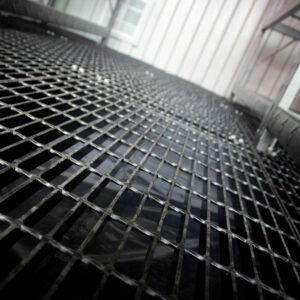
In addition to safeguarding workers, OSHA and the EPA have also developed storage guidelines for environmental protection. OSHA requires all chemical storage buildings with fire sprinklers must have sumps that are at least four inches deep. Sumps are affixed to the bottom of storage lockers to collect flammable liquids during spills. Furthermore, EPA 40 CFR 264.175(b)5 requires all sumps must be able to contain at least 10 percent of the total volume of the primary containers or 100 percent of the largest container’s volume, whichever is greater. All U.S. Hazmat Storage’s chemical storage lockers are equipped with a spill sump containment system to prevent spills from breaching the environment and contaminating vulnerable equipment and personnel. Our chemical storage lockers can meet all OSHA requirements for hazardous chemical storage regardless of size and application. Contact us today for a free quote and consultation.
Chemical Storage Compliance Guide
To ensure your facility meets OSHA’s strict hazardous chemical storage requirements, US Hazmat offers a free Chemical Storage Compliance Guide—an essential quick reference guide for safety managers, EHS professionals, and procurement officers. This searchable database helps you quickly verify storage compatibility, required safety measures, and federal compliance standards for the chemicals you handle. Whether you’re storing flammables, corrosives, or reactive agents, our guide simplifies compliance with OSHA 1910.106 and 1910.1200, NFPA 30, and EPA EPCRA Tier II reporting. Access the US Hazmat Chemical Compliance Guide here and take the guesswork out of chemical storage safety with OSHA, EPA, NFPA, and ATF compliance.
Frequently Asked Questions About OSHA Chemical Storage Rules (FAQs)
What is the OSHA distance rule for storing hazardous chemicals?
OSHA recommends storing hazardous materials at least 10 feet away from exterior walls and property lines. Additionally, chemical storage areas must never block exit corridors, stairways, or emergency evacuation routes.
How much flammable liquid can be stored outside a safety cabinet under OSHA rules?
According to OSHA 1910.106, a maximum of 25 gallons of flammable liquids can be stored in a single room outside of an approved safety cabinet or compliant fire-rated storage locker.
What is the EPA secondary containment rule for chemical storage?
Under EPA 40 CFR 264.175, secondary containment sumps must be capable of holding 100% of the capacity of the largest container or 10% of the total volume of all stored containers, whichever is greater.
Ensure 100% OSHA Compliance with US Hazmat Storage
Avoid costly OSHA fines and safeguard your workforce with industrial-grade chemical storage solutions. US Hazmat Storage engineers custom 2-hour and 4-hour fire-rated lockers and non-fire-rated chemical storage buildings tailored to your exact operational specifications.
- Direct Phone Support: Call us today at (800) 555-0199
- Online Quote: contact our chemical safety experts for a free quote https://ushazmatstorage.com/contact-us/
- Service Area: Nationwide delivery across the United States.