
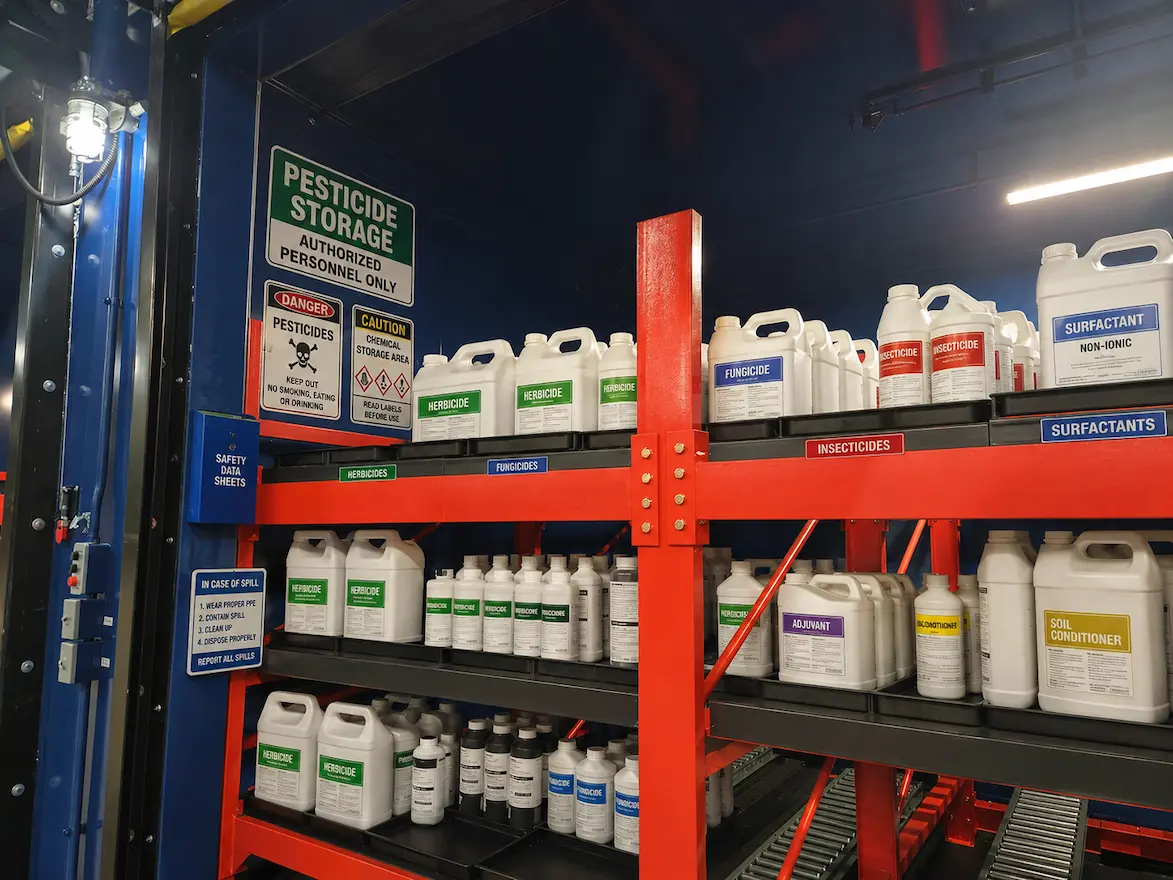
Pesticide Storage can quietly become one of the most important safety and compliance decisions in a commercial landscaping operation. Products move in and out before crews leave for the day, containers get restocked during busy seasons, and a storage area that worked last year may no longer match the inventory, climate, access needs, or daily workflow of the business.
The risks are not always obvious at first. A product can freeze, overheat, leak, lose its label, sit too close to incompatible materials, or end up where an untrained employee can reach it. For lawn care teams, grounds departments, tree care crews, and commercial landscapers, storage is not just about keeping chemicals organized. It affects worker safety, product integrity, environmental exposure, inspection readiness, and the ability to keep operations moving without preventable setbacks.
A strong pesticide storage plan starts with the product label and then looks at the real conditions around the facility: temperature, humidity, ventilation, separation, containment, security, inventory, and emergency access. US Hazmat Storage helps teams think through these storage decisions with the actual products, site layout, seasonal conditions, and crew workflow in mind, so the storage area supports the operation instead of becoming a hidden risk.
Storage Starts With the Label, Not the Building
Before choosing shelves, ventilation, containment, or a dedicated structure, start with the pesticide label. Under FIFRA, the label is legally binding. In plain terms, the label is the law. If a product is stored or used in a way the label prohibits, that can become a violation.
For most landscaping operations using portable containers, such as jugs, bags, pails, drums, and smaller containers, storage instructions are usually driven by the product label, the Safety Data Sheet, and any state-specific requirements.
That means the first step in any pesticide storage program is simple but often skipped: read the label and SDS for every product on-site.
Together, they can tell you:
- Required storage temperature
- Whether the product must be kept dry
- Ventilation expectations
- Incompatible materials
- Container handling requirements
- Spill response guidance
- PPE requirements
- Disposal instructions
- Fire or reactivity concerns
A storage building can be clean, locked, and well built, but still be wrong for the products inside if it ignores label requirements. The structure should be selected around the inventory, not the other way around.
Location and Separation: What Should Not Share a Shelf
In many landscaping yards, products end up close together because that is where the space is. Pesticides may sit near fertilizer, seed, fuel, PPE, spare parts, irrigation supplies, and equipment. That convenience can create real problems.
Good pesticide storage should make separation obvious, even for a new employee restocking the room at the end of a long day.
Sound separation practices keep pesticides:
- Away from fertilizers, seed, feed, food, and anything that could be ingested
- Away from PPE, so leaks do not contaminate the gear meant to protect workers
- Away from wells, surface water, storm drains, and irrigation lines
- Organized with dry formulations above liquids
- Grouped by compatibility, not just by container size
- Separate from fuels, solvents, aerosols, and other materials with different hazards
- Stored so labels face outward and remain readable
Dry products should generally be stored above liquids because a leaking jug can damage powders, granules, wettable powders, and water-soluble packets. Liquids should sit where leaks can be seen quickly and contained before they spread.
The goal is not to make the storage room complicated. The goal is to make the correct placement easy to understand.
Temperature and Humidity Control Through the Season
Commercial landscaping is seasonal, but pesticide storage has to work year-round. Products may be bought in spring, used through summer, and left through winter. That creates temperature and humidity challenges, especially in sheds, trailers, garages, or unconditioned rooms.
Most pesticide labels call for a cool, dry storage area. A common working range is roughly 40 to 100 degrees Fahrenheit, but the product label sets the real requirement. Always confirm the range product by product.
Cold weather is one of the most common failure points. Freezing can crack containers, damage seals, separate formulations, and ruin product performance. A jug that freezes and splits over winter can create both a cleanup problem and a supply problem before the next season begins.
Heat can also create problems, including:
- Pressure buildup inside containers
- Volatilization of active ingredients
- Brittle or softened plastic
- Faster product degradation
- Stronger fumes in poorly ventilated areas
- Label damage or adhesive failure
Direct sunlight makes these problems worse. Containers should not sit in windows, open racks, truck beds, or outdoor areas where sun exposure can damage packaging and labels.
Humidity works more slowly, but it still matters. Moisture can cause dry formulations to cake, clump, or harden. It can rust metal containers, weaken cardboard packaging, and lift labels until they peel or blur.
A stable storage space protects both the product and the documentation that crews and inspectors need to see.
Ventilation That Moves Vapors Away From People
A closed pesticide storage room can trap fumes, odors, and humidity. Even sealed containers may release small amounts of vapor, especially in warm conditions or when products are frequently opened and returned.
Ventilation helps move air through the room and away from employees.
A practical setup may include:
- Low intake vents near the entry point
- Exhaust vents or a fan on the opposite wall
- Exhaust routed directly outdoors
- Air movement across the room, not into occupied work areas
- Vent openings protected from weather and pests
- Ventilation sized to the products and activities inside
The right level of ventilation depends on what the facility stores and how the room is used. A room that only stores sealed containers of low-volatility products may need less ventilation than a space where employees open, measure, mix, or load products.
If mixing or loading happens inside, the risk changes. The room may need stronger ventilation, better containment, eye wash access, spill response supplies, and clearer work procedures.
Pesticide storage should not place employees in a position where they open a door and step directly into concentrated fumes.
Secondary Containment for Liquid Pesticides
Liquid pesticides need a plan for the day a container fails. Even a small leak can move quickly across a floor, reach a drain, contaminate other products, or create exposure risk for employees.
Federal containment rules under 40 CFR Part 165 focus heavily on certain bulk stationary containers and agricultural pesticide operations. For the portable containers commonly used by landscaping crews, requirements often come from the label, state rules, local expectations, and sound safety practice.
That does not make containment optional from a practical standpoint.
Good liquid pesticide storage should include:
- An impervious floor or containment surface
- Chemically compatible spill pallets or trays where needed
- Curbed or bermed areas for larger liquid volumes
- No floor drains unless properly designed and approved
- Spill kits near the storage area
- Clear cleanup procedures
- Containers kept closed when not in use
- Liquids stored where leaks can be spotted quickly
Containment should prevent a spill from reaching soil, storm drains, vehicles, equipment, or the rest of the building. It should also help keep incompatible liquids from mixing.
For many landscaping operations, engineered spill pallets or a dedicated chemical storage building with a containment floor can provide a cleaner, more dependable approach than trying to retrofit a general storage room.
Security and Access Control for Restricted-Use Products
Pesticides should only be accessible to people who are trained and authorized to handle them. That expectation becomes even more important for restricted-use products, which are intended for certified or licensed applicators.
Security is not only about theft. It also helps prevent accidental exposure, misuse, vandalism, and product loss.
Practical access controls include:
- Locked doors
- Limited keys or access codes
- Fencing for outdoor storage areas
- Clear warning signs
- Windows too small or protected enough to prevent entry
- Inventory checks
- Restricted access for untrained employees
- No overnight storage in unsecured trucks or trailers
That last point matters. Trucks and trailers move product. They should not become pesticide storage areas. Leaving products overnight in an unsecured vehicle can expose children, animals, visitors, or unauthorized people to materials they should never reach.
A controlled storage area protects the company and the crew.
Hazard Communication and Emergency Coordination
The people most likely to respond to a pesticide fire, leak, or spill may not be the people who stocked the shelf. Firefighters, emergency responders, supervisors, and cleanup teams need clear information before they enter the area.
A good pesticide storage setup should include:
- Clear signage identifying the storage area
- NFPA or hazard placards where appropriate
- A current product inventory
- Safety Data Sheets accessible outside the room
- Emergency contact information
- Spill response instructions
- Labels kept clean and readable
- Training for employees who handle products
SDS documents should be easy to access without entering a contaminated room. In a serious spill, responders should not have to walk into the hazard to find out what spilled.
It is also smart to contact the local fire department before an incident happens. Many departments are willing to review the site, note storage locations, and keep emergency information on file. That conversation can make response safer and faster if something ever goes wrong.
For employees, OSHA hazard communication expectations also matter. Anyone handling pesticides should know where labels and SDS documents are, what PPE is required, and what to do if a container leaks.
Inventory, Shelf Life, and Container Integrity
A tidy pesticide storage room is more than a nice visual. It is a compliance and safety tool.
Inventory control helps prevent overbuying, product aging, duplicate purchases, and forgotten containers. It also makes inspections easier because the company can explain what is stored, why it is there, and how it is managed.
A strong inventory routine should include:
- First-in, first-out rotation
- Cycle counts during the season
- Review of opened containers before opening new ones
- Removal of damaged containers
- Separation of unusable product
- Tracking of expired or discontinued products
- Clear disposal planning
- Updated SDS files
- Label checks
Keep products in their original containers whenever possible. The original label carries required information, including product identity, directions, hazards, and storage instructions.
If a product is ever transferred into another approved container, the replacement label must include the required information. Unlabeled or mystery containers should never remain in active storage.
Empty, rinsed, unusable, or obsolete products also need a defined holding area until they can be handled properly. Many states offer pesticide collection programs, often called Clean Sweep programs. Some clean HDPE pesticide containers may be eligible for recycling through approved pesticide container recycling programs. Commercial users usually cannot rely on household hazardous waste channels, so disposal planning should be confirmed locally.
Matching the Storage Structure to a Landscaping Operation
All of these practices eventually point back to one big question: is the current storage structure actually built for the inventory?
Many turf and landscape pesticides are water-based and not flammable. For those inventories, a fire-rated building may be more than the products require. A purpose-built non-fire-rated chemical storage building can often provide the features that matter most, such as containment, ventilation, climate control, organization, and access control.
The situation changes when the inventory includes:
- Solvent-based products
- Aerosols
- Fuels
- Flammable liquids
- Oxidizers
- Large liquid volumes
- Products with strict temperature limits
In those cases, fire-rated construction, separation distances, ventilation, and local fire code review may become more important.
Cold-climate operations should pay special attention to climate control. Freeze protection is one of the most common reasons landscaping pesticide storage fails over time. A building that keeps products stable through winter can protect both the inventory and the company’s seasonal readiness.
US Hazmat Storage works with landscaping and ground operations to turn a real product list, site layout, seasonal temperature profile, and daily workflow into an engineered storage solution. Instead of forcing pesticides into a leftover room, the storage structure can be designed around how crews actually receive, store, access, and move product.
Put the Storage Decision Ahead of the Season
Good pesticide storage is easier to plan before the season starts than to fix after a freeze, spill, inspection finding, or product loss. The right approach starts with the label, then moves through separation, temperature control, ventilation, containment, access control, inventory, and emergency planning.
A commercial landscaping company does not need a complicated system. It needs a consistent one. Products should be stored where they belong, at conditions they can tolerate, behind controls that match the hazard, and inside a structure built for the inventory instead of the leftover corner.
Before the next buying season, walk the storage area with your product list in hand. Look for labels that no longer read clearly, containers that do not belong together, liquids without containment, products sitting too close to PPE or fertilizer, and areas that would not perform well in a freeze or spill.
If those gaps point toward a dedicated storage building, contact US Hazmat Storage to review your inventory, climate, site layout, and workflow. The right storage structure can help your landscaping operation protect its products, crews, property, and compliance posture before the busy season begins.
FAQ
Does pesticide storage have to follow the product label?
Yes. Under FIFRA, the pesticide label is legally binding. Storage instructions on the label can govern temperature, ventilation, handling, and container requirements.
What temperature should a pesticide storage area hold?
Many labels call for a cool, dry space, often around 40 to 100 degrees Fahrenheit. Always confirm the exact range on each product label.
Do landscaping companies need secondary containment for pesticides?
Often, yes as a best practice, and sometimes by state or local requirement. Liquid pesticides should be stored where leaks can be contained.
How should restricted-use pesticides be secured?
Store restricted-use products in a locked area accessible only to certified or authorized applicators, with limited keys, warning signs, and inventory control.
Can I store pesticides next to fertilizer or PPE?
No. Keep pesticides separate from fertilizer, seed, feed, and PPE to reduce contamination risk and avoid incompatible storage conditions.
Do pesticides need a fire-rated storage building?
Not always. Many water-based landscape products are not flammable, but solvent-based products, aerosols, and fuels may require fire-rated storage review.