
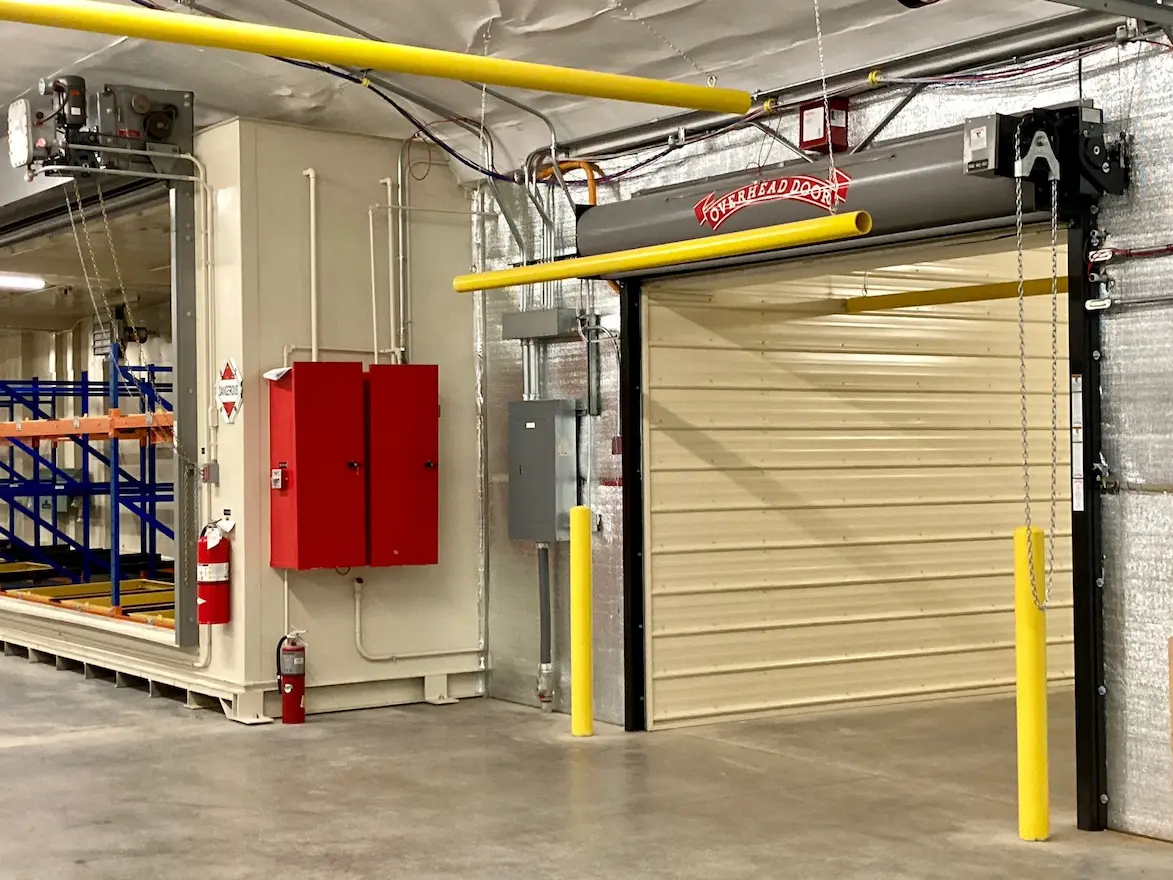
Fire resistant chemical buildings are not just storage structures with stronger walls. They are engineered systems designed to help facilities reduce fire exposure, support safer chemical separation, control spill risk, and give emergency teams a more predictable environment if something goes wrong.
When a facility stores flammable liquids, combustible liquids, solvents, aerosols, coatings, fuel-related materials, or other hazardous chemicals, the building around those materials becomes part of the safety plan. It affects how heat moves, how vapors are controlled, how fire exposure is slowed, how spills are contained, and how far the storage area should sit from people, property, equipment, and occupied spaces.
That is why setback distances matter. The right chemical storage building should not be dropped into the nearest open space. It should be selected and placed with attention to stored materials, container volume, fire risk, local code review, access paths, emergency response, and long-term site operations.
US Hazmat Storage helps industrial, commercial, laboratory, utility, manufacturing, and field-service teams choose fire-rated chemical storage buildings built around real hazard profiles. The goal is simple: create a safer storage environment that supports compliance, protects people, and fits the way the site actually works.
Why Fire Resistant Chemical Buildings Require More Than Basic Storage
A standard shed, shipping container, or warehouse corner may hold containers, but that does not mean it can safely manage chemical fire risk. Chemicals can introduce hazards that ordinary storage spaces were not designed to handle.
Fire resistant chemical buildings are used when facilities need a more controlled storage environment for materials that may increase fire, vapor, spill, or exposure risk. These buildings can help support:
- Fire separation from occupied or high-traffic areas
- Safer storage of flammable and combustible liquids
- Secondary containment for leaks and spills
- Controlled access for authorized employees
- Ventilation planning for vapor management
- Clear organization by chemical hazard class
- Better emergency response access
- Stronger readiness for inspections and safety reviews
- Better alignment with OSHA, NFPA, EPA, and local fire authority expectations
The building is only one part of the safety system. The full plan should also include labels, Safety Data Sheets, employee training, chemical compatibility review, spill response procedures, and inspection logs.
What NFPA 30 Compliance Means for Chemical Storage Planning
NFPA 30 is one of the most important references for facilities storing flammable and combustible liquids. NFPA describes the code as providing safeguards intended to reduce hazards associated with the storage, handling, and use of flammable and combustible liquids.
For fire resistant chemical buildings, NFPA 30 compliance is not only about the structure itself. It may influence several site-planning decisions, including:
- Maximum allowable quantities
- Fire protection features
- Container and drum storage layout
- Indoor versus outdoor storage decisions
- Ventilation considerations
- Separation from buildings and property lines
- Spill control and drainage
- Emergency access
- Handling and transfer practices
The exact requirements depend on the chemical class, quantity, container type, building design, jurisdiction, and site conditions. Local authorities may adopt or enforce NFPA-related requirements through fire codes, building codes, or permitting processes.
That is why US Hazmat Storage recommends treating NFPA 30 compliance as part of a broader design review, not as a checkbox after equipment is ordered.
The Role of Setback Distances in Fire Protection
Setback distances help reduce the chance that a fire or chemical incident in one area will immediately affect another. They also help emergency responders access the site and manage exposure risks more effectively.
A setback is the planned separation between a chemical storage building and nearby features such as:
- Occupied buildings
- Property lines
- Roads and traffic lanes
- Process areas
- Loading docks
- Electrical equipment
- Fuel storage areas
- Storm drains
- Public access areas
- Other chemical storage units
For fire resistant chemical buildings, the correct setback distance depends on what is stored, how much is stored, the fire rating of the building, and what surrounds the storage area.
Common Factors That Affect Setback Decisions
| Factor | Why It Matters |
| Chemical classification | Flammable, combustible, oxidizing, corrosive, or reactive materials may require different planning |
| Quantity stored | Higher volume can increase fire load and exposure concerns |
| Fire rating | A fire-rated building may support safer separation strategies |
| Nearby structures | Occupied buildings, process areas, and property lines affect placement |
| Emergency access | Fire and spill response teams need clear approach routes |
| Drainage | Storage should not create uncontrolled runoff into drains or soil |
| Ventilation direction | Exhaust should not move vapors toward ignition sources or occupied areas |
| Local code review | Fire marshals and local authorities may require specific placement |
Setback distances should be planned early. Moving a chemical storage building after installation can be expensive and disruptive.
Fire Suppression as Part of the Building Strategy
Fire suppression is not one-size-fits-all. The right suppression approach depends on the stored chemicals, container types, fire load, building size, local requirements, and whether materials are simply stored or actively dispensed.
A fire resistant chemical building may include or support:
- Automatic fire suppression systems
- Fire-rated wall and roof assemblies
- Fire-rated doors
- Explosion relief features where required
- Ventilation systems
- Grounding and bonding for transfer areas
- Interior fire extinguishers
- Clear emergency access points
- Smoke or heat detection systems
- Separation between incompatible materials
Fire suppression should be matched to the hazard. A building storing sealed containers of combustible liquid may require a different approach than a building storing flammable solvents, aerosols, or chemicals with reactive properties.
Facilities should also review whether employees dispense materials inside the building. Dispensing can increase vapor, spill, and ignition concerns compared with sealed-container storage.
Structural Integrity: What Makes a Building Fire Resistant
Structural integrity matters because a chemical storage building must maintain its protective function under demanding conditions. The building should resist routine wear, chemical exposure, weather, industrial traffic, and potential fire exposure.
Strong fire resistant chemical buildings may include:
- Heavy-duty steel construction
- Fire-rated wall systems
- Reinforced floors
- Integrated secondary containment
- Durable doors and latching systems
- Corrosion-resistant finishes
- Weather-resistant roof and wall assemblies
- Forklift-compatible design where needed
- Ventilation components protected from weather
- Anchoring or wind-resistance features based on site conditions
Structural integrity also affects daily safety. If doors do not close properly, containment is damaged, vents are blocked, or the interior layout creates overcrowding, the building can lose some of its intended safety value.
Secondary Containment and Spill Control
Fire risk is not the only concern in chemical storage. Leaks and spills can create slip hazards, exposure hazards, environmental concerns, and chemical reaction risks. EPA guidance for certain bulk storage installations includes secondary containment sized for the largest container and enough freeboard for precipitation when applicable.
For fire resistant chemical buildings, secondary containment should be designed around the stored materials and the site environment.
A containment plan should consider:
- Largest container volume
- Total liquid volume stored
- Whether containers are drums, totes, cans, or mixed sizes
- Chemical compatibility with the sump or liner
- Whether the unit is indoors or outdoors
- Rainwater management
- Spill cleanup access
- Inspection visibility
- Segregation of incompatible liquids
A clean containment sump is important. It should not become a place for tools, rags, loose containers, or forgotten materials. The sump must remain available for the event it is designed to control.
Ventilation, Vapor Management, and Ignition Control
Flammable vapors are a major concern in chemical storage. Some vapors can collect near low points, move through openings, or travel toward ignition sources if not properly managed.
Ventilation planning for fire resistant chemical buildings may include:
- Natural ventilation
- Mechanical ventilation
- Exhaust placement
- Intake placement
- Weather-protected vents
- Vapor movement review
- Electrical classification review
- Ignition source control
- Restrictions on open flames or hot work nearby
Ventilation should be based on the stored chemicals and how the building is used. A storage-only unit may have different needs than a building where employees transfer or dispense liquids.
Ignition control should also be reviewed around the building. Nearby welding, heaters, electrical panels, vehicle traffic, smoking areas, and powered tools can all affect site safety.
Chemical Compatibility and Interior Layout
A fire resistant building does not make incompatible chemicals safe to mix. Interior organization still matters. If a spill occurs, incompatible materials should not be able to combine easily inside the same containment area.
The interior layout should support:
- Separation of flammables and oxidizers
- Separation of acids and bases
- Separation of corrosives from incompatible containers or surfaces
- Storage of reactive materials according to SDS guidance
- Clear aisles
- Labels facing outward
- Spill kits placed near but not blocking access
- Dedicated waste or return areas
- Inspection visibility
Why Local Fire Authority Review Matters
NFPA 30 may provide the technical foundation, but local authorities often determine how those standards are applied on a specific site. Fire marshals, building departments, environmental teams, insurers, and internal EHS leaders may all review the storage plan.
Before installing fire resistant chemical buildings, facilities should confirm:
- Permit requirements
- Required setbacks
- Fire rating expectations
- Maximum allowable quantities
- Suppression system requirements
- Placarding requirements
- Emergency access needs
- Drainage restrictions
- Inspection schedule
- Documentation requirements
Local review is especially important when the storage building is placed near property lines, occupied structures, public roads, process areas, or other hazardous material storage.
US Hazmat Storage helps customers think through those practical questions before installation, so the storage solution fits the site instead of creating new problems after delivery.
Choosing the Right Fire Resistant Chemical Building
Selecting the right building starts with understanding the material. The chemical inventory should guide the building type, containment design, ventilation, suppression options, and placement.
A practical pre-purchase review should include:
- Chemical names and SDS files
- Total storage volume
- Container types and sizes
- Flammable or combustible classification
- Compatibility concerns
- Indoor or outdoor placement
- Required fire rating
- Need for suppression or detection
- Site access and emergency routes
- Setback distance requirements
- Local authority expectations
- Future growth needs
Common Mistakes to Avoid
Even strong storage buildings can be undermined by poor planning. Avoiding these mistakes helps protect the value of the investment.
Common mistakes include:
- Choosing a building before reviewing SDS data
- Ignoring setback distances until installation day
- Treating fire rating as a substitute for compatibility planning
- Storing oxidizers beside flammables
- Blocking ventilation openings
- Overfilling the building
- Storing containers in the containment sump
- Forgetting rainwater management for outdoor units
- Placing the building where emergency access is limited
- Skipping local fire authority review
- Failing to train employees on storage rules
A fire-rated structure helps reduce risk, but it does not replace good storage management. The building, procedures, training, and inspections need to work together.
Build Fire-Resistant Storage Around the Real Risk
Fire resistant chemical buildings are an important part of safer hazardous material storage, especially when flammable or combustible liquids are involved. But the engineering behind them goes beyond stronger walls. Effective storage depends on fire suppression planning, structural integrity, secondary containment, ventilation, chemical compatibility, NFPA 30 compliance, and the right setback distances.
A building that is properly selected and placed can help facilities reduce exposure, protect employees, improve organization, and support inspections. A building chosen too quickly can create avoidable problems with access, permitting, drainage, fire separation, or chemical compatibility.
US Hazmat Storage helps facilities choose fire-rated chemical storage buildings that align with stored materials, site layout, and compliance-focused safety planning. Contact US Hazmat Storage to review your chemical storage needs and select a fire resistant solution built around your real operating risks.
FAQ
What are fire resistant chemical buildings used for?
They store hazardous, flammable, or combustible chemicals in structures designed to support fire protection, containment, and safer separation.
Do fire resistant chemical buildings need setback distances?
Yes. Setbacks help separate chemical storage from occupied buildings, property lines, ignition sources, traffic areas, and emergency access routes.
What does NFPA 30 compliance cover?
NFPA 30 addresses safeguards for flammable and combustible liquid storage, handling, use, containers, tanks, and related fire protection concerns.
Is fire suppression always required?
Not always. Suppression needs depend on materials, volume, building type, local codes, and how the storage building is used.
Can incompatible chemicals be stored in one fire-rated building?
Only with proper separation based on SDS guidance, compatibility planning, containment design, and applicable code requirements.
Why does structural integrity matter in chemical storage?
Strong construction helps the building resist fire exposure, weather, corrosion, heavy loads, impact, and routine industrial use.
Should local fire authorities review the storage plan?
Yes. Local review helps confirm placement, fire rating, permits, setbacks, emergency access, and inspection expectations.
Does US Hazmat Storage provide fire-rated chemical storage buildings?
Yes. Hazmat Storage provides fire-rated chemical storage buildings designed around hazardous material storage, containment, and safety planning.