
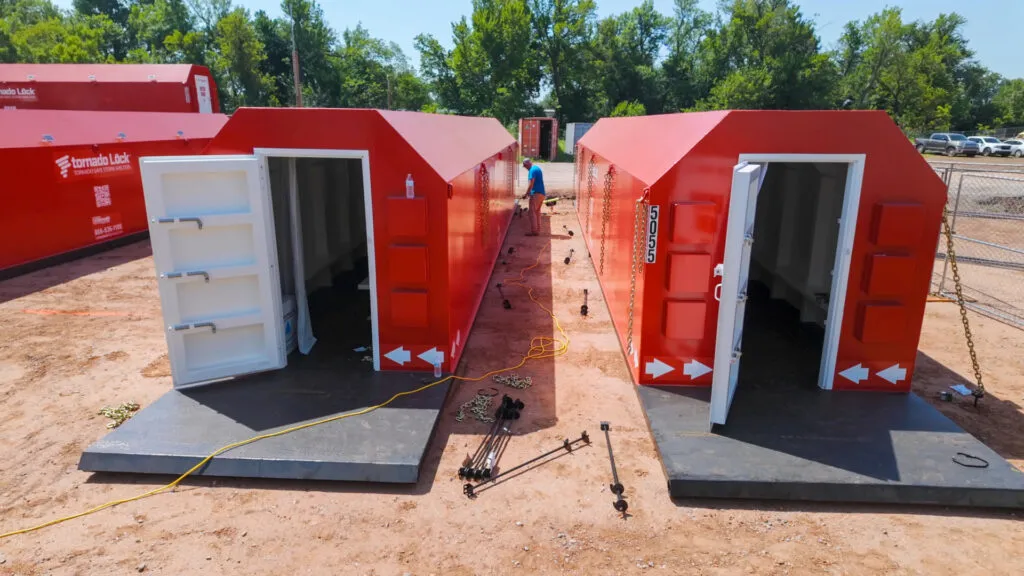
FEMA P-361 is one of the most important references for planning community shelters that are built to protect people during tornadoes, hurricanes, and extreme wind events. For schools, municipalities, emergency managers, public facilities, churches, businesses, utilities, and community organizations, the standard helps turn a general safety goal into a more structured shelter planning process.
A community shelter is not just a reinforced room with a strong door. It must be planned around occupant safety, wind resistance, debris impact protection, accessibility, ventilation, emergency operations, signage, maintenance, and long-term readiness. When severe weather arrives, the shelter needs to perform under pressure, not simply look secure on paper.
That is why FEMA P-361 matters. It gives planners, owners, architects, engineers, and local decision-makers a framework for evaluating what a safe room should do, how it should be designed, and what factors should be considered before people depend on it.
US Hazmat Storage helps organizations think through community storm shelter needs with a focus on safety, practical use, and compliance-minded planning. For teams responsible for protecting groups of people, understanding FEMA P-361 is a critical first step.
Why FEMA P-361 Matters for Community Safety
Severe weather planning often begins with a simple question: where will people go when conditions become dangerous? For a single household, that question may be easier to answer. For a school, workplace, public facility, or community site, the answer is more complicated.
A community shelter may need to protect dozens, hundreds, or even thousands of people. That means the design must account for more than structural strength.
A FEMA P-361-informed shelter plan should consider:
- The number of occupants expected
- The type of weather hazard
- Wind and debris impact risks
- Entry and exit flow
- Accessibility for people with disabilities
- Emergency lighting
- Ventilation
- Sanitation needs
- Communication procedures
- Signage and wayfinding
- Maintenance and inspections
- Long-term operational readiness
The shelter must be part of an emergency plan, not an isolated structure. People need to know where it is, how to enter, when to use it, who manages access, and what conditions it is designed to withstand.
What FEMA P-361 Covers
FEMA P-361 provides guidance for community and residential safe rooms designed for tornadoes and hurricanes. In the context of community shelters, it supports planning and design decisions that help provide a higher level of protection from extreme wind and wind-borne debris.
Core Areas Addressed by FEMA P-361
FEMA P-361 can influence many parts of the shelter planning process, including:
- Site selection
- Structural design
- Wind load resistance
- Debris impact protection
- Door and hardware performance
- Ventilation
- Occupant capacity
- Emergency lighting
- Accessibility
- Signage
- Operations and maintenance
- Quality assurance
- Documentation
The goal is not only to build a strong shelter. The goal is to create a shelter that can be used safely, managed properly, and maintained over time.
FEMA P-361 and ICC 500
FEMA P-361 is closely connected to ICC 500, the standard for the design and construction of storm shelters. In simple terms, ICC 500 sets minimum requirements for storm shelter design and construction, while FEMA P-361 provides additional guidance and best practices for safe rooms intended to provide a higher level of protection.
For community shelters, both references may matter. Project teams should work with qualified professionals and local authorities to confirm which requirements apply to their specific project.
Community Shelters vs. Ordinary Shelter Areas
Not every room that feels safe is a compliant community shelter. A hallway, gym, cafeteria, storage room, conference room, or interior classroom may offer some protection from weather exposure, but that does not mean it meets FEMA P-361 expectations.
A true community shelter must be designed for a specific hazard and expected occupant load.
Ordinary Shelter Area
An ordinary shelter area may be:
- An interior room selected during a safety drill
- A hallway away from windows
- A basement or lower-level space
- A room used for temporary refuge
- A space chosen because it is available, not engineered
These areas may be useful in an emergency plan, but they may not offer the performance expected from a FEMA P-361-informed safe room.
FEMA P-361-Informed Community Shelter
A community shelter should be planned around:
- Extreme wind resistance
- Wind-borne debris impact protection
- Tested doors and opening protection
- Proper anchoring
- Defined occupant capacity
- Emergency use conditions
- Accessibility
- Ventilation
- Lighting
- Clear operations procedures
- Maintenance over time
The difference is important. A shelter should not be judged only by location. It should be judged by engineering, documentation, and readiness.
Occupant Capacity and Real-World Use
Occupant capacity is one of the most important parts of community shelter planning. A shelter that is structurally strong but too small for the expected population can create serious problems during an emergency.
FEMA P-361 planning should account for:
- Expected number of occupants
- Space per person
- Type of population served
- Seating or standing conditions
- Emergency supplies
- Accessibility needs
- Duration of occupancy
- Interior circulation
- Entry and exit flow
Common Occupancy Planning Mistakes
Community shelter planning can fail when teams:
- Estimate capacity too casually
- Forget visitors, staff, vendors, or students
- Ignore shift changes
- Overlook special events or peak occupancy
- Leave no room for emergency supplies
- Fail to plan for wheelchair users
- Choose a shelter location too far from occupants
- Create narrow entry points that slow access
Capacity planning should be practical. During a warning, people may be anxious, moving quickly, carrying personal items, assisting children, or helping others reach safety. The shelter layout should support that reality.
Structural Integrity and Wind-Borne Debris Protection
A community shelter must be designed to resist extreme forces. Wind pressure, uplift, lateral loads, and debris impact are central concerns in FEMA P-361 planning.
Structural Components That Matter
Important structural elements include:
- Walls
- Roof or ceiling assembly
- Foundation and anchoring
- Doors
- Door frames
- Hardware
- Windows or protected openings, if any
- Ventilation penetrations
- Connections between components
The weakest part of the shelter can affect the performance of the whole system. A strong wall is not enough if the door, frame, anchor system, or roof connection is not designed for the same level of protection.
FEMA Compliance and Documentation
A community shelter project should be supported by documentation. Facility owners and decision-makers should not rely only on verbal claims or generic product descriptions.
Useful documentation may include:
- Design drawings
- Engineering calculations
- Product specifications
- Testing documentation
- Installation details
- Occupant capacity calculations
- Maintenance requirements
- Inspection records
- Compliance statements
- Local approval records
Why Documentation Matters
Documentation helps support:
- Permitting
- Grant applications
- Insurance review
- Internal safety planning
- Maintenance
- Future renovations
- Public accountability
- Emergency management coordination
For community shelters, documentation also helps future staff understand how the shelter was designed and what must be maintained for it to remain dependable.
Accessibility and Community Responsibility
Community shelters should be planned for real communities, not ideal conditions. That means accessibility must be built into the design and operations plan.
A shelter plan should consider:
- Wheelchair access
- Door width and hardware
- Path of travel
- Interior maneuvering space
- Signage visibility
- Lighting
- Assistance procedures
- Communication for people with hearing or vision needs
- Restroom or sanitation considerations when applicable
- Shelter location relative to main occupancy areas
A shelter that some people cannot reach or use is not fully serving the community. FEMA P-361-informed planning should support safer access for the full expected occupant group.
FEMA P-361 and Funding Readiness
Many community shelter projects are connected to grant planning, municipal budgeting, school safety programs, or public safety funding. FEMA P-361 can be important in those conversations because it helps define recognized performance expectations.
Funding Preparation May Include
- Hazard mitigation planning
- Preliminary design review
- Engineering consultation
- Cost estimates
- Occupant capacity planning
- Site selection
- Documentation of risk
- Community benefit explanation
- Local code coordination
- Long-term maintenance planning
Funding processes can take time. Having clear documentation, defined needs, and a FEMA P-361-informed approach can help the project move with more confidence.
Choosing a Community Shelter Partner
Community shelter decisions affect real people. The right partner should understand both the technical side and the human side of shelter planning.
A qualified shelter provider should help with:
- FEMA P-361-informed planning
- Community shelter sizing
- Severe weather risk considerations
- Structural performance questions
- Accessibility planning
- Site placement review
- Documentation support
- Installation coordination
- Long-term readiness considerations
US Hazmat Storage supports organizations that need community storm shelters built around safety, preparedness, and practical use. The goal is not just to provide a structure. The goal is to help communities create a dependable place for protection when severe weather leaves little time to react.
Build Community Protection Before the Warning Arrives
FEMA P-361 gives communities a clearer way to think about severe weather protection. It helps define what a safe room should consider, how community shelters should be planned, and why engineering, capacity, accessibility, documentation, and maintenance all matter.
A community shelter is more than an emergency space. It is a public safety investment. When designed and managed properly, it gives people a defined place to go when tornadoes, hurricanes, or extreme winds threaten the area.
US Hazmat Storage helps schools, municipalities, businesses, public facilities, and community organizations plan storm shelter solutions with safety and readiness in mind. Contact US Hazmat Storage to discuss FEMA P-361 community shelter planning and choose a safer path for protecting the people who depend on your facility.
FAQ
What is FEMA P-361?
FEMA P-361 is FEMA guidance for designing and planning safe rooms for tornadoes and hurricanes, including community and residential applications.
Does FEMA P-361 apply to community shelters?
Yes. FEMA P-361 includes guidance for community safe rooms used by schools, public facilities, businesses, and community organizations.
Is FEMA P-361 the same as ICC 500?
No. ICC 500 sets storm shelter standards. FEMA P-361 provides additional guidance and best practices for safe room planning.
What makes a shelter FEMA compliant?
A FEMA-compliant shelter should align with applicable design, construction, debris impact, wind resistance, occupancy, and documentation expectations.
Why is occupant capacity important?
Capacity determines whether the shelter can safely protect the expected number of people during a severe weather emergency.
Can a community shelter be used for daily purposes?
Yes, but daily use must not block access, damage components, reduce capacity, or interfere with emergency readiness.
Who needs a community storm shelter?
Schools, municipalities, workplaces, churches, utilities, public facilities, and organizations in severe weather regions may benefit from one.
Does US Hazmat Storage provide community storm shelters?
Yes. US Hazmat Storage helps organizations plan community storm shelter solutions for severe weather protection and emergency readiness.