
Choosing a drum storage rack sounds simple until the floor plan gets tight. A facility may have the right number of 55-gallon drums on paper, but once forklift aisles, containment sumps, fire separation, ventilation, access doors, and inspection space are added, the layout can change quickly.
Vertical and horizontal configurations both have a place in chemical drum storage. The better choice depends on what the drums contain, how often they are accessed, whether dispensing is required, and how much space the site can safely dedicate to storage. A layout that saves square footage but blocks inspections, creates unstable stacking, or limits containment access is not a real space-saving solution.
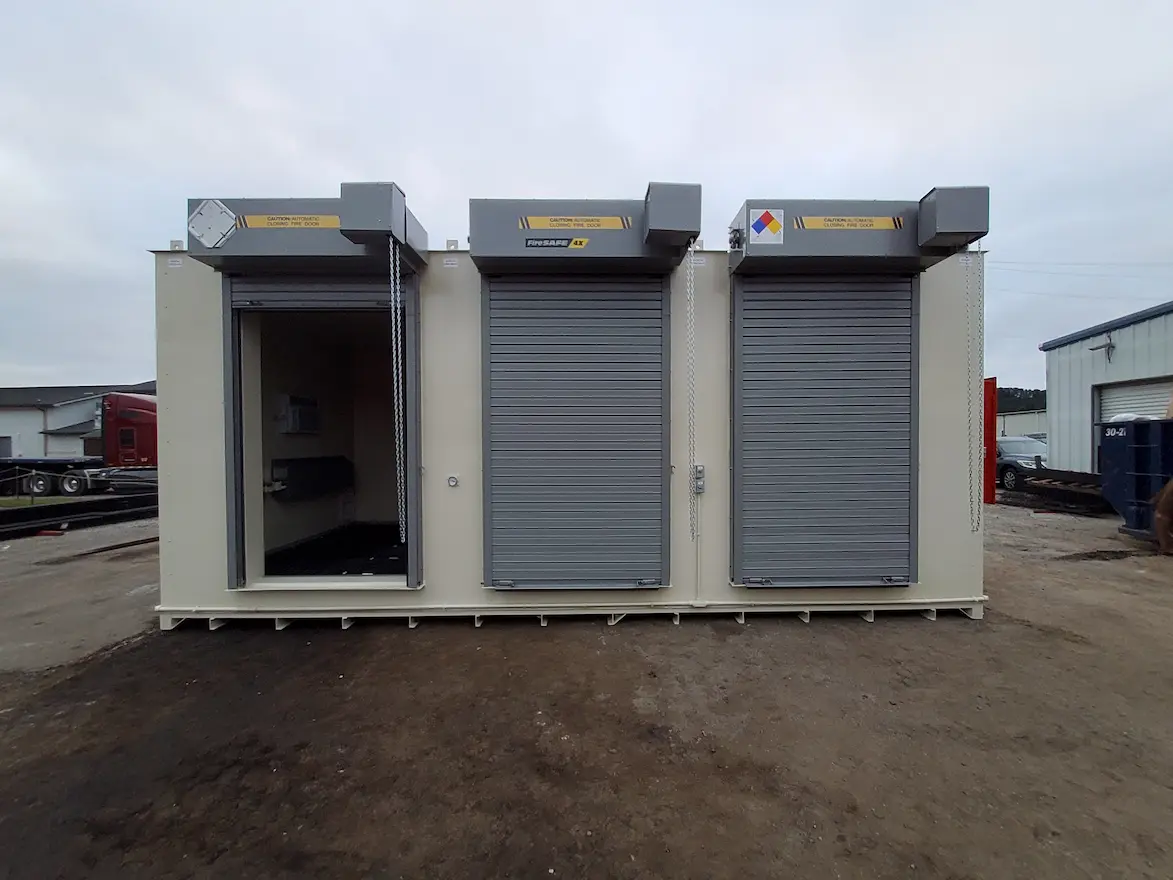
For high-volume 55-gallon drum storage, US Hazmat Storage focuses on purpose-built buildings, lockers, and enclosures with integrated spill containment, fire-rated options, forced-air ventilation, explosion-proof electrical options, and custom layouts for drums, pallets, forklifts, and handling needs. Their 55-gallon drum storage solutions are designed around the realities of hazardous material storage, not generic warehouse shelving.
Why a Drum Storage Rack Decision Is Really a Layout Decision
A drum storage rack is not just a metal frame. In a regulated environment, it becomes part of a larger safety system. The rack affects drum stability, aisle clearance, fire protection, inspection access, spill response, dispensing workflow, and how easily workers can identify labels or damaged containers.
OSHA’s general material handling standard states that storage must not create a hazard, and materials stored in tiers must be stacked, blocked, interlocked, and limited in height so they remain stable and secure against sliding or collapse. That matters directly when facilities use multi-level racks or stack drums to gain floor space.
A rack layout also changes how secondary containment works. EPA’s SPCC guidance explains that regulated facilities must provide secondary containment for the capacity of the largest single container, plus enough freeboard for precipitation, and that a common collection area can serve multiple containers in certain layouts.
In practical terms, the rack is only one part of the footprint. The full layout includes:
- Drum diameter and loaded weight
- Rack depth and tier height
- Forklift or drum handler access
- Inspection aisle width
- Spill sump or containment floor area
- Fire protection and ventilation clearance
- Segregation between incompatible materials
- Emergency access and egress paths
That is why the “most compact” layout is not always the safest or most usable layout.
Vertical Drum Storage Rack Layouts: Better for Density and Inspection
A vertical drum storage rack stores drums upright. This may be single-level, palletized, or engineered into a multi-tier rack system. For many high-volume facilities, vertical storage is the most practical starting point because it works well with standard drum handling, labeling, containment floors, and forklift movement.
Vertical layouts are often easier to inspect. Labels, bungs, closures, drum tops, corrosion points, and leaks are generally more visible when drums are stored upright and arranged with clear aisles. This matters for EHS teams that need routine inspections, documentation, and fast identification of problem containers.
Vertical storage can also use building width efficiently. US Hazmat Storage lists standard 55-gallon drum storage building widths from 6 ft to 14 ft, with approximate capacities ranging from up to 28 barrels in a 6 ft wide unit to up to 180 barrels in a 14 ft wide unit. Actual layouts vary based on aisle width, rack system, handling access, spill containment, and code constraints.
Vertical layouts tend to work best when the priority is bulk inventory, stable access, and clear segregation by chemical class.
| Vertical Layout Strength | Why It Matters |
| Strong bulk capacity | Works well for storing many drums in dedicated buildings |
| Easier label visibility | Supports inspections and inventory control |
| Better pallet compatibility | Fits common forklift and palletized workflows |
| Cleaner containment planning | Drums can sit above grated floors or integrated sumps |
| Better segregation options | Easier to separate groups by hazard class or use area |
The tradeoff is height. Once a facility wants to stack drums or use multi-tier racks, the structure must be engineered for load, stability, fire protection, sprinkler reach, and safe handling.
Horizontal Drum Storage Rack Layouts: Better for Dispensing and Point-of-Use Access
A horizontal drum storage rack stores drums on their side, often in a cradle-style system. This layout is common when drums are used for dispensing rather than long-term bulk storage. It can reduce handling steps because workers do not need to move a drum every time material is needed.
Horizontal storage can save operational space when the rack combines storage and controlled access in one location. For example, a maintenance area, lab support zone, or production cell may need a small number of drums positioned for regular use. In that case, horizontal storage may reduce trips to a separate storage room.
The limitation is that horizontal layouts often require more front access. Dispensing clearance, drip control, nozzle access, hose routing, and localized containment all need room. That space should be counted before assuming the layout is smaller.
Horizontal layouts also require careful review for the chemical type, drum condition, closure integrity, and dispensing setup. OSHA’s Hazard Communication Standard requires employers to keep Safety Data Sheets accessible during each work shift, and SDS information should guide storage and handling decisions for each hazardous chemical.
| Horizontal Layout Strength | Why It Matters |
| Good for dispensing | Reduces drum movement for frequent-use liquids |
| Useful near work areas | Supports controlled point-of-use access |
| Clear operator access | Makes dispensing stations easier to manage |
| Can reduce handling time | Fewer moves may lower daily operational friction |
| Works for small groups | Best for limited quantities, not every bulk inventory |
Horizontal storage is usually less ideal when the main goal is maximum bulk capacity. It often serves workflow better than density.
Vertical vs. Horizontal: Which Saves More Space?
For pure storage density, a vertical drum storage rack usually saves more space in high-volume environments. Upright drums can be grouped more efficiently, arranged by aisle logic, and integrated into dedicated 55-gallon drum storage buildings with spill containment and forklift access.
For active dispensing, a horizontal layout may save space around the workflow because storage and access happen in one controlled area. That does not always mean it saves building footprint. It means it may reduce movement, staging, and repeated drum handling.
The better question is not “Which rack is smaller?” It is “Which rack reduces risk while supporting the way this facility actually uses drums?”
| Decision Factor | Vertical Rack | Horizontal Rack |
| Best use case | Bulk inventory storage | Dispensing or frequent access |
| Space efficiency | Strong for high-volume storage | Strong for point-of-use workflows |
| Inspection access | Usually easier | Depends on rack height and placement |
| Containment planning | Easier to centralize | Needs drip and dispensing containment |
| Forklift handling | Usually more compatible | More limited after drums are positioned |
| Safety review priority | Stacking stability and load rating | Dispensing control and leak prevention |
| Best fit | Storage buildings, lockers, palletized layouts | Maintenance areas, controlled dispensing zones |
A high-volume chemical site may use both. Vertical storage can hold reserve inventory, while horizontal racks support active dispensing in a separate, controlled area.
Space Savings Can Fail Without Secondary Containment
A facility can choose the most compact drum storage rack and still lose the design if containment was treated as an afterthought. Spill control is not optional planning space. It is part of the footprint.
US Hazmat Storage’s drum storage buildings include options such as secondary containment flooring, diking, spill sump systems, ventilation, and fire-resistive modifications. Their fire-rated drum storage buildings also list built-in steel spill sumps, ventilation options, explosion-proof lighting and electrical options, and sizing for drum pallets, forklifts, and racking.
For oil storage covered by SPCC, EPA guidance notes that facilities need secondary containment or diversionary structures to prevent discharges, and that bulk storage container installations must provide containment for the largest single container with freeboard for precipitation.
That means the layout should answer these questions early:
- Where does a leak go if a drum fails?
- Can the sump be inspected without moving every drum?
- Does the rack block containment access?
- Can workers see staining, corrosion, or pooling?
- Does the layout separate incompatible materials?
- Can a spill response team reach the affected drum safely?
A layout that stores more drums but hides the containment system creates a long-term inspection problem.
How to Choose the Right Drum Storage Rack Configuration
The right drum storage rack starts with the chemical inventory, not the catalog. A facility storing lubricants, corrosives, solvents, waste drums, coatings, or flammable liquids may need very different layouts, even if every container is technically a 55-gallon drum.
Start with these planning steps:
- Confirm the full drum count today and projected growth.
- Review SDS storage guidance for each material.
- Separate flammables, corrosives, oxidizers, reactives, and waste streams.
- Decide whether drums are for reserve storage, active dispensing, or both.
- Confirm forklift, pallet jack, or drum handler access.
- Size secondary containment before finalizing rack placement.
- Review fire-rated construction, ventilation, and electrical needs.
- Confirm aisle width for inspection and emergency access.
- Coordinate final layout with EHS, fire officials, and engineering review.
US Hazmat Storage notes that its drum storage systems can be configured for walk-in lockers, palletized storage with forklift aisles, high-capacity buildings with racking, and mixed drum and IBC tote storage bays. That flexibility matters because the safest layout is usually customized around chemical class, volume, handling method, and site constraints.
A Practical Rule for High-Volume Drum Storage
For most facilities, vertical storage should be the default for high-volume chemical drum storage. It usually supports stronger density, cleaner inspection access, better containment planning, and more efficient forklift movement.
Horizontal storage should be reserved for controlled dispensing or frequent-use drums where access matters more than maximum capacity. It can improve workflow, but it should not replace a dedicated bulk storage plan for larger inventories.
The best industrial layout may look like this:
- Vertical racks or palletized bays for reserve drum inventory
- Horizontal cradles only where dispensing is required
- Dedicated containment under both storage types
- Clear separation between incompatible materials
- Fire-rated storage where required by chemical class and site conditions
- Inspection aisles that remain open and marked
- Enough building capacity to avoid unsafe overflow later
That approach protects space without sacrificing safety.
Build the Rack Around the Storage System, Not the Other Way Around
The best drum storage rack configuration is the one that fits the full system: chemical hazards, containment, fire protection, ventilation, drum movement, inspection routines, and future capacity. Vertical storage usually wins for bulk space savings. Horizontal storage earns its place when dispensing access is the operational priority.
US Hazmat Storage helps facilities evaluate those tradeoffs inside purpose-built 55-gallon drum storage buildings, lockers, and enclosures designed for hazardous materials, high-volume inventories, and code-aware layouts. Instead of forcing a generic rack into a risky corner, the stronger move is to design the storage environment around the drums, the chemicals, and the way the site actually operates.
For facilities planning a new drum area or correcting an overcrowded one, the next step is a technical layout review that includes rack orientation, containment capacity, access requirements, and future growth. That is where space savings become safer, more durable, and easier to defend during inspections.
FAQ
Which drum storage rack saves the most space?
Vertical racks usually save more space for bulk storage. Horizontal racks work better when frequent dispensing is the main priority.
Can 55-gallon drums be stored horizontally?
Yes, when the rack, drum condition, chemical type, containment, and dispensing controls are appropriate for the application.
Do drum racks need secondary containment?
Yes, regulated drum storage often requires containment planning. Requirements depend on chemical type, quantity, location, and applicable rules.
Is vertical drum storage safer than horizontal storage?
Not automatically. Vertical storage is often easier to inspect, but safety depends on engineering, stability, containment, and handling procedures.
What should be checked before choosing a drum rack?
Review SDS guidance, drum count, handling equipment, containment volume, chemical compatibility, fire protection, ventilation, and inspection access.