
Fertilizer storage becomes a serious compliance issue when rainwater, wash water, spills, or damaged containers allow nutrients to move beyond the storage area. A bag, drum, tote, or pallet may look harmless when it is sitting dry inside a facility. The risk changes quickly when fertilizer is exposed to stormwater, and that water can travel toward drains, soil, ditches, retention areas, or nearby waterways.
Most fertilizers are not managed like flammable liquids, but that does not make them low priority. Nitrogen and phosphorus can contribute to nutrient pollution when they leave the intended application area. For agricultural suppliers, landscaping operations, nurseries, golf course maintenance teams, municipal yards, distributors, and industrial facilities, the storage decision is part of the runoff control plan.
US Hazmat Storage helps facilities approach fertilizer storage with practical containment, weather protection, organization, and access in mind. For non-flammable materials such as fertilizers, pesticides, and related products, the right storage building can reduce exposure, improve housekeeping, and make environmental management easier to defend.
Why Fertilizer Runoff Creates Compliance Pressure
The main problem with fertilizer runoff is movement. When fertilizer dissolves into water or is carried away as dust, granules, residue, or contaminated sediment, it can leave the site and affect downstream water quality. That movement may happen through storm drains, drainage channels, soil infiltration, paved yards, loading areas, or outdoor storage zones.
EPA water runoff standards are not usually about one universal fertilizer storage rule that applies the same way to every facility. The issue often depends on facility type, state permitting, NPDES stormwater coverage, local drainage rules, proximity to waterways, and whether materials are exposed to stormwater.
That is why facilities need a storage system that supports prevention. It is usually easier and more cost-effective to keep fertilizer dry, contained, labeled, and separated than to manage runoff after contamination has already occurred.
Common runoff concerns include:
- Rain contacting open bags or damaged containers
- Liquid fertilizer leaks entering floor drains
- Bulk materials stored on uncovered pavement
- Residue left after loading or mixing
- Fertilizer dust collecting near dock areas
- Containers stored near storm drains
- Washdown water carrying nutrients off-site
- Pesticides and fertilizers stored too close together
Fertilizer storage is not only a warehouse issue. It is a water quality issue.
Who Needs Better Fertilizer Storage Controls?
A wide range of businesses and public operations handle fertilizers in volumes large enough to require a more organized storage plan. Some store dry granular fertilizers. Others store liquid concentrates, soil amendments, pesticides, herbicides, or mixed agricultural products.
Facilities that should review their storage setup include:
- Agricultural supply distributors
- Nurseries and garden centers
- Landscaping companies
- Golf course maintenance operations
- Parks and recreation departments
- Municipal public works yards
- School and university grounds departments
- Lawn care and turf management companies
- Farm cooperatives
- Pest control and vegetation management teams
- Industrial facilities with maintained grounds
- Warehouses handling bagged or bulk fertilizer products
Even small operations can create runoff risk when fertilizer is stored outdoors, handled near drains, or left exposed to rainfall. A cleaner storage layout can reduce waste, improve safety, and help teams respond more confidently during inspections or environmental reviews.
Understanding Fertilizer Storage Risk by Product Type
Not all fertilizers create the same storage concerns. Dry products, liquid products, blended materials, and pesticide-adjacent products each need different handling decisions. The right building should match the material, container type, access needs, and runoff exposure risk.
| Product Type | Main Storage Concern | Practical Control |
| Dry bagged fertilizer | Moisture, torn bags, dust, runoff from residue | Covered storage, pallets, clean floors, sealed containers |
| Bulk granular fertilizer | Windblown dust, rain exposure, yard runoff | Enclosed storage, curbing, housekeeping, protected loading |
| Liquid fertilizer | Leaks, spills, tank failure, drain exposure | Secondary containment, compatible containers, spill kits |
| Micronutrient blends | Labeling errors, incompatible storage, residue | Clear organization, SDS access, separated zones |
| Pesticide-adjacent materials | Cross-contamination, regulatory overlap | Separate storage areas, labeling, restricted access |
| Soil amendments | Dust, moisture, packaging failure | Dry storage, raised pallets, clean transfer areas |
This is where non-fire rated chemical storage can be valuable. If the product is not flammable, a fire-rated building may not be necessary. A non-fire rated storage building can still provide the containment, organization, weather protection, ventilation options, and secure access that fertilizer materials need.
EPA Water Runoff Standards and Facility Responsibility
EPA’s runoff framework focuses on preventing pollutants from reaching surface water, groundwater, and stormwater systems. For many facilities, this connects with NPDES stormwater permits, stormwater pollution prevention plans, best management practices, and state or local environmental rules.
A fertilizer storage area can become a stormwater concern when materials are exposed to precipitation or when spills can reach a drain. If fertilizer handling takes place outdoors, near loading areas, or on paved surfaces, the facility should review how stormwater moves across the site.
A practical review should ask:
- Where does rainwater flow after it contacts the storage area?
- Are fertilizers stored under cover?
- Are containers protected from puncture, corrosion, and moisture?
- Are storm drains located near storage or mixing areas?
- Is there secondary containment for liquids?
- Are spills cleaned before they can dissolve into runoff?
- Are dry residues swept and collected?
- Are employees trained to recognize runoff risk?
- Is the storage area included in the SWPPP if required?
The point is not to overcomplicate storage. The point is to prevent fertilizer from becoming a pollutant once water moves through the site.
Core Fertilizer Storage Checklist for Runoff Control
A facility does not need to wait for an incident to improve its storage system. Most runoff prevention steps are practical, visible, and easy to audit when they are built into daily operations.
Use this checklist as a starting point:
- Store fertilizer under cover and away from direct rainfall.
- Keep bags, drums, totes, and containers off the floor when moisture is a concern.
- Use pallets, racks, or containment platforms where appropriate.
- Separate dry fertilizer from liquids that could cause wetting or clumping.
- Keep liquid fertilizer in compatible containers with secure closures.
- Provide secondary containment for tanks, totes, and drums.
- Keep storage away from storm drains, ditches, and exterior doorways.
- Clean dust, residue, and spilled granules before rain can move them.
- Label products clearly and keep SDS documents accessible.
- Separate fertilizers from pesticides when required by product guidance.
- Maintain spill kits near storage and transfer areas.
- Train staff on cleanup, reporting, and runoff prevention.
Good fertilizer storage should make the correct behavior easier than the shortcut.
Why Outdoor Storage Often Creates the Highest Risk
Outdoor storage may seem convenient, especially for bulky or seasonal fertilizer inventory. The problem is that outdoor areas expose materials to rain, wind, temperature swings, forklift traffic, packaging damage, and uncontrolled drainage.
Even if containers are closed, outdoor storage can still create problems. Bags can tear. Pallets can fail. Labels can weather. Granules can collect in corners. Liquid containers can leak slowly. Stormwater can pass through the area and carry small amounts of material away over time.
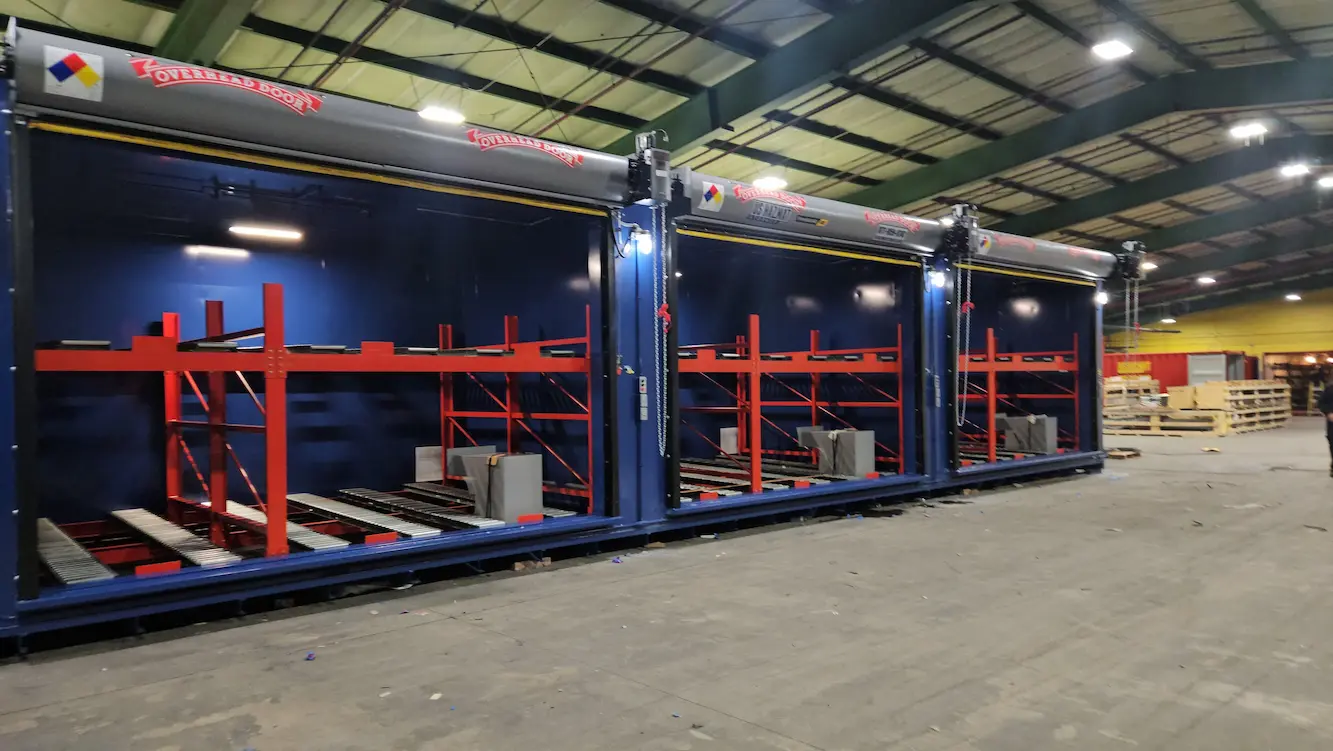
A non-fire rated chemical storage building helps solve these issues by creating a dedicated space for materials that need protection from weather but do not require fire-rated construction. This can be especially useful for fertilizer storage because the goal is often moisture control, containment, access, and housekeeping rather than fire separation.
For many facilities, moving fertilizer into a dedicated building can reduce:
- Product loss from weather exposure
- Nutrient residue near storm drains
- Cleanup time after rain events
- Packaging damage
- Confusion between product categories
- Inspection concerns around exposed materials
- Uncontrolled runoff from loading zones
The building does not replace operational discipline, but it gives the team a cleaner system to work inside.
Liquid Fertilizer Needs Secondary Containment
Liquid fertilizer deserves special attention because leaks can move quickly. A small drip from a tote, valve, fitting, hose, or drum can become a larger cleanup problem if it reaches a drain or leaves the storage area.
Secondary containment should be sized and planned around the largest container, transfer process, and site layout. The right approach depends on the product, container volume, local requirements, and whether the material is stored indoors or outdoors.
Practical containment options may include:
- Spill containment pallets
- Curbed floors
- Sump systems
- Portable berms
- Compatible trays
- Dedicated tote containment
- Sealed transfer areas
- Spill response supplies near the point of use
The storage plan should also consider how employees move liquid fertilizer. If the highest risk occurs during unloading, transfer, or mixing, containment should cover that work area too.
Dry Fertilizer Still Needs Runoff Protection
Dry fertilizer can be easy to underestimate. It may not look urgent compared with liquid storage, but it can dissolve quickly when exposed to water. Torn bags, dust, broken pallets, and residue near doors can all contribute to nutrient movement during a rain event.
Dry fertilizer storage should focus on moisture protection, packaging integrity, and housekeeping. Raised pallets, covered storage, clean aisles, and sealed containers can make a major difference.
A strong dry storage routine should include:
- Inspecting bags and pallets when shipments arrive
- Removing damaged packaging from general storage
- Keeping products away from exterior doors
- Sweeping residue before washdown
- Avoiding open storage near drains
- Keeping dry products separate from liquids
- Rotating inventory to reduce aging and damage
For many facilities, these steps reduce both environmental risk and product loss.
Pesticides, Fertilizers, and Separation Planning
Facilities that store fertilizers often store pesticides, herbicides, soil amendments, or other grounds maintenance chemicals nearby. That can create cross-contamination and labeling concerns if the layout is not intentional.
Fertilizers should not be random inventory. They should be organized by product type, container condition, compatibility, and handling frequency. Pesticides and fertilizers may need separate zones depending on label directions, local rules, and facility procedures.
A dedicated non-fire rated chemical storage building can support this separation without forcing every product into the same room. For example, a facility may need one zone for dry fertilizer, another for liquid fertilizer, and a separate secured area for pesticide products.
The goal is simple: employees should know what each product is, where it belongs, how it is handled, and what to do if it spills.
Common Fertilizer Storage Mistakes
Many runoff problems begin with small storage habits that become normal over time. The facility may not notice the issue until there is a heavy rain, inspection, complaint, spill, or drainage concern.
Common mistakes include:
- Storing fertilizer directly on the ground
- Leaving pallets outside without full weather protection
- Keeping liquid totes near storm drains
- Allowing torn bags to remain in active inventory
- Washing residue toward exterior doors
- Mixing pesticides and fertilizers without separation
- Storing products in unlabeled or damaged containers
- Ignoring slow leaks from valves or fittings
- Forgetting to include storage areas in inspection routines
- Using general sheds that do not support containment or cleanup
These problems are easier to prevent than correct. Once fertilizer has entered runoff, the facility may face cleanup, reporting, sampling, or operational disruption.
Building a Cost-Effective Storage System for Non-Flammables
Not every chemical storage challenge requires a fire-rated building. Fertilizer storage often calls for protection from weather, moisture, spills, unauthorized access, and runoff pathways. When the material profile is non-flammable, a non-fire rated chemical storage building can be a practical and cost-conscious choice.
US Hazmat Storage offers solutions for facilities that need organized, durable storage for non-flammable materials such as fertilizers, pesticides, and related chemicals. These buildings can support better containment, cleaner material separation, easier inspection, and more controlled access.
For facilities reviewing fertilizer, pesticide, or non-flammable chemical storage, the non-fire rated chemical storage buildings page provides a practical starting point.
Preparing for Stormwater Reviews and Internal Audits
The strongest storage systems are easy to inspect. If a manager, consultant, insurer, or regulator walks the site, the storage area should clearly show that the facility is trying to prevent runoff exposure.
Documentation can help support that position. Keep records of inspections, employee training, spill cleanup, container checks, and maintenance. If the facility has a SWPPP, make sure the fertilizer storage area is accurately reflected.
A simple audit should review:
- Storage condition
- Container integrity
- Drain locations
- Housekeeping
- Spill kit availability
- Containment condition
- Product labeling
- Employee access
- Outdoor exposure
- Correct separation of materials
The goal is not paperwork for its own sake. Documentation proves that runoff control is part of the facility’s operating routine.
Better Fertilizer Storage Protects Product, Water, and Operations
Fertilizer storage is most effective when it treats water as the main pathway of risk. If fertilizer stays dry, contained, labeled, separated, and away from uncontrolled drainage, the facility is in a much stronger position. If rainwater, spills, dust, or washdown water can move nutrients off-site, the storage system needs attention.
A non-fire rated chemical storage building can give facilities a practical way to manage non-flammable materials without overspending on fire-rated construction that may not match the actual hazard. For fertilizers, pesticides, and related products, the right building can support cleaner handling, better runoff control, and stronger inspection readiness.
US Hazmat Storage brings organizations a storage plan made around real site conditions, product types, access needs, containment requirements, and environmental responsibility. When fertilizer storage is designed before runoff becomes a problem, facilities can protect product value, reduce cleanup risk, and keep water quality protection built into everyday operations.
FAQ
Does fertilizer storage need to meet EPA runoff expectations?
Yes. Facilities should prevent fertilizer from entering stormwater, drains, soil, or waterways, especially when materials are stored outdoors or near runoff paths.
Is fertilizer considered a non-flammable chemical?
Many fertilizers are non-flammable, but storage requirements still depend on the specific product, SDS, quantity, container type, and site conditions.
Why is runoff a concern with fertilizer?
Fertilizer can contain nutrients such as nitrogen and phosphorus. When moved by water, those nutrients can contribute to downstream water quality problems.
Can fertilizer be stored outdoors?
Outdoor storage increases runoff and moisture risk. Covered, contained, and controlled storage is usually safer and easier to manage.
What is the best storage option for liquid fertilizer?
Liquid fertilizer should be stored in compatible containers with secondary containment, spill response supplies, and protection from uncontrolled drainage.
Should fertilizer and pesticides be stored together?
Not casually. They should be separated based on labels, SDS guidance, compatibility, access needs, and facility procedures.
Do non-fire rated buildings help with fertilizer storage?
Yes. They can provide weather protection, containment, organization, access control, and lower-cost storage for non-flammable materials.
What should employees check during fertilizer storage inspections?
They should check container condition, leaks, labels, residue, pallets, drains, spill kits, separation, and whether rainwater can contact stored products.