
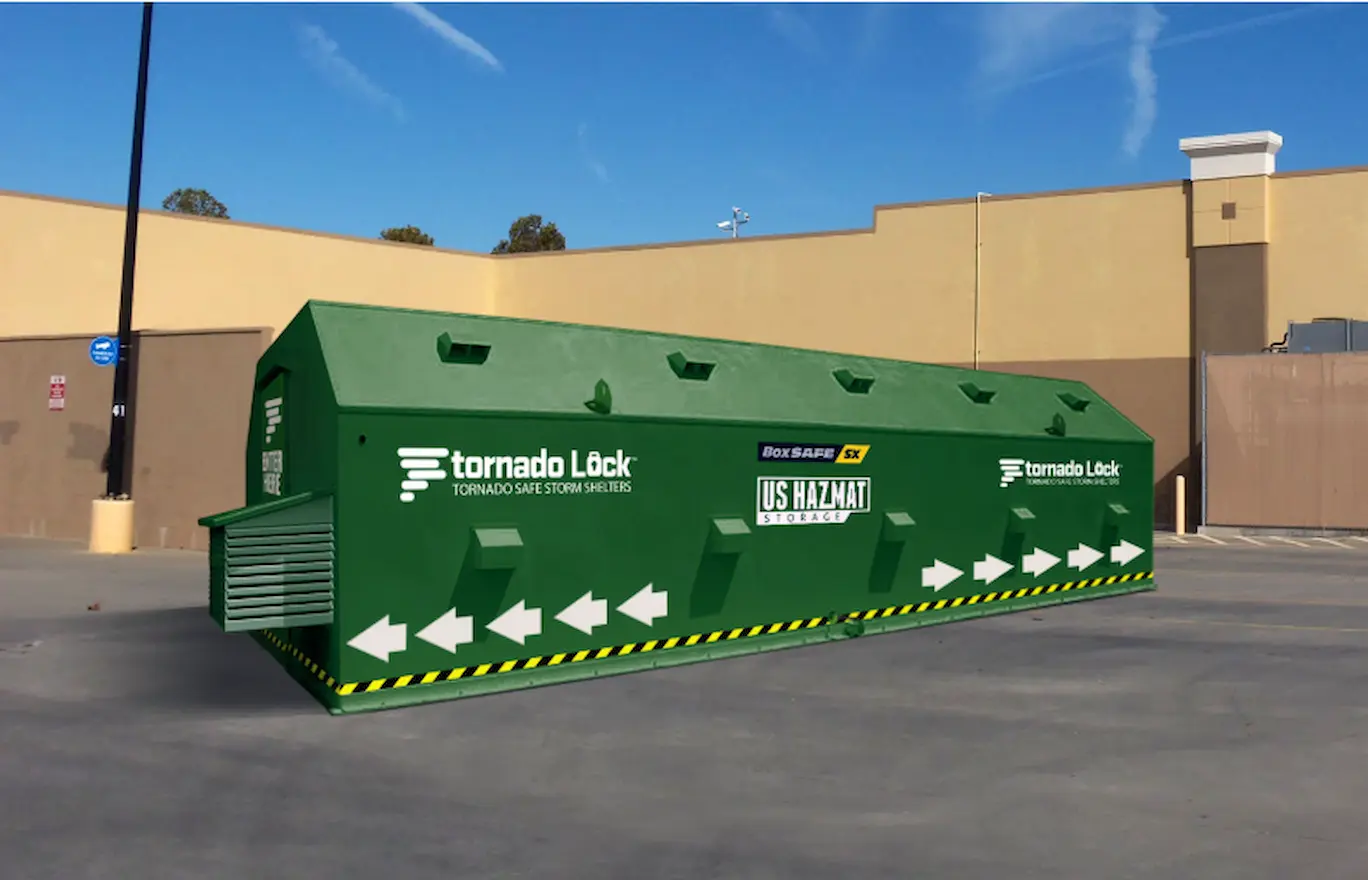
Steel tornado shelters matter most when severe weather planning moves beyond basic preparedness and becomes a question of structural survival. For schools, industrial facilities, municipal buildings, emergency response sites, and community spaces, a tornado shelter is not a convenience feature.
That is why material selection deserves serious attention. Concrete, masonry, and hybrid systems can all have a place in storm protection, but steel offers a strong combination of strength, controlled fabrication, modular flexibility, and long-term durability. When properly engineered, anchored, installed, and documented, steel tornado shelters can support the kind of severe weather protection that communities need before the sirens sound.
At US Hazmat Storage, community shelter planning is approached with the same discipline used for industrial safety systems: clear specifications, durable construction, practical access, and protection designed around real operating conditions.
Why Steel Tornado Shelters Perform Well in Extreme Wind Events
Tornado protection is not only about resisting wind pressure. A shelter must also account for uplift, lateral forces, debris impact, door performance, anchoring, occupant load, ventilation, emergency lighting, and access during a stressful event. Steel supports many of these requirements because it can be engineered with predictable strength and manufactured with tight quality control.
Unlike ordinary building rooms, steel tornado shelters are designed as dedicated protective structures. The walls, roof, frame, doors, hardware, and anchoring system must work together. A strong wall does not help if the door fails. A reinforced roof does not help if the shelter is not properly anchored. A durable shell does not help if occupants cannot enter quickly or remain inside safely.
Steel is especially valuable because it allows shelter manufacturers to design every part as part of one system. The frame, panels, connections, and access points can be coordinated for a specific capacity, site layout, and intended use.
Steel vs. Conventional Building Rooms
Many facilities assume that an interior hallway, restroom, mechanical room, or basement area can serve as a tornado refuge. In some situations, those spaces may reduce exposure compared with exterior rooms, but they are not the same as engineered shelters.
A typical building room is usually designed for everyday occupancy, not tornado-level wind loads or windborne debris. In an extreme wind event, roof damage, wall failure, broken glazing, falling equipment, or flying objects can turn ordinary rooms into dangerous spaces.
| Feature | Ordinary Interior Room | Engineered Steel Tornado Shelter |
| Intended purpose | Daily building use | Severe weather refuge |
| Structural design | General building loads | Extreme wind and debris resistance |
| Door system | Standard commercial door | Shelter-rated door and hardware |
| Anchoring | Part of normal building construction | Designed to resist uplift and lateral forces |
| Occupant planning | Not always calculated | Based on intended shelter capacity |
| Documentation | Limited for storm use | Can support code and review discussions |
Steel tornado shelters create a clearer separation between “better than outside” and “designed for refuge.” That distinction matters when a facility is responsible for employees, students, visitors, patients, or the public.
FEMA Compliance Starts With Design Intent, Not Marketing Language
The phrase FEMA-compliant tornado shelters should never be treated as a label alone. Compliance depends on design criteria, engineering, construction quality, anchoring, opening protection, ventilation, life safety planning, and documentation. A shelter should be evaluated as a complete system, not as a collection of strong materials.
For community projects, FEMA guidance and ICC 500 expectations often shape the conversation around occupant safety, siting, wind resistance, debris impact, and performance during tornado events. Facility owners should look for clear documentation that explains how the shelter was designed, what standard it was built around, how many occupants it supports, and what site conditions must be addressed during installation.
That planning should include:
- Design wind speed criteria
- Debris impact resistance
- Door and hardware performance
- Foundation and anchoring requirements
- Occupant load and usable floor area
- Ventilation and emergency lighting
- Accessibility and entry planning
- Inspection and maintenance expectations
A steel shelter can only provide the intended level of protection when the full system is planned correctly. The material is important, but the engineering behind it is what makes the difference.
How Steel Supports Severe Weather Protection
Steel has several practical advantages in extreme wind protection. It is strong, measurable, adaptable, and well suited for prefabricated construction. This allows shelter systems to be built in controlled environments before being delivered to the site, which can reduce field variability and support more consistent quality.
For facilities with limited space or active operations, prefabricated steel shelters can also simplify deployment. A school, plant, warehouse, or municipal site may not have time for a long construction disruption. A modular steel shelter can be planned around placement, access, utility needs, and occupant capacity with fewer unknowns than a fully site-built refuge.
Steel also supports long-term resilience. Properly finished and maintained steel structures can handle demanding environments, frequent use, and repeated inspections. For industrial and community applications, that durability matters because the shelter may sit ready for years before being needed.
Key Advantages of Steel Tornado Shelters
A strong shelter should be judged by how well it protects people, how clearly it supports compliance review, and how practically it fits into the facility. Steel tornado shelters offer several advantages across those areas.
- High strength-to-weight performance: Steel can deliver significant structural strength without requiring massive wall thickness.
- Controlled fabrication: Panels, frames, doors, and components can be built under repeatable manufacturing conditions.
- Modular flexibility: Shelters can be sized for small teams, large groups, or public access needs.
- Durable exterior protection: Coatings and finishes can help resist corrosion and wear.
- Clear anchoring strategy: Steel shelters can be engineered with defined connection points and foundation requirements.
- Faster project planning: Prefabricated systems can reduce some of the delays associated with full site-built construction.
- Adaptable placement: Above-ground steel shelters can often be located near the people who need access most.
For community storm shelters, access is especially important. The best shelter on a property is less effective if occupants cannot reach it quickly during a warning.
Where Steel Shelters Make the Most Sense
Steel shelters are useful in many settings, but they are especially practical where durability, access, and speed of deployment matter.
| Setting | Why Steel Can Be a Strong Fit |
| Schools and campuses | Supports group refuge planning and repeated drills |
| Industrial facilities | Durable enough for demanding work environments |
| Municipal buildings | Can serve staff and public-facing safety needs |
| Warehouses | Can be placed near work zones or break areas |
| Clinics and care facilities | Supports accessible refuge for staff, patients, and visitors |
| Job sites | Can provide protection where permanent buildings are limited |
| Community centers | Helps centralize severe weather refuge for larger groups |
The goal is not only to install a shelter. The goal is to place the right shelter where people can realistically use it.
Community Storm Shelters Need More Than Structural Strength
A shelter for one family and a shelter for a workplace or community are very different planning problems. Community storm shelters must account for larger occupant groups, entry flow, accessibility, visibility, signage, emergency procedures, and responsibility during a weather event.
A strong steel shell is only one part of that plan. The surrounding process matters too. Facilities should define who unlocks the shelter, how people are directed to it, how drills are handled, how maintenance is documented, and what supplies may be needed inside.
A practical community shelter plan should address:
- Who the shelter is intended to protect
- How many people may enter during a warning
- How quickly occupants can reach the shelter
- Whether access routes remain clear
- How people with mobility limitations will enter
- How the shelter will be inspected
- Who is responsible for maintenance
- How emergency communication will be handled
US Hazmat Storage supports this kind of planning through durable shelter solutions designed for real community, industrial, and operational conditions. For more information about shared refuge planning, visit the company’s community storm shelters page.
Above-Ground Steel Shelters and Accessibility
One of the strongest practical advantages of above-ground steel shelters is accessibility. Underground shelters can be effective in certain residential contexts, but they may create challenges for schools, workplaces, clinics, older adults, wheelchair users, or large groups.
Stairs, narrow entries, water intrusion, difficult doors, and poor lighting can all slow access during the exact moment when speed matters. Above-ground steel shelters can be installed closer to daily activity areas, with wider doors, clearer routes, and better visibility.
For community use, that can make a major difference. A shelter should not require people to cross a parking lot, move through cluttered storage areas, or descend stairs under pressure if a safer and more accessible placement is possible.
Accessibility is not a secondary concern. It is part of life safety.
Anchoring Is Critical to Shelter Performance
A steel shelter is only as strong as the connection between the structure and its foundation. Tornado winds create uplift and lateral forces that can challenge walls, roofs, doors, and the base of the shelter. Without proper anchoring, even a strong shelter can be compromised.
Anchoring should be reviewed as part of the full design, not treated as an afterthought during installation. The foundation, slab condition, fasteners, embedment, soil conditions, and installation quality all matter.
This is one reason generic shelters, improvised rooms, or unverified structures create risk. A shelter may appear strong, but if its anchoring system is not designed for the expected forces, the protection level becomes uncertain.
Doors, Hardware, and Openings Matter as Much as Walls
In tornado shelter design, openings are often among the most vulnerable points. Doors, frames, hinges, latches, vents, and penetrations must perform under pressure and impact conditions. A shelter wall can be heavily reinforced, but if the door system is weak, the shelter may not provide the expected protection.
Steel tornado shelters often use reinforced doors and frames designed as part of the shelter system. This matters because doors must remain closed, latched, and functional during the event. They also need to support safe egress after the storm passes.
Facilities should never assume that a standard commercial door can be used in a tornado refuge. Shelter openings require serious review, especially for community applications.
Planning Capacity for Real Occupant Loads
Community storm shelters should be sized around real use, not best-case assumptions. A small shelter may work for a maintenance team, but not for a school wing, clinic staff, public office, warehouse shift, or visitor-heavy building.
Capacity planning should consider:
- Maximum expected occupants
- Shift changes
- Visitors, contractors, or patients
- Mobility needs
- Space for emergency supplies
- Time spent inside during warnings
- Local emergency procedures
Steel shelters can be designed in different sizes and configurations, which helps facilities match protection to actual risk. A shelter that is too small can create confusion when people need it most. A shelter that is properly sized can support a calmer, clearer emergency response.
Inspection and Maintenance Keep Protection Ready
A shelter is not finished once it is installed. It needs to remain ready. Doors should close properly. Hardware should latch. Ventilation openings should remain clear. Access routes should not be blocked. Signs should remain visible. The interior should not become storage space for unrelated equipment.
A simple maintenance checklist can help prevent readiness problems:
- Inspect doors, latches, hinges, and seals
- Keep entry routes clear
- Check signage and lighting
- Review ventilation openings
- Confirm emergency supplies are organized
- Document inspections
- Train staff on shelter procedures
- Run periodic drills
Steel shelters are durable, but durability does not replace maintenance. Community safety depends on readiness.
How Steel Tornado Shelters Support Long-Term Community Safety
The value of steel tornado shelters extends beyond one severe weather event. They can become part of a larger safety culture inside a facility. Employees know where to go. School administrators have a defined refuge plan. Facility managers can document inspections. Municipal leaders can show that severe weather protection was considered before an incident occurred.
That kind of preparation builds trust. It tells workers, students, visitors, and community members that life safety is not being improvised.
For organizations in tornado-prone regions, the question is not whether severe weather will happen. The question is whether the facility has planned clearly enough before it does.
Choosing a Steel Shelter Partner
Selecting a shelter should not come down to price alone. Facilities should look for a partner that understands structure, compliance expectations, placement, access, and long-term use.
Before purchasing, ask:
- What standard is the shelter designed around?
- What documentation is provided?
- How is the shelter anchored?
- What occupant capacity does it support?
- Are doors and openings rated as part of the system?
- What foundation requirements must be met?
- Can the shelter be placed near the people who need it?
- What maintenance is recommended?
- Can the design support community or workplace use?
US Hazmat Storage helps organizations evaluate these questions with a practical, safety-first mindset. The right shelter should protect people, support review conversations, and fit the way the site actually operates.
Stronger Shelter Planning Starts Before the Storm
Steel tornado shelters offer a serious advantage for facilities that need dependable protection during extreme wind events. Their strength, modular flexibility, controlled fabrication, and long-term durability make them a practical choice for workplaces, schools, municipal buildings, clinics, industrial sites, and shared community spaces.
Still, the best results come from treating the shelter as a complete life safety system. Material strength, FEMA-aligned planning, anchoring, access, doors, capacity, maintenance, and emergency procedures all need to work together.
US Hazmat Storage designs community storm shelter solutions for organizations that cannot afford guesswork when severe weather threatens people on site. With the right steel shelter in the right location, facilities can move from basic preparedness to a clearer, stronger, and more defensible safety plan.
FAQ
Are steel tornado shelters better than regular building rooms?
Yes. Regular rooms are built for daily use. Engineered steel tornado shelters are designed specifically for extreme wind, debris impact, anchoring, and occupant refuge.
What makes a tornado shelter FEMA compliant?
FEMA compliance depends on the full system: design criteria, anchoring, doors, ventilation, occupant capacity, documentation, and proper installation.
Can steel tornado shelters be used as community storm shelters?
Yes. Steel shelters can be designed for larger occupant groups, making them suitable for schools, workplaces, municipal buildings, clinics, and public facilities.
Are above-ground steel shelters safe during tornadoes?
Properly engineered and anchored above-ground steel shelters can provide strong protection while also improving accessibility compared with underground options.
Why is anchoring so important for steel shelters?
Anchoring helps the shelter resist uplift and lateral forces. Without proper anchoring, even a strong steel structure may not perform as intended.
Do shelter doors need to be specially rated?
Yes. Doors, frames, hinges, latches, and openings must be designed as part of the shelter system, not replaced with standard commercial hardware.
How often should a community shelter be inspected?
Facilities should inspect shelters regularly, especially before storm season. Doors, access routes, signage, lighting, ventilation, and emergency supplies should stay ready.
Where should a steel tornado shelter be placed?
The shelter should be close to occupants, easy to access, clearly marked, and supported by a foundation suitable for the engineered anchoring system.