
Drum storage requirements in Los Angeles are not a small facilities detail. For manufacturers, the way 55-gallon drums are stored can affect worker safety, fire exposure, spill control, environmental protection, emergency response, and inspection readiness. A drum may look routine on a production floor, but once it holds solvents, coatings, oils, cleaners, adhesives, fuels, or hazardous waste, it becomes part of a regulated storage system.
Los Angeles adds another layer of pressure because many manufacturing sites operate in dense industrial corridors. Space is limited. Loading docks are busy. Forklifts move constantly. Storage areas may sit near production lines, drains, exterior walls, neighboring properties, or public access points. In that environment, drum storage requirements need to be handled with planning, not improvisation.
At US Hazmat Storage, we approach drum storage as an engineered safety decision. The question is not only where the drums fit. The better question is whether the storage setup controls risk, supports compliance, protects employees, and gives inspectors and emergency responders a clear picture of what is stored on site.
Why Drum Storage Requirements Start With the Material
A safer drum storage plan begins with the material inside the drum. The container size matters, but the hazard profile matters more. A 55-gallon drum of lubricating oil does not create the same risk as a drum of flammable solvent or corrosive waste. A full drum does not create the same exposure as an empty drum with residue. A sealed container does not create the same operational concern as a drum used for dispensing.
Before selecting lockers, spill pallets, racks, or outdoor storage buildings, Los Angeles manufacturers should review:
- Chemical name and use
- Safety Data Sheet information
- Flash point, if applicable
- Hazard class and compatibility
- Maximum quantity stored
- Container condition
- Whether drums are opened or dispensed from
- Whether materials are raw product, waste, used oil, or process chemicals
- Whether the storage location is indoor or outdoor
This inventory should guide the equipment decision. Buying storage first and trying to make the chemicals fit later often creates gaps. The strongest approach is to define the hazard, then select a storage system that matches it.
Local Reporting and Hazardous Materials Business Plan Concerns
For Los Angeles manufacturers, drum storage requirements may connect directly to hazardous materials reporting. A standard 55-gallon drum can be enough to trigger a closer review because many hazardous material reporting thresholds for liquids begin at 55 gallons, depending on the material and applicable exemptions.
That does not mean every drum creates the same obligation. It does mean facilities should not assume a small storage area is automatically outside reporting requirements. The Hazardous Materials Business Plan framework is designed to help emergency responders understand what is stored at a facility, where it is located, and how the business will respond to a release or threatened release.
A good storage program makes that process easier. Labels should be visible. Storage locations should be consistent. Inventory records should match the actual site. Employees should know how to respond if a container leaks. If drums move, quantities change, or new materials are added, documentation should be reviewed.
The goal is not paperwork for its own sake. The goal is to make the facility readable in an emergency.
Drum Storage Requirements and Secondary Containment
Secondary containment is one of the most important parts of drum storage requirements because containers can fail. A drum can be punctured by a forklift, damaged during transfer, weakened by corrosion, left with a loose closure, or exposed to weather conditions that create problems over time.
A containment system should be able to keep a leak from spreading into work areas, drains, soil, or stormwater pathways. For 55-gallon drums, that may mean spill pallets, containment decks, sumps, bermed areas, or purpose-built drum storage buildings with integrated containment.
A good containment review should consider:
- The largest container in the storage area
- Total stored volume
- Whether drums are indoors or outdoors
- Chemical compatibility with the containment material
- Rainwater accumulation
- Fire suppression runoff, if applicable
- Access for inspection and cleanup
- Distance from drains, doors, and traffic lanes
Containment should not be treated as a tray under a container. It is part of the facility’s emergency control strategy. If a drum leaks during a shift, the containment system should give the team time to respond without turning a small failure into a larger shutdown.
Indoor vs. Outdoor Drum Storage in Los Angeles Facilities
Indoor drum storage can be convenient. Materials stay close to the work area, employees can access them quickly, and weather exposure is lower. But indoor storage may also increase worker exposure, create vapor concerns, complicate fire protection, and reduce usable floor space.
Outdoor drum storage can move hazards away from occupied areas, support larger storage layouts, and improve separation from production zones. It can also introduce concerns around heat, direct sunlight, security, vehicle impact, rainwater, and runoff.
| Storage Option | Where It Helps | What to Review |
| Indoor drum storage | Frequent access, process support, weather protection | Ventilation, fire risk, aisle clearance, worker exposure |
| Outdoor drum storage | Larger inventories, better separation, dedicated hazard zones | Weather, security, containment, stormwater, site access |
| Fire-rated drum storage | Flammable or higher-risk materials | Rating, placement, ventilation, fire authority review |
| Modular drum lockers | Organized storage with containment | Capacity, compatibility, access, inspection needs |
There is no universal best option. The right choice depends on the material, quantity, workflow, and site layout. The storage area should make safe behavior easier, not harder.
Fire Risk and Flammable Drum Storage
Flammable and combustible liquids require a more careful review because the danger is not only the liquid. Vapors can create ignition risk. Heat can affect containers. Dispensing can introduce static or handling hazards. Nearby ignition sources can turn poor placement into a serious exposure.
For flammable drum storage, facilities should review:
- Distance from ignition sources
- Ventilation and vapor control
- Fire-rated construction
- Grounding and bonding during dispensing
- Approved containers and closures
- Fire extinguisher access
- No-smoking signage
- Separation from incompatible materials
- Local fire authority expectations
This is where drum storage requirements become more than an inventory issue. The facility needs a system that controls container placement, access, vapor concerns, and emergency response. In a dense Los Angeles manufacturing environment, convenience should never override fire safety.
A drum that is easy to reach but poorly placed may create more risk than it solves.
Labels, SDS Access, and Employee Training
A storage area is only useful if people can understand it quickly. Labels, Safety Data Sheets, and employee training all support that clarity.
Every drum should be identifiable without guessing. Workers should not have to open a container, rely on memory, or ask around to determine what a drum contains. Labels should remain visible and legible. If drums are moved into racks or lockers, the label position should still allow inspection.
Employee training matters because the best storage system can fail if workers do not understand how to use it. Teams should know where drums belong, which materials must stay separated, what to do if a drum leaks, how to report a damaged container, and where spill response supplies are located.
A practical training program should cover:
- Safe drum handling
- Hazard recognition
- Labeling expectations
- Spill response steps
- Emergency communication
- Incompatible material separation
- Personal protective equipment
- Reporting damaged or leaking containers
Documentation helps prove that the system is not only installed, but actively managed.
Drum Storage Requirements for Incompatible Materials
One of the easiest ways to create unnecessary risk is to store every drum in the same area simply because the containers look similar. Similar containers do not mean similar hazards.
Flammables, corrosives, oxidizers, toxics, reactives, petroleum products, and hazardous waste may require different storage conditions. Some materials should not share the same containment area because a leak or spill could create a dangerous reaction.
| Material Type | Storage Concern |
| Flammable liquids | Ignition control, ventilation, fire protection |
| Corrosives | Compatible containment and separation |
| Oxidizers | Separation from combustibles and organic materials |
| Petroleum products | Spill control, runoff protection, APSA review where applicable |
| Hazardous waste | Labeling, accumulation rules, inspection records |
| Reactive chemicals | Strict segregation and specialist review |
Compatibility should be checked through the SDS and the facility’s safety process. A storage system should help maintain separation visually and physically, not depend on employees remembering which drums cannot sit together.
Forklifts, Traffic, and Physical Damage
In manufacturing environments, one of the most realistic drum storage hazards is impact damage. Forklifts, pallet jacks, carts, trucks, and loading activities can all affect container integrity. A drum placed near a traffic lane may be convenient until it is hit, tipped, dented, or punctured.
A safer storage layout should include:
- Protected drum zones
- Bollards or guard barriers where needed
- Clear forklift routes
- Stable flooring or pads
- Adequate aisle space
- Safe pickup and replacement access
- Clear signage
- Separation from high-traffic doors and docks
Drum storage requirements should account for how the facility actually moves. If the storage area forces workers to maneuver around drums, squeeze through narrow spaces, or temporarily stage containers in travel paths, the layout needs to be improved.
Good storage protects the drums from the workplace, not just the workplace from the drums.
Outdoor Drum Storage and California Site Conditions
Outdoor storage in Los Angeles can be practical, but it should not be casual. Heat, sun exposure, rain events, wind, seismic concerns, unauthorized access, and stormwater pathways all need review.
A strong outdoor drum storage plan should consider:
- Shade or heat exposure
- Weather protection
- Security and controlled access
- Containment capacity
- Site grading
- Drain protection
- Vehicle impact risk
- Emergency responder access
- Distance from buildings and property lines
- Seismic stability where applicable
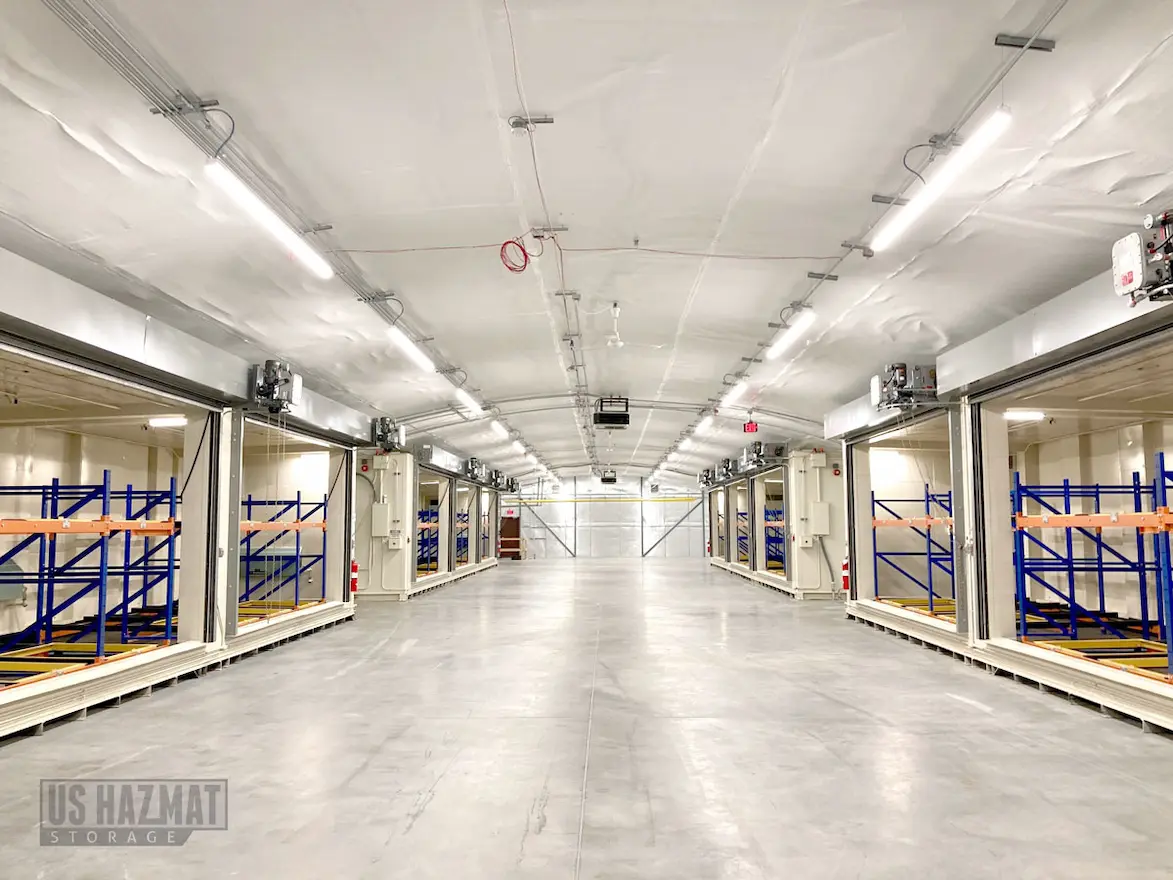
Outdoor storage often works best when it is purpose-built. A controlled drum locker, modular storage unit, or engineered outdoor containment system can help reduce the risks that come from improvised storage on bare pavement or near drains.
For Los Angeles manufacturers, outdoor space may be valuable. That makes it even more important to use it deliberately.
What Inspectors and Emergency Responders Need to See
A good storage area should be easy to inspect. If an inspector has to move containers, guess what is inside drums, or ask why incompatible materials are stored together, the system is already creating concern.
Inspectors and responders generally need to see:
- Clearly labeled containers
- Accessible storage areas
- Visible containment
- Unblocked aisles
- Current inventory records
- Emergency response information
- Separated incompatible materials
- Fire protection access
- Spill response supplies
- Consistent storage locations
The same clarity helps employees. A storage area that is easy to inspect is usually easier to maintain.
How US Hazmat Storage Helps Los Angeles Manufacturers
US Hazmat Storage helps manufacturers turn drum storage requirements into practical storage systems. Instead of relying on improvised areas, repurposed corners, or inconsistent drum placement, facilities can use purpose-built solutions that support containment, access, fire safety, and inspection readiness.
Our 55-gallon drum storage solutions can support facilities storing solvents, oils, coatings, fuels, hazardous waste, process chemicals, and maintenance materials. Depending on the hazard and site conditions, that may involve drum lockers, outdoor storage buildings, spill containment systems, fire-rated options, or modular chemical storage units.
We help teams evaluate:
- Drum count and storage volume
- Indoor vs. outdoor placement
- Secondary containment
- Fire-rated storage needs
- Chemical compatibility
- Workflow and access
- Ventilation considerations
- Site constraints
- Inspection readiness
The right storage solution should reduce uncertainty. It should help workers know where materials belong, help managers control inventory, and help the facility show a clear safety plan when reviewed.
Safer Drum Storage Starts Before the Inspection
The best time to fix a drum storage problem is before an inspection, before a leak, and before an emergency. Once a container fails or a regulator identifies a storage issue, the facility is already reacting. A better approach is to build the system before pressure arrives.
Drum storage requirements in Los Angeles should be treated as part of daily manufacturing safety. Know what is stored. Know where it is stored. Keep labels readable. Keep containment visible. Separate incompatible materials. Protect drums from traffic. Review quantities when inventory changes. Make the storage area easy to inspect.
At US Hazmat Storage, we help California manufacturers create safer, more practical systems for high-volume drum storage. If your facility stores hazardous or industrial materials in drums, our 55-gallon drum storage solutions can help you move from a crowded storage area to a cleaner, safer, more defensible setup.
FAQ
What are drum storage requirements?
Drum storage requirements are safety and compliance expectations for storing drum containers, including labeling, containment, compatibility, access, and fire protection.
Do 55-gallon drums trigger reporting in Los Angeles?
They can. Many liquid hazardous material reporting thresholds begin at 55 gallons, though exemptions and special cases may apply.
What is secondary containment for drum storage?
Secondary containment is a backup system that helps capture leaks or spills before they reach floors, drains, soil, or stormwater.
Can flammable liquids be stored in 55-gallon drums?
Yes, but storage must account for container approval, fire risk, ventilation, ignition control, containment, and local requirements.
Should drums be stored indoors or outdoors?
It depends on the material, volume, access needs, fire risk, weather exposure, containment, and local authority expectations.
Why is labeling important for drum storage?
Labels help workers, inspectors, and emergency responders identify materials quickly and respond safely.
How can US Hazmat Storage help?
US Hazmat Storage helps evaluate drum volume, containment, fire-rated options, outdoor placement, and 55-gallon drum storage solutions.