
When a storage tank fails catastrophically, the consequences rarely stay within the facility fence. At the Nippon Dynawave Packaging Co. mill in Longview, Washington, a chemical storage tank holding white liquor, a highly caustic substance used to break down wood chips into pulp, ruptured during a shift change on the morning of May 26, 2026. According to USA TODAY reporting, the blast happened around 7 a.m. as workers were gathering in an employee break room, catching many of them directly in the path of the release.
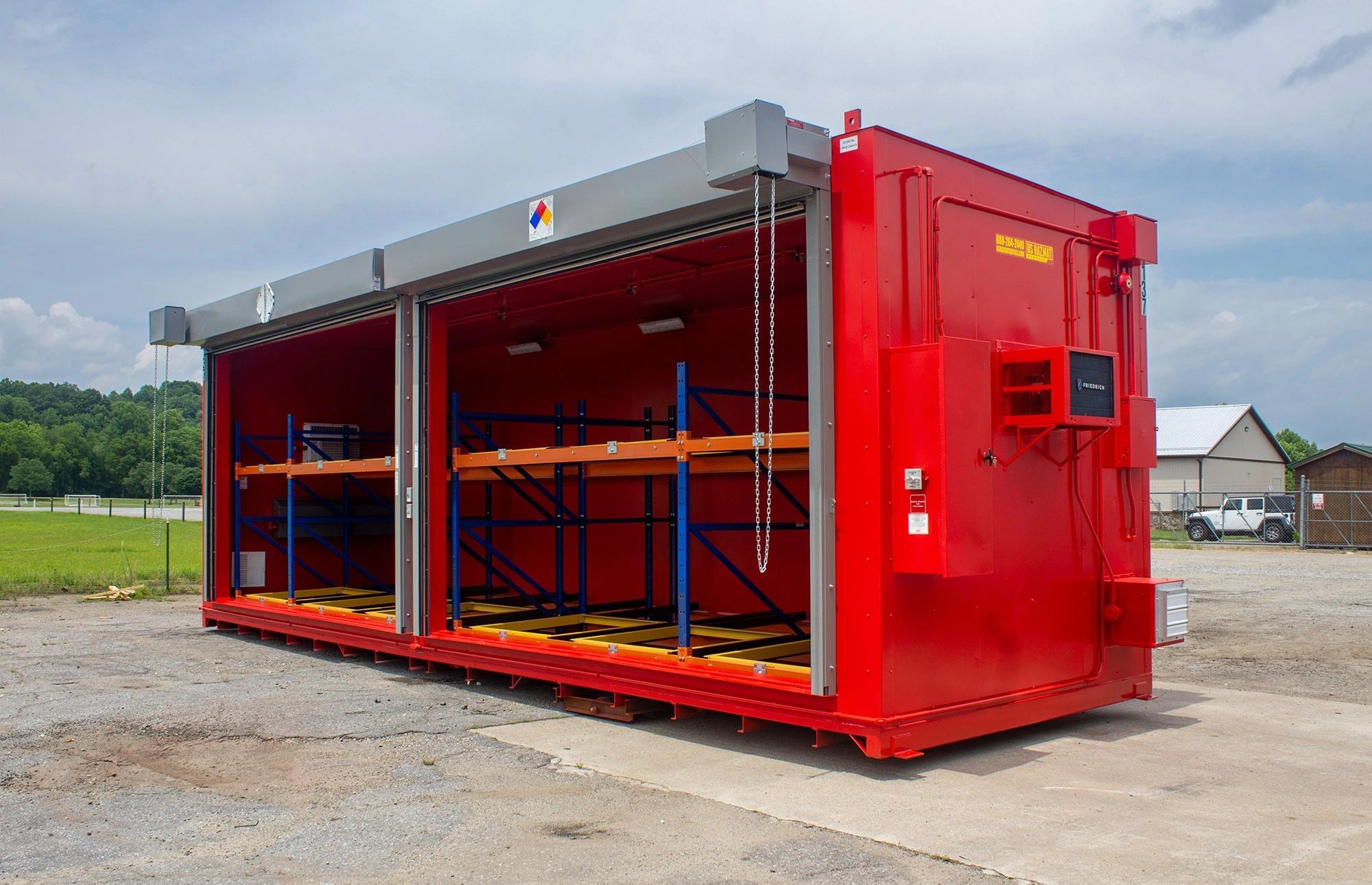
For compliance planning resources, see chemical storage buildings and hazmat storage compliance resources.
What happened at Nippon Dynawave
The tank that failed held a highly alkaline substance known as white liquor, a standard chemical in papermaking operations. USA TODAY reported that approximately 550,000 gallons spilled across the mill and into local waterways. Nine workers were killed, seven more were hospitalized with burns, and a firefighter was treated and released. Washington Gov. Bob Ferguson called it likely the deadliest industrial disaster in modern state history.
Recovery operations were slow and technically difficult. USA TODAY reported that the area directly around the tank remained off limits to recovery workers for days, with crews relying on drones to observe conditions while some 25,000 gallons of the chemical remained inside the damaged vessel. Crews decontaminated recovered bodies before releasing them to the coroner’s office. The U.S. Chemical Safety Board opened an investigation into the incident.
The environmental footprint extended beyond the facility. Some of the released liquid reached the city’s dike network and local waterways, though officials said drinking water remained safe and the Columbia River was not affected. State ecology officials reported fish kills in the dike network and warned residents not to touch dead fish as flushing operations continued.
Inspection history and prior complaints
USA TODAY reported that Washington’s Department of Labor and Industries had two ongoing inspections open at the facility at the time of the rupture. One opened in March following an anonymous complaint about a valve on a separate tank. Another opened earlier in May after a complaint about a sinkhole caused by a failed drain. The facility had also been cited in three prior inspections over the last five years, and the department previously investigated an employee finger amputation and cited the company for moving equipment before inspectors could examine it.
The site also had a history of fire incidents on the property, with a railway warehouse destroyed by fire in August 2025 and a four-day conveyor belt fire in July 2023.
For hazmat storage planning, this history is operationally significant. Open inspections, prior complaints about valve conditions, and a pattern of site incidents suggest that risk indicators existed before the rupture, which reinforces the compliance principle that tank integrity and maintenance programs must be treated as active, ongoing safety controls, not documentation checkboxes.
What this means for hazmat storage compliance and operational risk
The Longview disaster illustrates how quickly bulk chemical storage failure can become a mass-casualty event. A few compliance planning takeaways are immediate.
Tank integrity as a safety system: The rupture during a routine shift change shows that catastrophic vessel failure can occur without warning during normal operations. Storage systems managing caustic or hazardous liquids must be evaluated beyond steady-state containment. Facilities need to plan for sudden vessel failure, including how the release pathway is managed and how people in adjacent areas are protected.
Secondary containment sized for real release volumes: At 550,000 gallons released across a single facility, the scale of this event underscores why containment design must account for credible worst-case release volumes, not minimum regulatory thresholds. Facilities should confirm that secondary containment capacity matches the materials stored. It must handle a sudden, large-volume release without allowing spread to uncontrolled areas or drainage pathways.
Inspection and maintenance programs as risk controls: The open inspections and prior complaints at this site point to a broader compliance reality: hazmat risk controls require active verification. Tank condition, valve integrity, and drain systems all need documented inspection on defined cycles. Waiting for a complaint to surface is not a control.
Shift change and personnel placement: USA TODAY reporting noted that the blast occurred during a shift change, when workers were concentrated in a break room near the affected area. Facilities managing high-consequence storage should evaluate personnel placement during transitions. Shift changes, maintenance windows, and transfer operations can all expose workers to elevated risk if a sudden release occurs.
Environmental release planning: The contamination of the dike network and potential river impact shows that a large-volume caustic release does not stop at the property line. Facilities near waterways or drainage systems should ensure that their spill containment and emergency response planning accounts for off-site pathways, including coordination with environmental agencies before an event occurs.
Design your chemical storage layout with the online US Hazmat Storage App to align with applicable codes.
Practical storage planning priorities drawn from the reporting
- Design for containment first: tank integrity failures can escalate into mass-casualty events within minutes, so spill containment capacity and safe emergency access must be built into the storage layout from the start, sized for worst-case release volumes rather than minimum thresholds.
- Validate redundancy for critical controls: the open inspections and prior valve complaints at this facility highlight the need to prevent single-point failures in detection, isolation, and mitigation functions. Critical protective systems should have verified backups, not assumed ones.
- Strengthen inspection and maintenance programs as safety controls: prior complaints, a history of site fires, and ongoing inspection activity before the rupture all point to the same lesson. Inspection cycles for tanks, valves, drains, and transfer equipment must be active, documented, and tied to the actual hazard profile of the stored materials.
- Integrate environmental monitoring with storage operations: the release of 550,000 gallons into the mill and surrounding dike network shows that off-site impact planning cannot be an afterthought. Release prevention and environmental monitoring must be operationally supported, not treated as standalone compliance documents.
Taken together, the Longview disaster shows how hazmat storage compliance is tested under the worst possible pressure, by vessel integrity, system reliability, and the adequacy of safety management programs. Facilities that treat these layers as interconnected protections, rather than separate checkboxes, are better positioned to reduce operational risk when the unexpected happens.
Sources
Next Steps for Facilities
Utilities / Energy: Request a Quote for code-aligned chemical and hazmat storage. Ensure compliance and explore building options using the US Hazmat Storage App before you expand capacity. Open the Hazmat Storage App.