
Facility managers who store hydrogen peroxide tend to encounter the same regulatory blind spot at the worst possible moment: an OSHA inspection or an insurer’s site audit. The question of whether is hydrogen peroxide flammable sounds simple, but the answer sits at the intersection of two separate code frameworks, and misreading it leads to storage programs that satisfy neither. Hydrogen peroxide does not carry a flash point classification under 29 CFR 1910.106, so it falls outside the flammable liquid category in the narrowest regulatory sense.
What it carries instead is a strong oxidizer profile that makes it capable of intensifying combustion in surrounding materials, governed by a distinct set of standards with their own storage, segregation, and quantity requirements. Understanding whether is hydrogen peroxide flammable under the frameworks that actually control it is the foundation of any credible EHS storage program for this chemical. US Hazmat Storage works with facility teams who need to get that foundation right before an inspection forces the conversation.
What OSHA and NFPA 30 Say About Hydrogen Peroxide
Federal OSHA defines flammable liquids under 29 CFR 1910.106 by flash point: any liquid below 100 degrees Fahrenheit falls into that category and triggers the standard’s storage, ventilation, and quantity requirements. Hydrogen peroxide, at the industrial concentrations used in pharmaceutical manufacturing, food processing, and specialty chemical operations, does not have a conventional flash point.
It will not ignite as a liquid under the conditions OSHA uses to classify flammable materials. That is the classification answer to whether is hydrogen peroxide flammable, and stopping there is exactly where many storage programs go wrong.
NFPA 30 operates on the same logic, and a storage program designed around that code alone will not address what hydrogen peroxide actually does to the fire environment around it. The answer to whether is hydrogen peroxide flammable under OSHA and NFPA 30 is technically no. The operationally important question is what it is under NFPA 400, the standard built specifically for materials like this one.
How NFPA 400 Classifies Hydrogen Peroxide by Concentration
NFPA 400, the Hazardous Materials Code, addresses oxidizers, reactive materials, and other substances whose hazards do not fit the flammable liquid category. It provides the classification framework that tells a facility exactly how hazardous its hydrogen peroxide inventory is and what storage controls that level requires. The code classifies oxidizers in four tiers based on oxidizing potential, and hydrogen peroxide moves through those tiers as concentration rises.
Concentrations between 8 and 60 percent fall under Class 3. Concentrations between 60 and 91 percent are Class 4, a tier reserved for materials that can initiate combustion in organic matter on contact and that require a materially higher level of storage control.
Whether is hydrogen peroxide flammable in the classical sense is settled at this point; what matters operationally is which NFPA 400 tier the facility’s actual inventory occupies, because that tier determines the maximum allowable quantities, the segregation distances, and the enclosure requirements that govern the storage program.
Concentration and the Shifting Hazard Profile
Hydrogen peroxide does not behave as one chemical from a storage standpoint. At 3 percent, the concentration available over the counter for first aid, the oxidizer hazard is minimal. At 30 percent, widely used in food and pharmaceutical production, it carries a Class 3 oxidizer designation with real separation and quantity implications. At 70 percent and above, a spill onto organic materials can produce ignition without an external spark. The answer to whether hydrogen peroxide is flammable reads the same across all three scenarios. The storage requirements are not remotely the same.
This concentration-dependence makes the inventory itself a regulatory variable. A facility that transitions from 30 to 50 percent product, or begins receiving 70 percent grade for a new process line, has changed its NFPA 400 classification status even if the physical storage area looks identical.
A periodic review that maps actual inventory by concentration against the current NFPA 400 table is not a paperwork exercise. It catches classification drift well before an inspection closes that gap, and it is why the answer to whether is hydrogen peroxide flammable must be re-evaluated every time the product grade changes.
OSHA’s Hazard Communication Framework for Oxidizer Storage
Answering whether hydrogen peroxide is flammable under the OSHA framework requires moving past 29 CFR 1910.106 and into 29 CFR 1910.1200, the Hazard Communication Standard. HazCom requires that every chemical on site have an accurate, accessible Safety Data Sheet, and that the SDS be used as a design input for storage conditions, not filed away for emergencies.
For hydrogen peroxide specifically, the SDS is where the regulatory answer to whether is hydrogen peroxide flammable gets translated into specific storage conditions: oxidizer classification, incompatible materials list, decomposition thresholds, and temperature range requirements.
Process Safety Management enters the picture at high-concentration inventories. Under 29 CFR 1910.119, hydrogen peroxide at concentrations of 52 percent or above carries a PSM threshold quantity of 7,500 pounds. Facilities at or above that threshold must address both the NFPA 400 oxidizer requirements and the full PSM compliance structure simultaneously. The question of whether is hydrogen peroxide flammable becomes secondary to process hazard analysis, mechanical integrity documentation, and management of change requirements at that scale.
Reading the SDS to Build a Storage Baseline
The SDS is the document that resolves whether is hydrogen peroxide flammable for the specific concentration, a specific formulation, and a specific set of storage conditions. Section 2 identifies the GHS and domestic hazard classifications. Section 7 specifies storage requirements, including keeping the material away from combustible and organic matter.
Section 10 covers reactivity and incompatibilities, a list that for hydrogen peroxide runs considerably longer than for most organic solvents and includes materials that commonly appear in mixed-use chemical storage areas.
Storage programs that treat the SDS as a compliance document rather than a design input produce the same recurring gap: the physical storage arrangement does not reflect what Section 7 actually requires. Segregation from reducing agents is a specified condition, not a general precaution. Temperature control to limit decomposition is a specified condition. Ventilation sufficient to manage oxygen evolution is a specified condition.
Each of those requirements must be traceable in the facility’s storage design to the SDS section that mandates it, because that traceability is what closes an OSHA or fire marshal review without findings.
Decomposition, Oxygen Enrichment, and Temperature Control
Hydrogen peroxide decomposes continuously into water and oxygen, and temperature governs how fast that process runs. In a well-ventilated enclosure at the temperatures the SDS specifies, the oxygen evolution is manageable. In a warm or poorly ventilated storage space, decomposition accelerates and the oxygen concentration in the enclosure climbs.
An oxygen-enriched atmosphere lowers the ignition threshold for any flammable material present and can cause materials that would not ignite under normal conditions to combust at lower temperatures or from lower-energy ignition sources.
This is why answering whether is hydrogen peroxide flammable by flash point logic alone misses the operational hazard entirely. A facility co-locating hydrogen peroxide and flammable solvents in an unventilated space has not created a hydrogen peroxide fire risk in the traditional sense. It has created conditions where decomposition products can dramatically worsen any fire that starts from the solvents. Temperature management and adequate ventilation are not optional for industrial hydrogen peroxide storage. They are SDS-specified requirements.
Storage Segregation Requirements Under NFPA 400
Correctly mapping the answer to whether hydrogen peroxide is flammable onto an NFPA 400 oxidizer classification shapes where the material can be stored and what it must be separated from. NFPA 400 Chapter 10 specifies separation distances between oxidizer storage and flammable liquid storage, combustible materials, and reducing agents. Those distances apply within a room and between buildings on the same site, and they scale with the oxidizer class.
Once the answer to whether is hydrogen peroxide flammable has been correctly mapped to an oxidizer tier, a common misconfiguration still appears: placing hydrogen peroxide and flammable solvents in the same undivided room under the assumption that separate cabinets provide adequate separation. NFPA 400 does not establish individual cabinet boundaries as the unit of segregation analysis at room-level quantities.
A ventilated storage cabinet may accommodate small quantities of flammable solvents within an otherwise compliant layout. Hydrogen peroxide at Class 3 or Class 4 quantities requires a separately designated, code-compliant storage area with physical separation at the room or building level when quantities exceed the NFPA 400 exempt amounts.
Enclosure Selection: Cabinets, Buildings, and Material Compatibility
Selecting the right enclosure converts the answer to whether is hydrogen peroxide flammable into a concrete product specification: oxidizer-rated service, not flammable liquid service. A UL 1275-listed flammable safety cabinet is designed to protect its contents during a fire and limit ignition spread. It is not listed for oxidizer storage, does not address the chemical incompatibility between hydrogen peroxide and organic materials in adjacent enclosures, and may not satisfy NFPA 400 for the concentration and quantity at hand.
Our OSHA flammable storage resources cover the cabinet and building requirements that apply when flammable liquids and oxidizers share a storage area, including the construction, ventilation, and separation criteria that separate a compliant configuration from one that generates inspection findings.
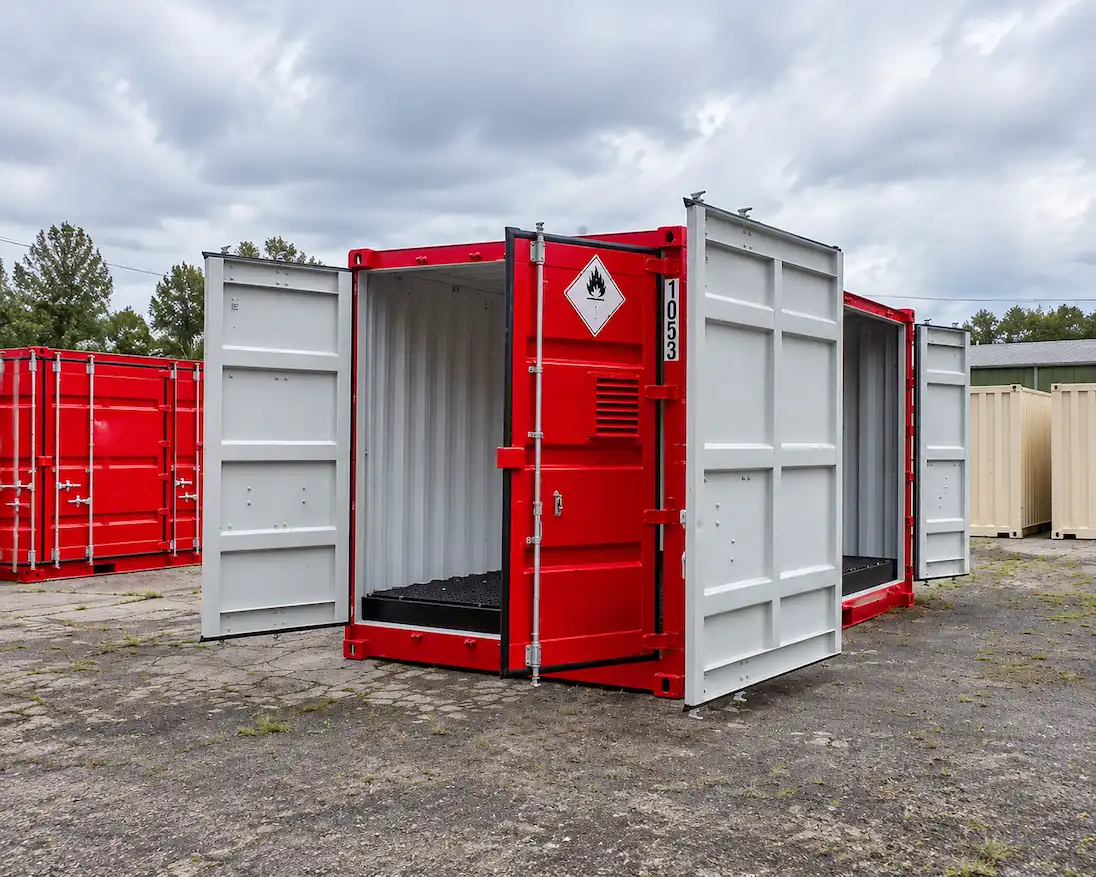
For hydrogen peroxide, three variables drive the enclosure specification: ventilation for decomposition gas management, interior material compatibility with sustained oxidizer exposure, and temperature control. A ventilated storage cabinet with stainless steel or oxidizer-compatible interior surfaces handles smaller quantities at lower concentrations. Dedicated storage buildings with mechanical ventilation, secondary containment, and engineered separation from incompatible materials are the right configuration for larger inventories or higher-concentration products.
Quantity Limits, Maximum Allowable Quantities, and Periodic Review
NFPA 400’s maximum allowable quantities define how much oxidizer a facility can hold in a given control area before the building’s occupancy classification changes or additional fire protection controls become mandatory. The table values differ by oxidizer class, so a facility moving from a Class 3 to a Class 4 product faces a substantially lower quantity ceiling before those requirements apply.
Whether is hydrogen peroxide flammable under the NFPA 400 framework ultimately requires mapping the specific concentration to the correct oxidizer class and comparing stored quantities against the applicable table.
Exceeding those limits without the required controls is among the most consequential findings on a fire code inspection, and among the most avoidable. Facilities that expand hydrogen peroxide use incrementally, adding a process line or increasing order volumes over time, frequently drift past the maximum allowable quantities without a formal review.
A documented, periodic review of stored quantities and concentrations against the current NFPA 400 table catches that drift before an inspector does. Jurisdictions with locally amended codes may impose lower ceilings than the base standard, and confirming the locally adopted edition is part of any site-specific compliance evaluation.
Building the Correct Storage Program
Getting the answer to is hydrogen peroxide flammable right is the non-negotiable starting point, but that answer alone does not build a storage program that survives scrutiny. The chemical’s oxidizer classification, the concentration of the specific product in inventory, the NFPA 400 tier that concentration occupies, the maximum allowable quantities for that tier in the locally adopted code, the SDS-specified storage conditions, and the OSHA documentation requirements must all connect into a coherent program that holds up in front of an inspector or a fire marshal.
US Hazmat Storage works with EHS managers and facility safety professionals who have started from the question of whether is hydrogen peroxide flammable and need a clear path from that question to a compliant, auditable storage configuration.
If your facility needs guidance on ventilated storage cabinet selection, oxidizer segregation layouts, or the maximum allowable quantities applicable to your concentration and jurisdiction, contact US Hazmat Storage and request specs, pricing, and delivery timelines today. Any final storage configuration should be reviewed against the locally adopted fire code, confirmed with the Authority Having Jurisdiction, and evaluated by a qualified EHS professional or fire protection engineer before installation is finalized.
FAQ
Is hydrogen peroxide considered a flammable liquid under OSHA?
No. OSHA defines flammable liquids by flash point under 29 CFR 1910.106, and hydrogen peroxide does not meet that threshold. It is governed as an oxidizer under NFPA 400, which establishes its own storage requirements and quantity limits.
What NFPA classification applies to industrial hydrogen peroxide?
Industrial hydrogen peroxide at 8 to 60 percent concentration is a Class 3 oxidizer under NFPA 400. Concentrations from 60 to 91 percent are Class 4. Each tier carries distinct storage, segregation, and quantity-limit requirements that differ substantially from flammable liquid standards.
Can hydrogen peroxide be stored in a standard flammable storage cabinet?
Standard UL 1275-listed cabinets are constructed and listed for flammable liquid service. They are not listed for oxidizer storage and do not address the segregation requirements NFPA 400 places on hydrogen peroxide relative to flammable materials stored in the same area.
What is the PSM threshold for hydrogen peroxide?
Under OSHA 29 CFR 1910.119, hydrogen peroxide at or above 52 percent concentration has a PSM threshold quantity of 7,500 pounds. Facilities at or above this threshold must comply with the full Process Safety Management framework, including process hazard analysis and mechanical integrity programs.
Why does hydrogen peroxide require a ventilated storage cabinet?
Hydrogen peroxide decomposes into water and oxygen. In a closed, unventilated enclosure, that process raises the oxygen concentration, which lowers the ignition threshold for any flammable materials present. Ventilation prevents oxygen accumulation and limits decomposition-related pressure buildup in containers.