
Corrosive chemical storage is one of those safety issues that can look controlled until a container, shelf, floor, or cabinet starts showing damage. A small leak from an acid or caustic material may not create an immediate fireball or dramatic scene. It may quietly eat into metal, weaken surfaces, damage labels, attack nearby containers, and create a bigger hazard before anyone realizes the storage system is failing.
That is why corrosives deserve a different level of organization. The risk is not only employee exposure. It is also structural damage to storage equipment, floors, containment systems, and nearby materials. EPA guidance on hazardous waste containers explains that incompatible waste can be unsuitable for a container if it may cause corrosion or decay, or if it may react with other materials to produce heat, pressure, fire, explosions, violent reactions, toxic gases, or flammable fumes.
The good news is that corrosive chemical storage becomes much more manageable when the system is built around three practical ideas: compatibility, containment, and inspection. At US Hazmat Storage, we help facilities think through hazardous chemical storage requirements with equipment and storage planning that protects people, property, and compliance readiness.
Why Corrosive Chemical Storage Creates Structural Risk
Corrosives do not only threaten skin, eyes, and respiratory safety. They can also weaken the physical systems meant to hold them.
A leaking container can damage steel shelves, painted cabinet surfaces, concrete floors, pallet edges, drum exteriors, hinges, fasteners, labels, and nearby secondary containers. If that damage is not caught early, a storage area can slowly lose the integrity it needs to contain a future spill.
OSHA’s hazard communication guidance explains that hazard information is communicated through labels, safety data sheets, and training, and that hazard determination identifies both physical hazards and health hazards. That matters because corrosive risk is not only about what a chemical does to a person. It is also about how that chemical behaves in the storage environment.
For facility managers, this means corrosive chemical storage should never be treated as “put acids over here and bases over there” and nothing more. The storage area itself needs to be compatible with the material, resistant to the expected exposure, easy to inspect, and organized enough to prevent incompatible contact.
Start With a Real Chemical Inventory
You cannot manage corrosives well if you do not know exactly what is on site.
A strong inventory should identify each corrosive by product name, concentration, container size, storage location, hazard class, and compatibility group. It should also point employees back to the current Safety Data Sheet.
OSHA’s guidance describes hazard determination as a process that includes selecting chemicals to evaluate, collecting data, analyzing that data, and documenting the results. That same basic discipline helps employers build a more reliable storage plan.
A practical corrosives inventory should include:
- product name and supplier
- acid, base, oxidizer, or specialty category
- concentration and container size
- primary container material
- current storage cabinet or room
- secondary containment type
- SDS location
- date received
- expiration or review date
- inspection notes
This step is not busywork. It is the foundation for safer corrosive chemical storage because it shows what materials are present, where incompatibilities may exist, and whether current containers and cabinets make sense.
Use a Chemical Compatibility Chart Before You Organize Shelves
Alphabetical storage is convenient. It is also one of the easiest ways to place incompatible chemicals side by side.
A chemical compatibility chart helps group chemicals by how they behave, not by what they are called. This is especially important with corrosives because acids, bases, oxidizing acids, organic acids, and inorganic acids may not belong together just because they share the word “acid.”
EPA guidance says incompatible wastes and materials must not be placed in the same container, including unwashed containers that previously held incompatible materials. It also warns that incompatible combinations can create uncontrolled hazards such as heat generation, violent reactions, fire, explosion, and flammable or toxic gases.
A simplified corrosives compatibility view may look like this:
| Chemical Group | Store With | Keep Away From |
| Inorganic acids | Compatible inorganic acids | Bases, oxidizers, cyanides, sulfides, reactive metals |
| Organic acids | Compatible organic acids | Oxidizing acids, bases, strong oxidizers |
| Caustic bases | Compatible bases | Acids, some metals, ammonium salts |
| Oxidizing acids | Separate dedicated containment | Organics, flammables, reducing agents, other acids unless confirmed compatible |
| Corrosive flammables | Storage based on primary hazard, with segregation | Oxidizers, incompatible acids or bases |
This table is only a planning aid. Final decisions should always be based on SDS data, applicable codes, and qualified safety review.
Corrosive Chemical Storage Needs Secondary Containment That Matches the Chemical
Secondary containment is not just a spill tray under a bottle. It is a backup system that helps keep a release from spreading into floors, drains, shelves, adjacent containers, or structural components.
EPA’s container guidance explains that containment areas are designed to prevent releases from containers from reaching the environment, and that secondary containment provides a backup system if primary containment fails.
For corrosive chemical storage, the key phrase is compatible containment. A tray that works for one corrosive may not be appropriate for another. The wrong liner, sump, coating, or pallet material can become part of the failure.
Common secondary containment options include:
- corrosion-resistant trays
- compatible spill pallets
- lined containment sumps
- curbed containment areas
- compatible drum basins
- cabinet sumps with chemical-resistant liners
- dedicated containment for separated compatibility groups
The goal is simple: if a container fails, the spill should remain controlled, visible, and separated from incompatible materials until trained personnel address it.
Containers and Cabinets Should Be Chosen for Chemical Resistance
A container may be strong and still be wrong.
EPA guidance states that hazardous waste containers must be made of or lined with materials that will not react with and are otherwise compatible with the waste in the container. It also states that deteriorating or leaking containers should not be used.
That same principle matters in everyday corrosive chemical storage. Metal cabinets, steel drums, plastic bottles, poly containers, liners, gaskets, shelves, and flooring all need to be evaluated based on what they may contact.
Use this quick equipment review:
| Storage Component | What to Check |
| Primary container | Compatible with the corrosive and in good condition |
| Cap or closure | Tight, intact, chemically resistant |
| Label | Legible, durable, not damaged by vapors or residue |
| Cabinet | Designed for corrosive storage when required |
| Shelving | Resistant to the stored chemical group |
| Sump or tray | Compatible with the largest likely spill |
| Floor or base | Protected from corrosion and liquid migration |
| Ventilation approach | Appropriate for the hazard and code requirements |
OSHA also notes, in guidance for corrosive gases and liquids, that employers should design and use specialized processing, material handling, and storage equipment to properly contain corrosives while considering normal use and emergency scenarios.
Separate Corrosives From Other Hazard Classes
Corrosives often create problems when they are treated as one broad category or stored near unrelated hazards.
A strong storage plan separates corrosives from:
- flammables
- oxidizers
- toxics
- reactives
- cyanides and sulfides
- water-reactive materials
- compressed gases
- incompatible metals
- general maintenance supplies
This is where hazardous chemical storage requirements become more than one cabinet or one label. The full system has to account for what happens if a bottle leaks, breaks, fumes, or spills during handling.
For example, acids and bases should not be stored where a leak from one can contact the other. Oxidizing acids need special attention because they can create serious hazards when placed near organic materials or reducing agents. Corrosive liquids should also be kept away from areas where they can attack structural supports, electrical systems, unprotected metal, or emergency exits.
Good segregation does not have to be complicated. It has to be consistent.
Build the Storage Area Around Inspection and Maintenance
The best storage system is the one your team can inspect without guesswork.
Corrosive damage often starts small. A stained shelf. A rough spot on a cabinet floor. A swollen cap. A softened tray. A label that is starting to fade. A cabinet hinge that is beginning to corrode. These are early warnings, not cosmetic details.
EPA’s regulations for containment buildings require barriers and surfaces to be chemically compatible with the hazardous wastes they contact, strong enough for the materials and operations involved, and maintained free of cracks, gaps, corrosion, or deterioration that could cause releases.
A routine corrosive chemical storage inspection should check:
- container condition
- caps and closures
- residue on bottles
- label legibility
- shelf condition
- cabinet corrosion
- sump or tray damage
- liquid in secondary containment
- incompatible materials nearby
- blocked access
- expired or unnecessary chemicals
- spill kit condition
- eyewash and emergency equipment access, where applicable
For small facilities, a monthly visual inspection may catch issues early. Higher-volume operations may need a more frequent schedule based on chemical type, quantity, and internal safety policy.
General Hazmat Organization Reduces Structural Damage
Poor organization creates structural risk.
A crowded storage room makes it harder to see leaks. Containers get pushed against each other. Heavy drums can damage containment lips. Labels become hidden. Workers may move chemicals quickly just to make room. That kind of clutter turns a small corrosive leak into a larger storage problem.
A safer corrosive chemical storage layout should make it easy to see, reach, inspect, and remove containers without disturbing incompatible materials.
Use these organization principles:
- store chemicals by compatibility, not alphabetically
- keep heavy containers low
- avoid storing corrosives above eye level
- keep containers closed when not in use
- leave inspection space around shelves and cabinets
- keep incompatible groups in separate containment
- remove expired or unnecessary products
- label shelves and zones clearly
- keep spill kits near storage, not buried inside it
- maintain clear access to exits and emergency equipment
Simple organization is not a substitute for compliant equipment. It is what helps that equipment perform in daily use.
Common Corrosive Chemical Storage Mistakes
Most corrosive storage problems are preventable. They usually come from shortcuts that seemed harmless at the time.
Watch for these common issues:
| Mistake | Why It Creates Risk |
| Storing acids and bases together | Leaks can allow incompatible contact |
| Using the wrong tray material | The tray may soften, crack, or fail |
| Keeping corrosives in damaged containers | Small leaks can attack shelves and floors |
| Storing by alphabet | Incompatible chemicals can end up side by side |
| Ignoring old chemicals | Aging containers can fail quietly |
| Overcrowding cabinets | Leaks and corrosion become harder to see |
| Missing SDS access | Workers may not know storage or spill requirements |
| Damaged labels | Hazards become harder to identify |
| No inspection schedule | Structural damage can progress unnoticed |
| Generic storage furniture | Cabinets or shelves may not resist corrosive exposure |
The goal is not perfection. The goal is a storage system that removes predictable failure points before they become expensive or dangerous.
Corrosive Chemical Storage Checklist
Use this checklist as a starting point for a safer storage review.
- Build a current chemical inventory.
- Review SDS storage and incompatibility sections.
- Group corrosives by compatibility.
- Separate acids, bases, oxidizing acids, and specialty corrosives.
- Use compatible primary containers.
- Inspect containers for cracks, corrosion, swelling, or leaks.
- Use compatible secondary containment.
- Keep incompatible groups in separate trays, cabinets, or zones.
- Choose cabinets designed for corrosive materials when needed.
- Keep heavy containers on lower shelves.
- Avoid storage above eye level.
- Keep labels clean and readable.
- Maintain clear access to spill kits and emergency equipment.
- Inspect cabinets, shelves, sumps, floors, and containment surfaces.
- Remove expired or unnecessary chemicals.
- Train employees on labels, SDS access, storage layout, and spill response.
- Document inspections and corrective actions.
OSHA’s Hazard Communication framework emphasizes labels, safety data sheets, and employee training as core tools for communicating chemical hazards. That documentation and training layer helps make a storage system usable by the people who work around it every day.
What to Look for in a Corrosive Storage System
When corrosives are part of your operation, generic storage almost always creates risk.
A proper system should be selected around chemical type, volume, compatibility, location, ventilation needs, containment needs, and inspection access.
Look for:
- corrosive-resistant materials
- dedicated acid or base storage options
- compatible cabinet interiors or liners
- integrated sump or containment
- clear labeling surfaces
- proper shelving strength
- easy inspection access
- secure closures
- site-appropriate ventilation planning
- compatibility with your emergency response plan
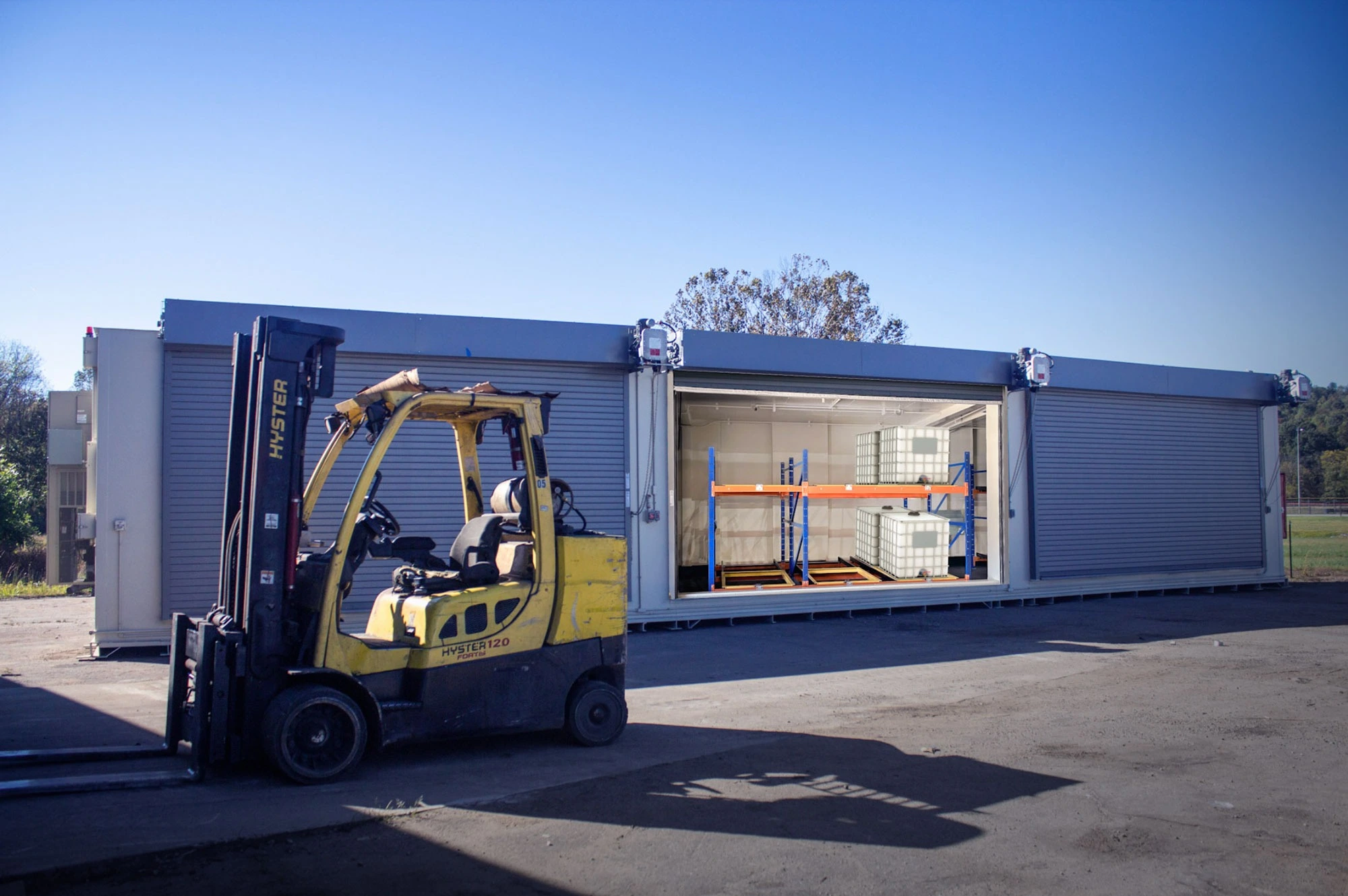
For larger or mixed hazmat operations, indoor cabinets may not be enough. Outdoor chemical storage buildings, lockers, containment buildings, and specialized hazmat storage systems may be more appropriate, depending on quantity and site conditions.
US Hazmat Storage helps organizations think through these decisions in the context of broader hazardous chemical storage requirements, so the final system supports compliance, safety, and long-term structural protection.
Protect the Storage System Before the Storage System Fails
Corrosives rarely give businesses a generous warning. A container can look stable until the shelf below it is stained. A cabinet can look acceptable until the floor pan is already damaged. A storage area can seem organized until a leak exposes incompatible chemicals nearby.
That is why corrosive chemical storage should be treated as an active safety system, not a fixed corner of the facility. The right plan starts with the inventory, continues through compatibility review, depends on secondary containment, and stays reliable through inspections, employee training, and equipment designed for the chemicals on site.
At US Hazmat Storage, we believe chemical storage should protect more than the contents of a container. It should protect workers, infrastructure, the environment, and the future of the operation. If your facility stores acids, bases, or other corrosive materials, now is the right time to review your setup before structural damage becomes the warning sign.
FAQ
What is corrosive chemical storage?
It is the safe organization, containment, and segregation of acids, bases, and other corrosive materials to prevent exposure, reactions, and damage.
Why does secondary containment matter for corrosives?
It helps control leaks before they spread to floors, shelves, drains, equipment, or incompatible chemicals.
Can acids and bases be stored together?
They should be segregated unless a qualified compatibility review confirms safe separation through proper containment and storage design.
What should a chemical compatibility chart show?
It should help identify which chemicals can share storage and which need separation based on hazard and reaction risk.
How often should corrosive storage areas be inspected?
Inspection frequency depends on risk, volume, and policy, but regular documented checks help catch leaks and structural damage early.
Where can I learn more about hazardous chemical storage requirements?
US Hazmat Storage provides guidance on hazardous chemical storage requirements and compliant storage solutions for many facility types.