
Fire suppression systems are one of the most important safety layers inside hazmat buildings because chemical storage fires rarely behave like ordinary workplace fires. A small ignition source near flammable liquids, solvents, aerosols, coatings, fuels, or volatile materials can escalate quickly if the building is not designed to contain heat, control vapor risk, support evacuation, and help emergency responders act safely.
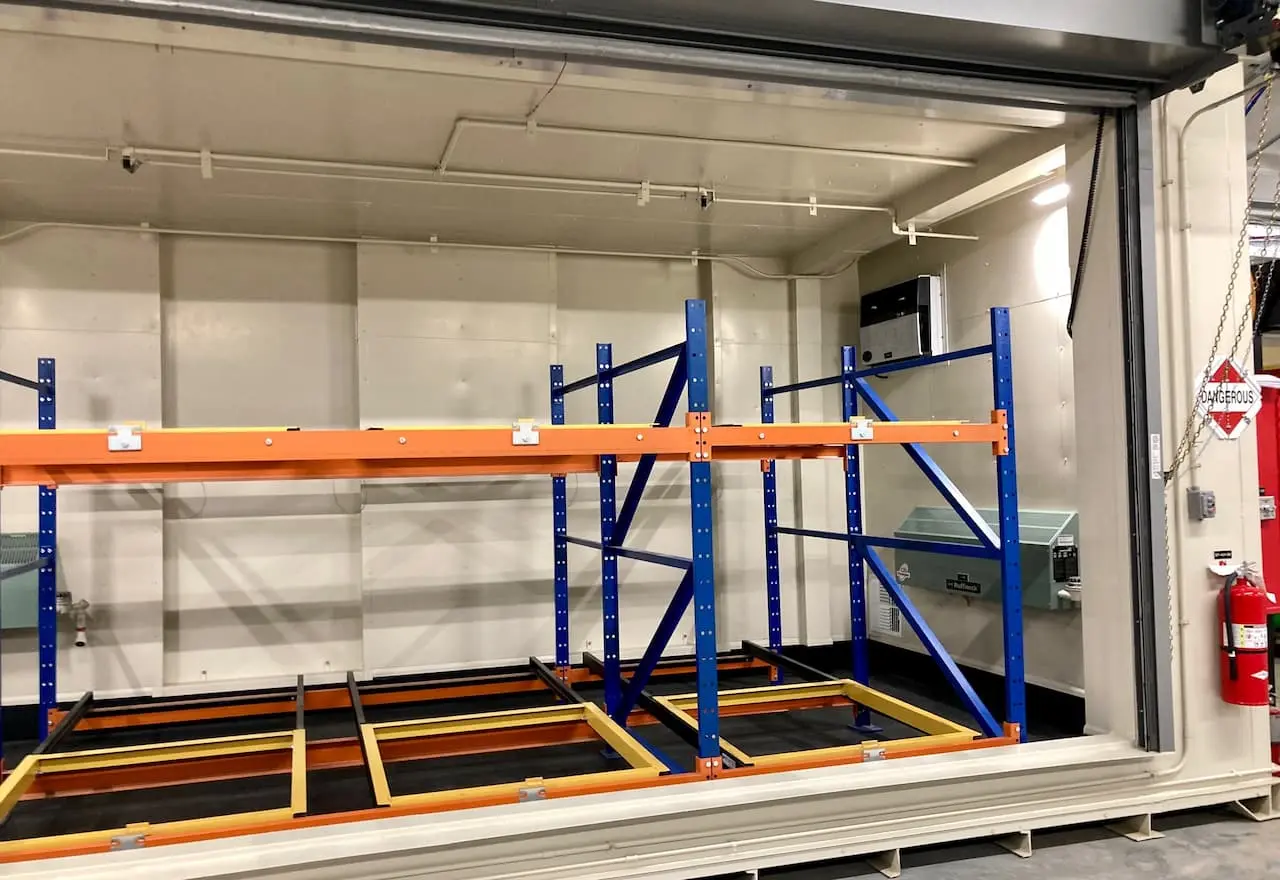
A hazmat building should never be treated like a basic storage shed with warning labels. The walls, doors, roof, ventilation, containment, electrical components, separation distances, access points, signage, and suppression strategy all need to work together. When those systems are coordinated, the building does more than store chemicals. It helps reduce the chance that one incident becomes a facility-wide emergency.
At US Hazmat Storage, we see fire protection as part of the building’s core design, not an add-on after the fact. A properly selected storage solution should protect workers, slow fire spread, support compliance, reduce property loss, and give teams more time to respond when every second matters.
Why Fire Suppression Systems Matter Before an Emergency Starts
Fire suppression systems matter because hazardous material fires can involve more than visible flame. They can involve vapors, pressure buildup, container failure, heat exposure, toxic smoke, contaminated runoff, and rapid fire spread to nearby inventory or operations.
OSHA’s flammable liquids standard recognizes fire protection systems for certain storage rooms, including sprinkler, water spray, carbon dioxide, or another approved system. OSHA also connects flammable liquid storage with room construction, ventilation, electrical safety, and fire-control expectations, which shows why suppression should be reviewed as part of the full storage environment.
That is why a hazmat building needs more than a portable extinguisher nearby. Extinguishers matter for early manual response, but they are not a complete fire protection strategy for higher-risk chemical storage. A dedicated suppression system can act sooner, reduce heat development, and help limit escalation before the fire spreads beyond the storage area.
For facility managers, this changes the planning question. The issue is not only “Do we have fire extinguishers?” The stronger question is “Does the building itself support fire control, evacuation, containment, and emergency response?”
Fire-Rated Chemical Storage Buildings Need Coordinated Protection
Fire-rated construction and fire suppression systems are related, but they do not do the same job. Fire-rated walls, doors, ceilings, and structural assemblies help resist fire spread for a defined period. Suppression systems actively help control or reduce the fire event.
In a chemical storage context, both layers matter. A fire-rated building can help separate hazardous materials from the surrounding facility. A suppression system can help reduce the heat and flame conditions inside that protected area. Together, they create a stronger safety envelope than either feature could provide alone.
A properly planned hazmat building should evaluate:
- Stored chemical type and hazard class
- Total quantity and container size
- Flammable or combustible liquid classification
- Fire-rated wall, roof, and door assemblies
- Ventilation and vapor management
- Electrical classification
- Secondary containment
- Suppression system type
- Emergency access and signage
- Local authority and insurance requirements
NFPA 30 provides safeguards intended to reduce hazards associated with the storage, handling, and use of flammable and combustible liquids, which makes it highly relevant when planning fire-rated hazmat buildings.
How Fire Suppression Systems Reduce Escalation Risk
A chemical storage fire becomes more dangerous when heat transfers to nearby containers. Drums, cans, totes, and process chemicals may begin reacting to heat before flames ever reach them directly. That can increase vapor release, pressure, leak risk, and the chance of fire spread.
Fire suppression systems help interrupt that escalation. Depending on the hazard and system design, they may cool the fire area, control flame spread, reduce available heat, or apply an agent suited to the stored materials. The correct system depends on what is inside the building, how much is stored, how containers are arranged, and what the local authority having jurisdiction requires.
In real operations, suppression supports life safety by helping with:
- Faster fire control
- Reduced heat exposure to containers
- Safer evacuation windows
- Better protection for emergency responders
- Lower risk of fire spreading beyond the storage building
- Reduced damage to structural components
- Improved protection for adjacent assets
This does not make chemical storage risk-free. No equipment can do that. It means the facility is not relying only on luck, distance, or manual reaction.
A well-designed hazmat building gives the fire less room to grow.
Common Fire Suppression Systems Used in Hazmat Buildings
Different storage hazards call for different suppression methods. A facility storing flammable liquids may need a different approach than one storing corrosives, oxidizers, aerosols, or mixed hazardous materials.
| Suppression Type | Common Application | Planning Consideration |
| Automatic sprinkler system | General fire control in many storage environments | Must be designed for the hazard and storage arrangement |
| Water spray system | Cooling containers and limiting fire spread | Useful where heat exposure to drums or tanks is a concern |
| Foam system | Certain flammable liquid hazards | Requires correct foam type and design basis |
| Carbon dioxide system | Specific enclosed hazards | Requires strict life-safety review due to oxygen displacement |
| Dry chemical system | Localized high-risk areas or equipment | Often used for rapid knockdown in defined hazards |
| Clean agent system | Sensitive equipment spaces | Not always appropriate for bulk chemical storage |
OSHA identifies sprinkler, water spray, carbon dioxide, or another system as fire protection options in certain flammable liquid storage room contexts. The correct choice still depends on the actual materials, building layout, and approved engineering design.
The key is fit. A suppression system should never be chosen only because it is available, familiar, or inexpensive. It has to match the chemical hazard.
Fire Suppression Systems and NFPA 30 Compliance Work Together
NFPA 30 compliance begins before the building is selected. It begins with the inventory. The stored liquid class, flash point, container type, storage volume, dispensing activity, and building arrangement all affect the fire protection approach.
This is where many facilities get into trouble. They choose a storage room, cabinet, or outdoor building first, then try to make the chemicals fit later. That order creates risk. A safer process starts with the stored materials and works outward toward the building design.
A practical pre-design review should answer:
- What chemicals are stored?
- Are they flammable, combustible, corrosive, oxidizing, toxic, or reactive?
- What do the Safety Data Sheets say?
- How many gallons are stored at maximum inventory?
- Are materials stored in cans, drums, totes, or tanks?
- Are liquids dispensed inside the building?
- Are incompatible materials separated?
- Does the site require indoor or outdoor placement?
- What does the fire authority require?
OSHA’s flammable liquid rules also address electrical equipment for inside storage rooms, including requirements tied to Class I, Division 2 hazardous locations for certain flammable liquid categories.
That matters because fire suppression is only one piece of the system. If ventilation, electrical classification, fire separation, and containment are wrong, suppression may be forced to operate inside a weak storage design.
Structural Integrity Depends on More Than Steel
A hazmat building needs to remain stable during a fire event long enough to protect people, contain hazards, and support response. Fire-rated panels, doors, and structural assemblies help, but suppression helps reduce the thermal load placed on those components.
When a fire grows unchecked, heat can weaken building materials, damage containers, increase vapor release, and spread to adjacent storage areas. Suppression can help reduce that intensity and buy critical time.
This is especially important for facilities storing:
- Solvents
- Fuels
- Paints and coatings
- Flammable cleaners
- Industrial chemicals
- Drum inventories
- Aerosol products
- Combustible liquids
- Maintenance chemicals
The goal is not only to protect the chemical inventory. The goal is to prevent the building itself from becoming part of the emergency. Strong structural design and coordinated suppression help keep the hazard contained where the facility planned for it.
That is why hazardous material storage buildings should be evaluated by how they perform under stress, not only by how much they can hold.
Fire Suppression Systems Need the Right Storage Layout
A suppression system cannot fix a poorly organized storage building. If drums block aisles, stored materials sit too high, incompatible chemicals share containment zones, or workers cannot access shutoff points, the building becomes harder to protect.
Fire protection depends on layout. Suppression discharge needs a clear path. Responders need access. Workers need evacuation routes. Inspectors need to see labels, containers, containment, and equipment without moving half the inventory.
A safer hazmat building layout should support:
- Clear aisle space
- Accessible doors and exits
- Visible labels
- Separated incompatible materials
- Defined drum or container zones
- Unblocked suppression components
- Spill kit access
- Fire extinguisher access
- Emergency signage
- Inspection pathways
OSHA’s flammable liquid standard includes requirements around fire control, storage rooms, ventilation, electrical equipment, and management of ignition hazards. These requirements show why storage design should be handled as a complete safety system rather than a simple space-planning exercise.
A building should make safe operation easier. If the storage design makes routine work awkward, emergency conditions will be even harder.
Containment Still Matters During Fire Suppression
Fire suppression often introduces water, foam, or another agent into the storage area. That means containment must account not only for chemical spills, but also for suppression discharge and possible contaminated runoff.
This is one of the most overlooked parts of hazmat building design. A fire may be controlled, but if runoff escapes the storage area, the facility may face environmental exposure, cleanup costs, and secondary damage.
A well-designed storage building may include:
- Leak-tight sump
- Liquid-tight floor
- Raised sill or containment curb
- Chemical-resistant coating
- Controlled drainage
- Spill pallets or containment decks
- Emergency response access
- Cleanup planning
OSHA requires certain inside storage rooms to be liquid-tight where the walls join the floor, and the standard addresses raised sills, depressed floors, and emergency drainage under specific storage conditions.
This is where engineered storage buildings outperform improvised solutions. A general-purpose shed may hold containers. A compliant hazmat building helps control what happens when containers leak, fire protection activates, or emergency response begins.
Inspection and Maintenance Keep Fire Suppression Systems Ready
A suppression system only protects the facility if it works when needed. That makes inspection, testing, and maintenance part of the life-safety program.
Facilities should not treat suppression as a one-time installation. Sprinkler heads can become obstructed. Valves can be closed. Components can corrode. Agent cylinders can lose pressure. Detection devices can fail. Changes in stored inventory can make the original design less appropriate.
A responsible maintenance program should include:
- Scheduled inspection by qualified professionals
- Testing records
- Valve and control checks
- Review of sprinkler or nozzle obstruction
- Alarm interface checks
- Inspection after building modifications
- Review after inventory changes
- Documentation for audits and insurance reviews
Fire protection systems are designed around specific assumptions. If the building begins storing different chemicals, larger volumes, new containers, or different storage heights, the suppression strategy should be reviewed.
The system should match the hazard as it exists today, not the hazard that existed when the building was first installed.
Common Mistakes Facilities Make With Fire Protection
Many fire protection failures begin with a reasonable assumption that was never checked. A facility believes the building is “fire-rated,” so it assumes suppression is handled. Another facility installs sprinklers, then stores materials that require a different review. Another keeps adding drums until the original protection design no longer fits the actual inventory.
Common mistakes include:
- Treating extinguishers as a full suppression plan
- Choosing non-rated storage for flammable liquids
- Installing suppression without reviewing chemical compatibility
- Forgetting containment for suppression runoff
- Blocking sprinkler heads or discharge paths
- Mixing incompatible materials
- Ignoring electrical classification
- Failing to update protection after inventory changes
- Skipping fire marshal or AHJ review
- Buying storage buildings based only on size and price
These mistakes are preventable. They usually happen because the building is treated as a container instead of a safety system.
A better approach is to select storage based on the material, volume, risk, code expectations, and emergency response needs.
How US Hazmat Storage Supports Safer Fire-Rated Buildings
At US Hazmat Storage, we help facilities select and configure chemical storage buildings around real hazards. That includes fire-rated construction, fire protection planning, containment, ventilation, signage, and safe operational access.
Our fire-rated chemical storage buildings are designed for facilities that need more than basic chemical storage. They support operations handling flammable liquids, combustible liquids, solvents, coatings, fuels, and other regulated materials where compliance and worker protection matter.
We help teams evaluate:
- Stored material classifications
- Fire-rated construction needs
- Suppression compatibility
- Secondary containment
- Ventilation and vapor control
- Drum, tote, or container volumes
- Electrical requirements
- Access and workflow
- Local authority expectations
- Inspection readiness
The right storage building should make the facility easier to manage. It should reduce uncertainty, improve compliance posture, support emergency response, and protect the people who work around hazardous materials every day.
Build Fire Protection Into the Storage Decision Early
Fire protection should not be added after the building is already selected. It should guide the selection from the start.
The stored materials, quantities, container sizes, site layout, fire exposure, ventilation, containment, and emergency access all affect whether a hazmat building is truly appropriate. Fire suppression systems can help save lives, but they perform best when the entire storage environment is designed around the same life-safety goal.
At US Hazmat Storage, we build chemical storage solutions for real industrial conditions. If your facility stores flammable liquids, fuels, solvents, paints, coatings, or other hazardous materials, now is the time to review whether your building has the right fire-rated construction and fire protection strategy.
Explore our fire-rated chemical storage buildings to find a safer, more compliant way to protect your people, your facility, and your operation.
FAQ
What are fire suppression systems?
Fire suppression systems are engineered systems that help control, reduce, or extinguish fires using water, foam, dry chemical, carbon dioxide, or other approved agents.
Do all hazmat buildings need fire suppression?
Not always. Requirements depend on stored materials, quantities, building design, local code, fire authority review, and hazard classification.
What is the difference between fire-rated construction and suppression?
Fire-rated construction helps resist fire spread. Suppression actively helps control or reduce a fire event.
Why does NFPA 30 compliance matter?
NFPA 30 addresses safeguards for flammable and combustible liquid storage, handling, and use, which can affect hazmat building design.
Can fire extinguishers replace fire suppression systems?
No. Extinguishers support early manual response, but they do not replace engineered suppression for higher-risk storage buildings.
How does US Hazmat Storage help with fire-rated buildings?
US Hazmat Storage helps facilities evaluate chemical inventory, fire-rated construction, containment, ventilation, and storage building requirements.