
Industrial operations, manufacturing plants, laboratories, and chemical processing facilities generate hazardous byproducts daily. Under Environmental Protection Agency (EPA) standards, establishing a compliant Satellite Accumulation Area (SAA) allows facilities to temporarily store toxic, corrosive, or ignitable waste at or near the point of generation without triggering expensive 90-day or 180-day hazardous waste storage permit mandates.
Using heavy-duty steel containment units and dedicated hazmat lockers for your Satellite Accumulation Area ensures worker protection, prevents environmental leaks, and safeguards your facility against severe EPA and OSHA fines.
Worried About Hazardous Waste Impacting the Work Area? We Have you Covered! U.S Hazmat’s Satellite Accumulation Area Hazardous Waste Lockers Allow Companies to Store or Accumulate Hazardous Waste For More Than 90 or 180 Days Without Needing a Dangerous Waste Storage Permit!
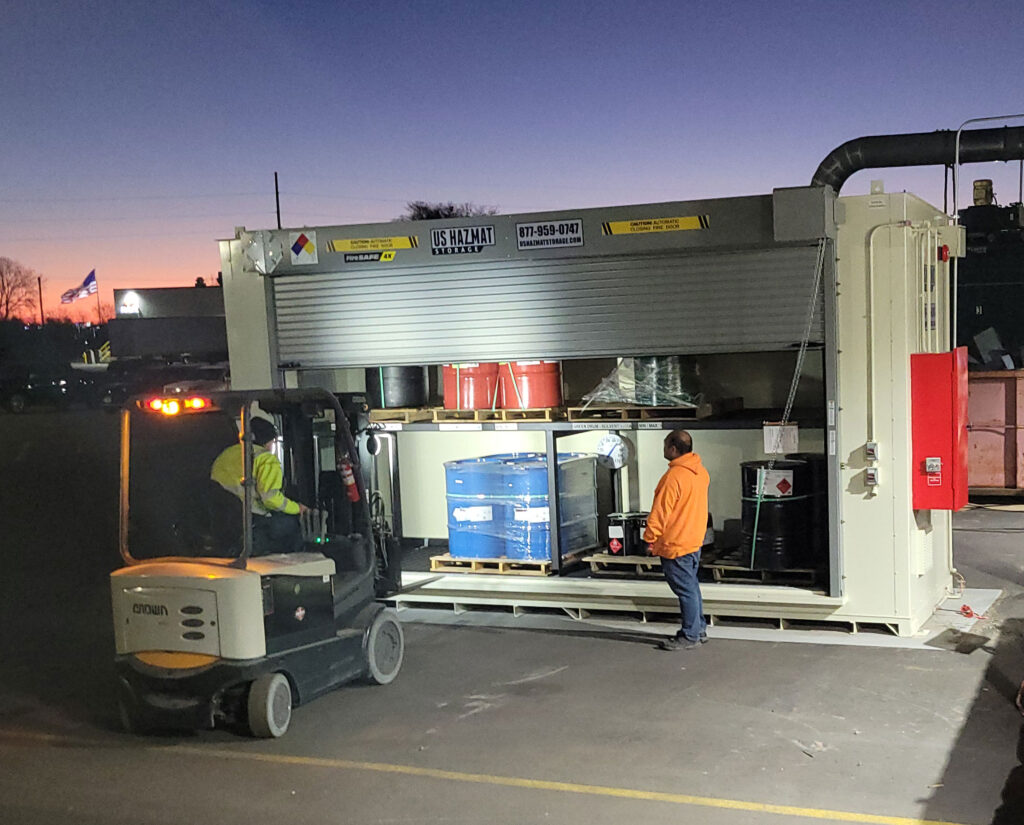
Spill Containment for Hazardous Waste Generation and Satellite Accumulation Areas
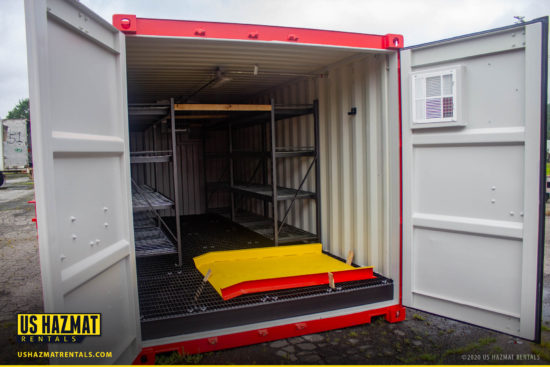
Although an SAA could consist of delineated storage as small as a shelf, cabinet, drum, or tote, hazardous waste generation necessitates more significant storage receptacles for continuous onsite protection. Our hazardous waste storage lockers are a prudent and cost-effective satellite accumulation storage area for generating and storing waste. Moreover, they can safely accommodate all-sized waste stockpiles, encouraging streamlined disposal practices and vigilance through designated custodial responsibility. An innovative spill sump containment system is affixed to each hazmat Conex conversion box’s bottom, allowing for continuous onsite protection from environmental contamination. Escaping or leaking toxic chemicals from drums or totes will safely fall through steel-grated flooring into a steel sump with a high-density 20-mil thick Polyethylene liner. Our engineers design each sump to meet or exceed a sufficient capacity to contain 10 percent of the total volume of stored hazardous waste. Spilled hazardous waste from breached or compromised drums will safely fall through the steel-grated flooring into the sump before safe extraction from designated hazmat personnel.
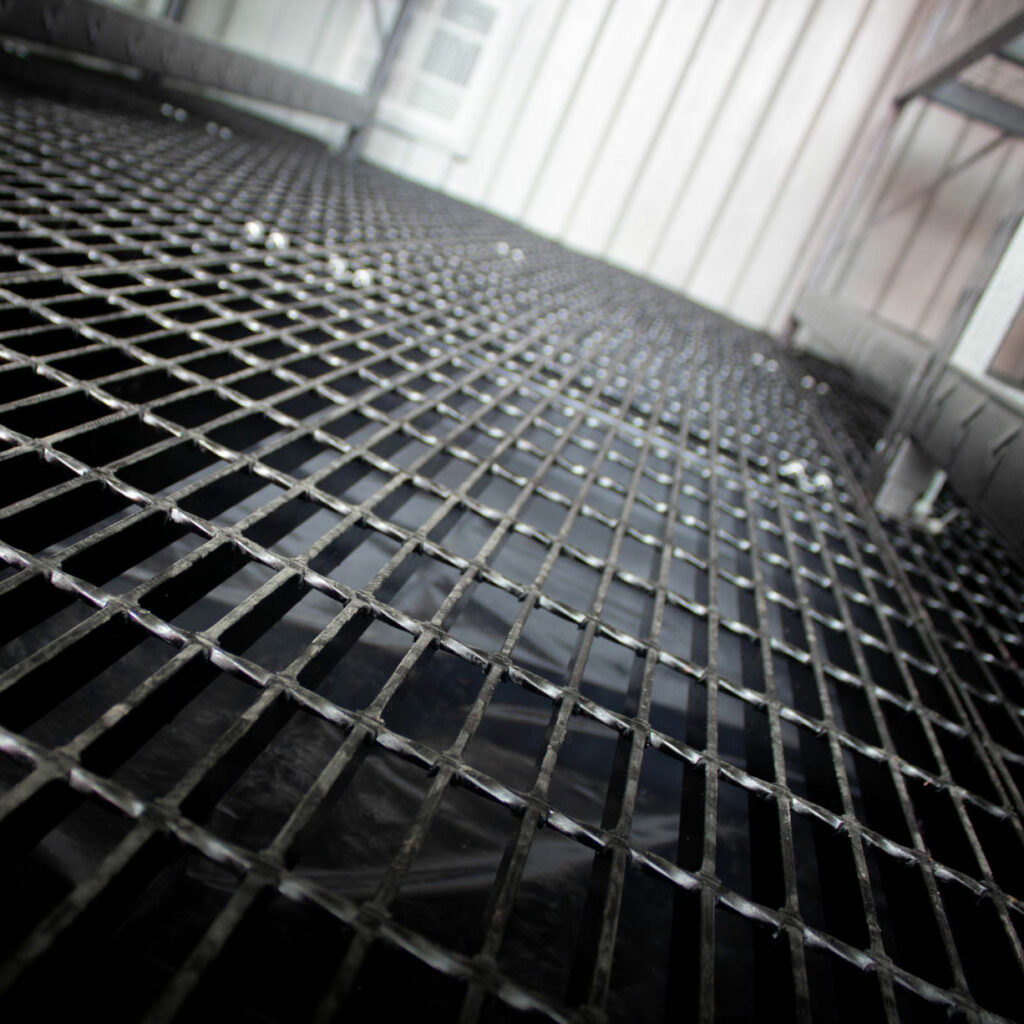
Meeting OSHA and EPA Regulations
Although no industrial facility is impervious to state and federal regulations controlling hazardous waste generation and disposal, our venerable, streamlined conversion boxes mitigate the more extreme and extenuating dangerous circumstances, including fire, pollution, exposure, and toxic inhalation. Moreover, our hazardous waste conversion boxes meet all EPA and OSHA waste disposal and storage regulations. So, what are the standard regulations overseeing hazardous waste generation and disposal? Firstly, EPA Part 261 covers identifying and listing hazardous waste chemicals. Each designated employee responsible for hazmat waste generation should know about this standard. This guiding principle will dictate each stage of storage and disposal, engendering continuous onsite protection. Consult each hazardous material’s appropriate Material Safety Data Sheet for each chemical’s unique hazards, physical and chemical properties, federally compliant storage practices, and emergency response for dangerous spills. EPA Part 263 defines standards for owners and operators of hazardous waste treatment, storage, and disposal.
Satellite Accumulation Storage Areas
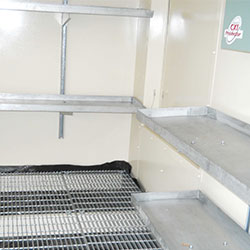
Hazardous waste storage is like real estate in a volatile, parallel industrial universe. Location is everything. Hazardous waste should be stored in designated satellite accumulation areas, away from industrial operations and heavy machinery. However, inventory managers must consider the byproduct’s chemical properties and quantities before choosing the correct hazardous waste storage locker. Practitioners should always store hazardous waste generation in airtight containers with a secured lid while not serviced. No drum container must exceed 55 gallons of hazardous waste, as larger receptacles and baseline quantities should be moved to an offsite central accumulation area. Designated custodians and employees must always label each hazardous waste generation container with the appropriate chemical label and legible writing.
Our Satellite Accumulation Areas and Hazardous Waste Storage Lockers Provide Convenient, Turnkey Protection for Hazardous Waste Without Interrupting Workflows. They Meet all OSHA Criteria and EPA Standards for Onsite Hazardous Waste Storage.
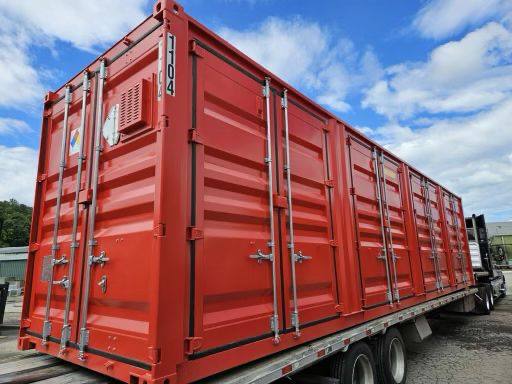
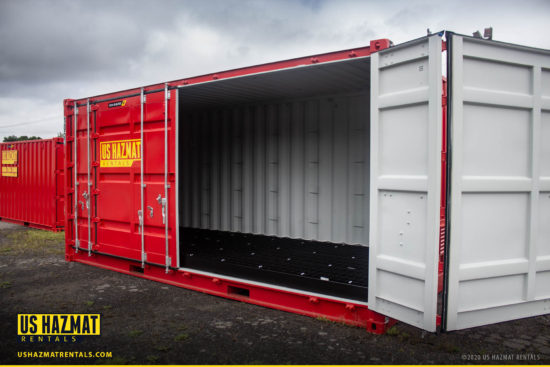
Our hazardous waste storage boxes are large shipping container boxes with emboldened safety features for maximum onsite protection. Each locker comprises superior steel sheet paneling and airtight secured welds, providing maximum onsite protection of hazardous waste in designated satellite accumulation areas. Optional fire suppression in our satellite accumulation area warehouses offers additional protection for volatile hazardous waste residuals containing flammable or inert substances. When dealing with dubious waste of unknown origin, hazmat handlers should always err on the side of caution while storing ambiguous mixtures in appropriate receptacles. Each U.S. Hazmat satellite accumulation area storage locker is customized to fit your needs and workflow. Moreover, our SAA containment options can complement onsite safety protocols adhering to OSHA Standard 29 CFR 1910.120 for storing hazardous waste.
Do’s and Don’ts of Hazardous Waste Storage
Employees and inventory specialists must never store hazardous waste containers with incompatible materials. A hazardous waste generator can be any person producing, storing, and handling hazardous waste or work process producing toxic waste. Designated hazardous waste generators or handlers should maintain occupancy of the waste in satellite accumulation areas or work platforms while employees are storing waste or the container is opened. All hazardous waste containers must meet all criteria of 40 CFR 265, Subparts AA, BB, and CC for hazardous waste generation and storage. SAA’s storing flammable or ignitable dangerous waste should be stored at a minimum of 50 feet from the facility’s property line. Our hazmat conversion box storage lockers are a logical solution to common storage dilemmas necessitating a satellite accumulation area.
Frequently Asked Questions About Satellite Accumulation Areas
What is the 55-gallon rule for a Satellite Accumulation Area?
Under EPA 40 CFR 262.15, a facility may accumulate up to 55 gallons of non-acute hazardous waste (or 1 quart of acute hazardous waste) at a Satellite Accumulation Area. Once this limit is reached, excess waste must be transferred to a Central Accumulation Area within 3 days.
Do Satellite Accumulation Areas require 90-day EPA hazardous waste permits?
No. As long as a facility complies with SAA rules (volume caps, labeling, closed containers, operator control), the stored waste is exempt from 90-day or 180-day storage permit limits until moved to a central accumulation site.
Must a Satellite Accumulation Area be located outdoors?
Not necessarily. SAAs can be located indoors or outdoors at or near the point of waste generation. However, if the waste is ignitable or reactive, outdoor placement at least 50 feet from property lines—or placement in a 2-hour or 4-hour fire-rated building—is required.
Secure Your Facility with EPA-Compliant SAA Storage Lockers
Mitigate environmental risks, ensure total EPA and OSHA compliance, and streamline hazardous waste workflows. Request a free quote for custom SAA lockers or speak directly with our engineering team:
- Direct Support Line: Call our hazmat storage specialists today at (800) 555-0199
- Online Quote Request: Submit your facility specs for custom turn-key pricing
- Nationwide Shipping: On-site delivery and installation available across the United States.