hazmat storage · custom-engineered storage
Hazmat Storage quotes Sized to Your Inventory
When someone searches for hazmat storage, they usually have a specific problem: an audit finding, a new process chemical, or more drums than the existing cabinet room can take. We start from that problem. A sales engineer asks what is stored, in what containers and how much,.
- Hazmat storage buildings, custom-engineered
- EPA secondary containment
- Integrated with plant workflows
Prefer to talk? 877-959-0747
How we specify hazmat storage
Hazmat storage for the inventory you have today
When someone searches for hazmat storage, they usually have a specific problem: an audit finding, a new process chemical, or more drums than the existing cabinet room can take.
Matching storage to the hazard class
Corrosives get a sump liner and acid-resistant shelving.
quote now, decide on ownership later
quoting gets compliant hazmat storage on site in days, which matters when an inspection date is fixed.
Custom design and integration
hazmat storage storage
Hazmat storage for the inventory you have today
When someone searches for hazmat storage, they usually have a specific problem: an audit finding, a new process chemical, or more drums than the existing cabinet room can take. We start from that problem. A sales engineer asks what is stored, in what containers and how much, then matches a building or locker from the storage fleet. The result is one secure, contained place outside the production space, sized to current inventory with a little headroom rather than a guess at the largest unit available.
Matching storage to the hazard class
Corrosives get a sump liner and acid-resistant shelving. Flammable liquids get explosion-proof electrical, explosion relief and mechanical exhaust. Toxics get dedicated fume exhaust. Temperature-sensitive products get heating or air conditioning. Mixed inventories can be split with internal walls or across two units. Every storage includes a spill containment sump under the floor grating, and fire suppression with UL listed components can be added in wet or dry form where your AHJ or insurer asks for it. Dedicated bays keep oxidizers well apart from organics and fuels.
quote now, decide on ownership later
quoting gets compliant hazmat storage on site in days, which matters when an inspection date is fixed. Terms can be short or long, and units are also available for sale if you prefer to own. Our engineers help with placement and supply drawings for permitting. When an inspection date is set, tell us at the first call so we can recommend in-stock options. Our engineers help place the unit, supply drawings for permitting, and coordinate delivery around your schedule. If the storage becomes long-term, conversion to purchase is straightforward.
Starting from the inventory you actually have
Hazmat storage planning should begin with a current count rather than an estimate from purchasing records. Walk every area where regulated materials are kept and list each product, its hazard class, container type and quantity. Include materials in production areas, maintenance shops, labs and outdoor yards. This inventory shows what is stored where, which areas exceed allowable quantities and which products are incompatible with their neighbors. It also highlights obsolete stock that can be disposed of rather than moved. With an accurate list, sizing becomes straightforward and the storage plan matches reality instead of assumptions.
Grouping materials by hazard class
Flammable liquids, corrosive acids and bases, oxidizers, toxics, compressed gases and water-reactive materials each carry different storage requirements, and some must be separated from each other. Grouping the inventory by class reveals how many separate spaces are needed. Compatible groups can share a building with separate bays and sumps; strongly incompatible groups, such as oxidizers and flammables, may need separate units. Safety data sheets list incompatibilities, and your AHJ confirms the final arrangement. This step prevents the most serious storage risk: incompatible chemicals reacting in a spill.
Choosing the storage format
Once groups and quantities are known, the format follows. Small quantities of a few products fit lockers. Larger quantities or many small containers suit walk-in buildings. Temperature-sensitive products need climate control. Storage close to other buildings may need fire-rated construction. Some sites end up with a combination: a walk-in building for general hazmat and a separate locker for oxidizers. We recommend formats based on your inventory and site plan.
Thinking about how storage is used daily
Good hazmat storage fits how people work. Consider how often materials are pulled, who pulls them and how far they travel. Storage too far from the point of use leads to stockpiles indoors. Storage that is hard to open or poorly lit leads to shortcuts. Place units near users, provide good lighting and organize shelves so common items are easy to reach. These practical details keep the storage plan working long after installation.
quote now, decide later
If the right long-term configuration is unclear, quoting lets you start with compliant storage today and adjust as you learn. After a few months of use, you will know whether the size, options and location are right. You can then buy the unit, swap it or add another. This approach avoids committing capital to a configuration that may not fit.
Prefabricated hazmat storage: weeks, not a capital construction project
Prefabricated construction is how US Hazmat Storage delivers hazmat storage in weeks, not the months or years of traditional hazard-storage design and construction. Each building is custom designed, engineered, and manufactured to the client's material storage requirements, facility integration, and process workflow. Planning, permitting, and approval move with a purpose-fabricated package. The benefits of working with us are cost, speed, and experience. Contact us at 877-959-0747 to learn how a process workflow compliant unit fits the plant you already run.
Class I/II/III classified areas and UL listed components for hazmat storage
US Hazmat Storage specifies hazmat storage for Class I, Class II, and Class III classified areas when the inventory requires that occupancy. Lighting, sensing, gauges, heat, air conditioning, and fire suppression can all be furnished as UL listed components. Explosion-proof electrical is laid out to the classified area. We do not call the building itself UL listed — the listed devices go into a custom-engineered enclosure designed to help meet NFPA, EPA, OSHA, and IFC storage compliance for those classified areas. Name the liquids and the area classification in the quote so the component package matches the process.
Describe your inventory and get a hazmat storage quote sized to it.
The building
How the unit is specified
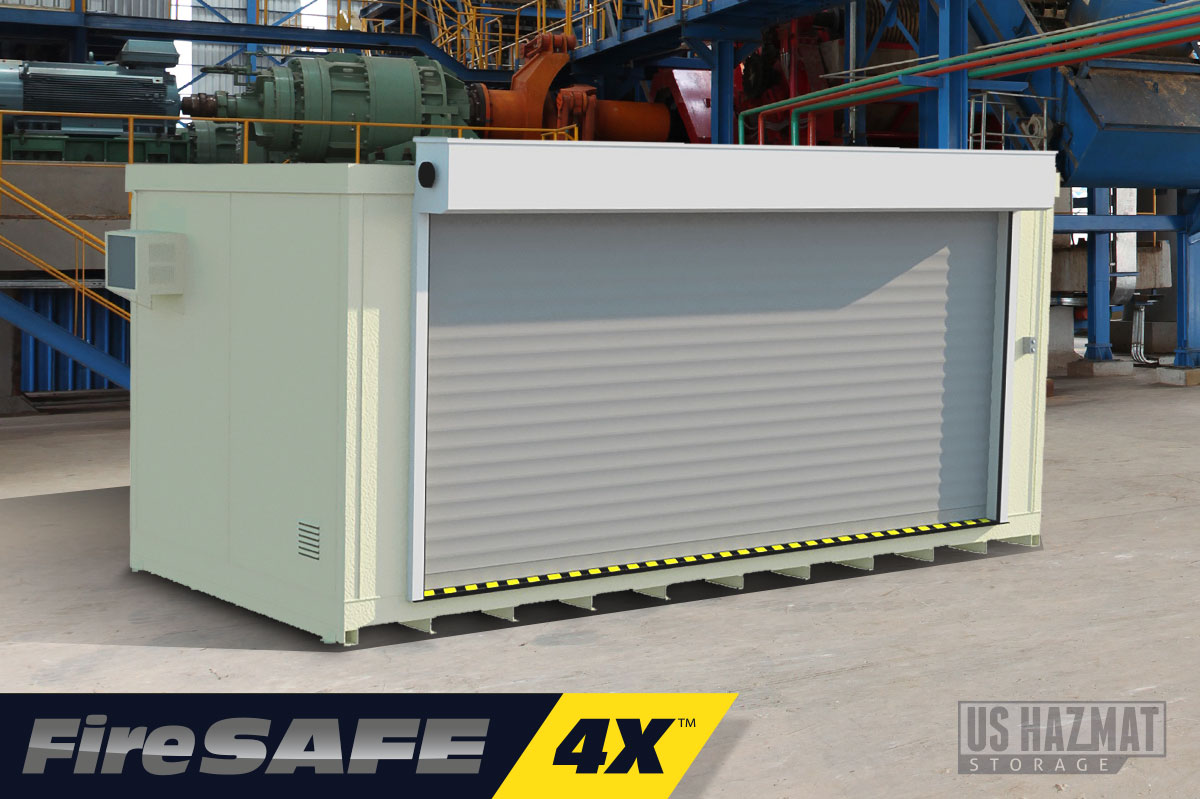
Every building is designed around how you handle the load and what the site requires. Small-container shelving, 55-gal drums, palletized material, or totes — then fire-rated walls, climate control, and fire suppression if you need them. Secondary spill containment is in every building.


Building options
Every building includes EPA secondary spill containment under the load.
Material handling
Designed to suit the client: shelving, drums, pallets, or totes. Fits any building above.
- Small container shelving
- 55-gal drums
- Palletized loads
- Totes / IBCs
- Pails and buckets
Materials stored
Any of these can go in any building. Name anything else in the quote.
- Chemical
- Flammable liquid
- Combustible liquid
- Toxin
- Battery
- Paints and coatings
- Flavorant
Before you request a quote
Questions about this hazmat storage
What counts as hazmat storage?
Any dedicated, contained storage for regulated materials such as flammables, corrosives, oxidizers or toxics.
Can you store several hazard classes together?
Incompatible classes are separated by walls or separate units; we plan that with you.
How fast can a unit arrive?
In-stock units can ship within days with rush processing, depending on configuration and location.
Where do I start with hazmat storage?
Start with an inventory count by hazard class; it drives sizing and format.
Can different hazard classes share one unit?
Compatible ones can, with separate bays; strong incompatibles usually need separate units.
Can I request a quote for before buying?
Yes, many customers quote first and buy once needs are clear.
Do you help with the inventory count?
We provide a simple template and review your completed list to recommend the right storage format and size.
Do you sell or quote hazmat storage?
Both. Buildings, lockers and containers are available to quote, quote-to-own or buy.
Do you sell the hazmat storage containers themselves?
No. We design and sell the storage building or locker around containers you already use. We do not sell drums, totes, tanks, or cylinders.
Can you match hazmat storage to our plant workflow?
Yes. Layout starts from your chemical list, container counts, forklift or pallet path, and how operators load the unit. We custom engineer the building to that process.
What do you need for a quote?
Name, work email, phone, company, the materials, a working container count, and any AHJ, setback, or fire-rating notes. Call 877-959-0747.
Is a hazmat storage unit custom-engineered?
Yes. Each building is purpose-designed, fabricated, and sold for permanent storage compliance. Prefabricated construction is planned in weeks, not a years-long site-built room.
Can lighting, HVAC, and fire suppression be UL listed?
Yes. Lighting, sensing, gauges, heat, air conditioning, and fire suppression can all be furnished as UL listed components. We do not call the building itself UL listed.
Do you meet Class I, II, and III classified area storage?
Yes. Buildings are designed for storage compliance in Class I, Class II, and Class III classified areas when the inventory requires that occupancy.