
55 gallon drum storage becomes more complex when volatile chemicals are involved. A drum may look stable from the outside, but temperature swings can change what is happening inside the container and around the storage area. Vapors can build. Pressure can increase. Labels can degrade. Corrosion can accelerate. A storage space that seems organized can still create risk if the environment is not controlled.
For facilities handling solvents, flammable liquids, coatings, adhesives, industrial cleaners, or other volatile materials, climate control is not just a comfort feature. It supports safer storage, more consistent inspection, better vapor management, and stronger compliance readiness. OSHA’s flammable liquids standard requires ventilation in rooms, buildings, or enclosures where certain flammable liquids are pumped or dispensed, and it notes that ventilation design must account for the relatively high specific gravity of vapors.
At US Hazmat Storage, 55 gallon drum storage is treated as an engineered system. The drum, storage building, sump, ventilation, temperature control, fire rating, signage, access control, and inspection plan all need to support the chemical risk, not just the storage volume.
55 Gallon Drum Storage Changes When Chemicals Are Volatile
Volatile chemicals deserve closer attention because they can release vapors more readily than lower-volatility materials. Those vapors can create inhalation, ignition, pressure, and compliance concerns depending on the chemical, container condition, room design, and handling practices.
That is why 55 gallon drum storage should begin with the Safety Data Sheet, not with the drum count alone. The SDS helps identify storage temperature guidance, flash point, vapor hazards, incompatibilities, personal protective equipment, ventilation needs, and emergency response measures. OSHA’s flammable liquids framework applies to handling, storage, and use of flammable liquids, and it includes detailed requirements for container storage, ventilation, transfer, and dispensing.
A drum storage area may need climate control when the chemicals are sensitive to heat, cold, sunlight, humidity, or vapor accumulation. Without that control, the facility may be relying too heavily on the drum itself to manage risks that should be addressed by the storage environment.
Climate Control Is About Stability, Not Just Cooling
Many teams hear “climate control” and think only of air conditioning. For volatile chemical storage, the goal is broader. The storage environment should reduce extreme temperature swings, limit heat buildup, support ventilation, protect container integrity, and keep storage conditions closer to what the chemical manufacturer requires.
Climate controlled chemical storage may support:
- More stable internal drum conditions
- Better control of heat exposure
- Reduced vapor accumulation when paired with proper ventilation
- Protection for labels, seals, and closures
- Better conditions for routine inspections
- Reduced stress on containers caused by environmental extremes
- More predictable storage for temperature-sensitive materials
Climate control does not replace code review, proper containers, compatible materials, or fire-rated design. It strengthens the storage system by reducing environmental stress that can make volatile chemicals harder to manage.
Temperature Swings Can Stress Drums and Storage Areas
A 55-gallon drum is a large container. When temperatures rise and fall, the contents and the headspace inside the drum can respond. That matters most when the stored material is volatile, flammable, reactive, or sensitive to degradation.
Temperature swings can contribute to practical problems such as:
- Drum expansion and contraction
- Increased vapor pressure
- Weakened seals or closures
- Condensation in certain storage conditions
- Label damage or illegibility
- Corrosion or container deterioration
- More noticeable vapor odors near storage zones
EPA container management rules for hazardous waste require containers to remain closed during storage except when adding or removing waste, and containers must not be handled or stored in a way that may rupture the container or cause leaks. While not every drum in every facility is a hazardous waste container, the principle is useful: storage conditions should protect container integrity, not work against it.
Ventilation and Climate Control Need to Work Together
Climate control and ventilation are not the same thing. A storage building can be cooled and still poorly ventilated. It can also be ventilated and still exposed to damaging heat. For volatile chemicals, both questions matter.
OSHA requires ventilation where certain flammable liquids are pumped or dispensed, and mechanical ventilation must operate while those liquids are handled when required. OSHA also states that storage or handling in areas with basements or pits must prevent vapor accumulation where vapors may travel.
For 55 gallon drum storage, the design should consider where vapors may collect, how air moves, whether dispensing happens inside the storage area, and whether exhaust locations create risk elsewhere. Climate control helps manage temperature. Ventilation helps manage vapor concentration. The two systems should be planned together, not treated as separate upgrades.
What Climate Control Should Protect in Drum Storage
A climate control system should support the hazards of the stored chemicals and the work being performed around them. It should not be selected only by square footage.
| Storage Concern | Why It Matters | Climate-Control Role |
| Vapor pressure | Heat can increase vapor generation in volatile chemicals | Helps reduce heat-driven stress |
| Container condition | Drums can corrode, degrade, or leak if storage conditions are poor | Supports stable inspection conditions |
| Label visibility | Heat, humidity, and sunlight can damage labels | Helps preserve hazard communication |
| Employee exposure | Volatile vapors may create worker safety concerns | Works with ventilation and access control |
| Fire risk | Heat and vapor accumulation can increase ignition concerns | Supports safer environmental control |
| Spill readiness | Leaks may become harder to manage in poor environments | Supports containment and inspection routines |
The right answer depends on the chemical profile, drum volume, site location, local codes, and whether materials are stored, transferred, or dispensed in the same space.
55 Gallon Drum Storage Still Needs Containment
Climate control does not remove the need for secondary containment. If a drum leaks, the storage system needs a way to contain the release. This is especially important for volatile chemicals because a spill can create vapor, fire, exposure, and cleanup concerns at the same time.
Drum storage containment should be reviewed around:
- Sump capacity
- Chemical compatibility
- Floor coating or liner compatibility
- Leak detection visibility
- Drum spacing and access
- Spill kit placement
- Fire-rated storage needs
- Emergency response procedures
EPA rules require at least weekly inspection of container storage areas for leaking containers and deterioration caused by corrosion or other factors. A climate-controlled storage space can make inspections more consistent, but the inspection process still needs to be documented and repeated.
Drum Layout Affects Safety and Inspection
A climate-controlled room can still be unsafe if drums are placed poorly. Layout affects ventilation, access, emergency response, dispensing, and inspection quality.
For inside storage rooms, OSHA requires a clear aisle at least 3 feet wide and states that containers over 30 gallons capacity shall not be stacked one upon another. It also requires dispensing by approved pump or self-closing faucet only.
For 55 gallon drum storage, this means drum placement should support movement, visibility, and safe access. A tight storage layout may save floor space, but it can make leaks harder to detect and emergency response harder to perform.
A safer layout usually provides:
- Clear aisle access
- Visible labels
- Separation of incompatible chemicals
- Protected dispensing zones
- Room for inspection
- Accessible spill response equipment
- No blocked exits or emergency equipment
- No stacking of drums where prohibited
Climate Control Helps Preserve Hazard Communication
Hazard communication depends on labels, SDS access, employee training, and visible storage organization. Poor storage environments can damage labels and make containers harder to identify during routine work or emergency response.
Heat, humidity, condensation, chemical splash, and sunlight can all reduce label readability. If a drum label becomes unreadable, employees lose key information about the contents, hazards, and handling precautions.
For 55 gallon drum storage, climate control helps protect the physical environment where hazard communication lives. It does not replace labeling requirements, but it can reduce the kind of environmental wear that turns good labeling into a compliance gap.
Volatile Chemical Storage Should Avoid Heat and Ignition Sources
Volatile chemical storage should be planned to reduce heat exposure, ignition risk, and vapor accumulation. CCOHS guidance for hazardous products using the flame pictogram advises keeping materials away from heat, hot surfaces, sparks, open flames, and other ignition sources, with no smoking near the area.
This is where climate control becomes part of ignition risk reduction. It should support a cooler, more stable storage environment while the broader system controls electrical classification, grounding and bonding where applicable, ventilation, signage, and separation from ignition sources.
No climate system should introduce new ignition sources into a hazardous area. Equipment selection should be reviewed against OSHA, NFPA, local fire code, and the specific classification of the storage space.
A Practical Climate-Control Review for Drum Storage
A facility does not need to guess whether climate control matters. It can review the storage area through a structured checklist.
| Review Question | Why It Matters |
| What temperature range does the SDS recommend? | Manufacturer guidance should drive storage conditions |
| Are chemicals flammable, volatile, reactive, or heat-sensitive? | Higher-risk materials may need tighter environmental control |
| Are drums stored indoors, outdoors, or in a dedicated building? | Exposure conditions change the climate-control need |
| Does dispensing happen in the same area? | Transfer activities may increase vapor and ignition concerns |
| Are drums inspected at least weekly where required? | Inspection helps detect leaks, corrosion, and deterioration |
| Are labels staying readable? | Label condition supports hazard communication |
| Is ventilation designed for vapor behavior? | Vapors may accumulate if airflow is poorly planned |
| Are incompatible chemicals separated? | Climate control does not solve compatibility problems |
| Is secondary containment sized and compatible? | Leaks still need controlled capture |
| Is equipment appropriate for the hazard area? | HVAC and electrical choices must not create ignition risk |
This review can help identify whether a current storage setup is simply holding drums or actually supporting safer storage.
When Outdoor Drum Storage Needs Climate Control
Outdoor storage can solve space problems, but it can also introduce heat, cold, humidity, rain, sunlight, and storm exposure. For volatile chemicals, those conditions can affect containers and storage performance.
Outdoor 55 gallon drum storage may need climate control when:
- Chemicals have manufacturer-specified storage temperature limits
- Heat exposure could increase vapor concerns
- Drums are stored in regions with extreme seasonal temperatures
- Labels, seals, or container surfaces are degrading
- Employees report strong odors near the storage area
- Dispensing or transfer activities happen inside the unit
- Inspection findings show corrosion, leaks, or condensation patterns
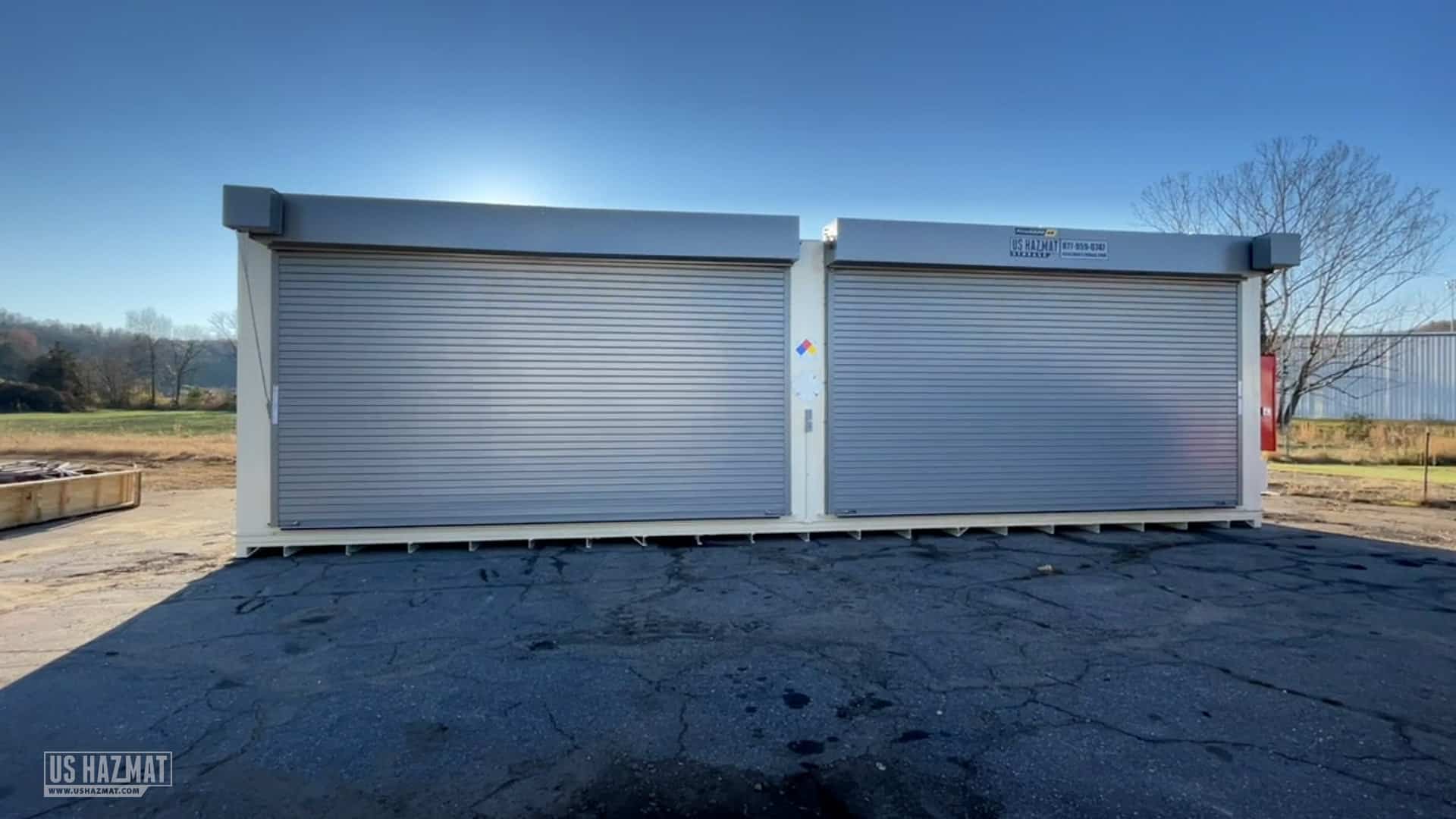
Engineered chemical storage buildings can help address these concerns through fire-rated construction, ventilation, containment sumps, access control, and climate-control options. US Hazmat Storage’s climate-controlled storage page notes that temperature-sensitive chemicals must be stored in line with manufacturer and SDS guidance, and it connects climate-controlled facilities to OSHA and hazardous material storage considerations.
Common Climate-Control Mistakes in 55 Gallon Drum Storage
Climate control fails when it is treated as a comfort feature rather than a safety and compliance component.
Common mistakes include:
- Installing general HVAC without reviewing hazard classification
- Cooling the room without planning vapor exhaust
- Storing volatile chemicals in direct sunlight
- Ignoring SDS temperature recommendations
- Blocking vents with drums or pallets
- Letting labels deteriorate in humid or hot areas
- Forgetting weekly container inspections where required
- Using climate control as a substitute for containment
- Storing incompatible chemicals in the same controlled space
- Choosing storage equipment before reviewing drum volume and chemical type
A stronger 55 gallon drum storage plan connects climate control to the full risk profile. Temperature is one factor. Ventilation, containment, compatibility, fire protection, and inspection make the system complete.
How US Hazmat Storage Supports Climate-Controlled Drum Storage
US Hazmat Storage helps facilities evaluate drum storage around real operational risk. That includes chemical type, drum count, storage location, containment needs, ventilation, temperature sensitivity, fire rating, and compliance expectations.
For volatile chemicals, climate control may be part of a broader engineered solution. The right system may include:
- Fire-rated chemical storage buildings
- Integrated secondary containment
- Mechanical ventilation
- Climate control options
- Drum rack or floor storage layouts
- Grounding and bonding provisions where applicable
- Proper signage and access control
- Inspection-friendly layouts
- Compatibility-based storage planning
The goal is not to add climate control as a luxury option. The goal is to design 55 gallon drum storage that helps protect workers, chemicals, containers, and the facility from preventable risk.
Climate Control Makes Drum Storage More Predictable
Volatile chemicals do not become safer because they are placed in larger containers. In many cases, high-volume storage requires more disciplined planning because one drum can carry enough material to turn a small gap into a serious event.
Climate control helps make drum storage more predictable. It supports temperature stability, cleaner inspections, better label preservation, vapor-control planning, and safer handling conditions. It also helps facilities move away from improvised storage and toward a system that is easier to document, inspect, and defend.
If your operation relies on 55 gallon drum storage, review the storage environment before the next inspection or incident forces the conversation. US Hazmat Storage can help you assess the chemicals, containment needs, climate exposure, and compliance gaps behind your current setup, then recommend a safer, engineered path forward.
FAQ
Why does climate control matter in 55 gallon drum storage?
It helps manage temperature swings, vapor concerns, container condition, label durability, and inspection consistency for volatile chemicals.
Does climate control replace ventilation?
No. Climate control manages temperature. Ventilation helps control vapors and air movement. Both may be needed.
Should 55-gallon drums be stacked indoors?
OSHA states containers over 30 gallons cannot be stacked one upon another in inside storage rooms.
How often should drum storage areas be inspected?
EPA container rules require at least weekly inspections for leaks and deterioration in regulated hazardous waste storage areas.Can outdoor drum storage be climate controlled?
Yes. Engineered outdoor chemical storage buildings can include ventilation, containment, fire ratings, and climate-control options.