
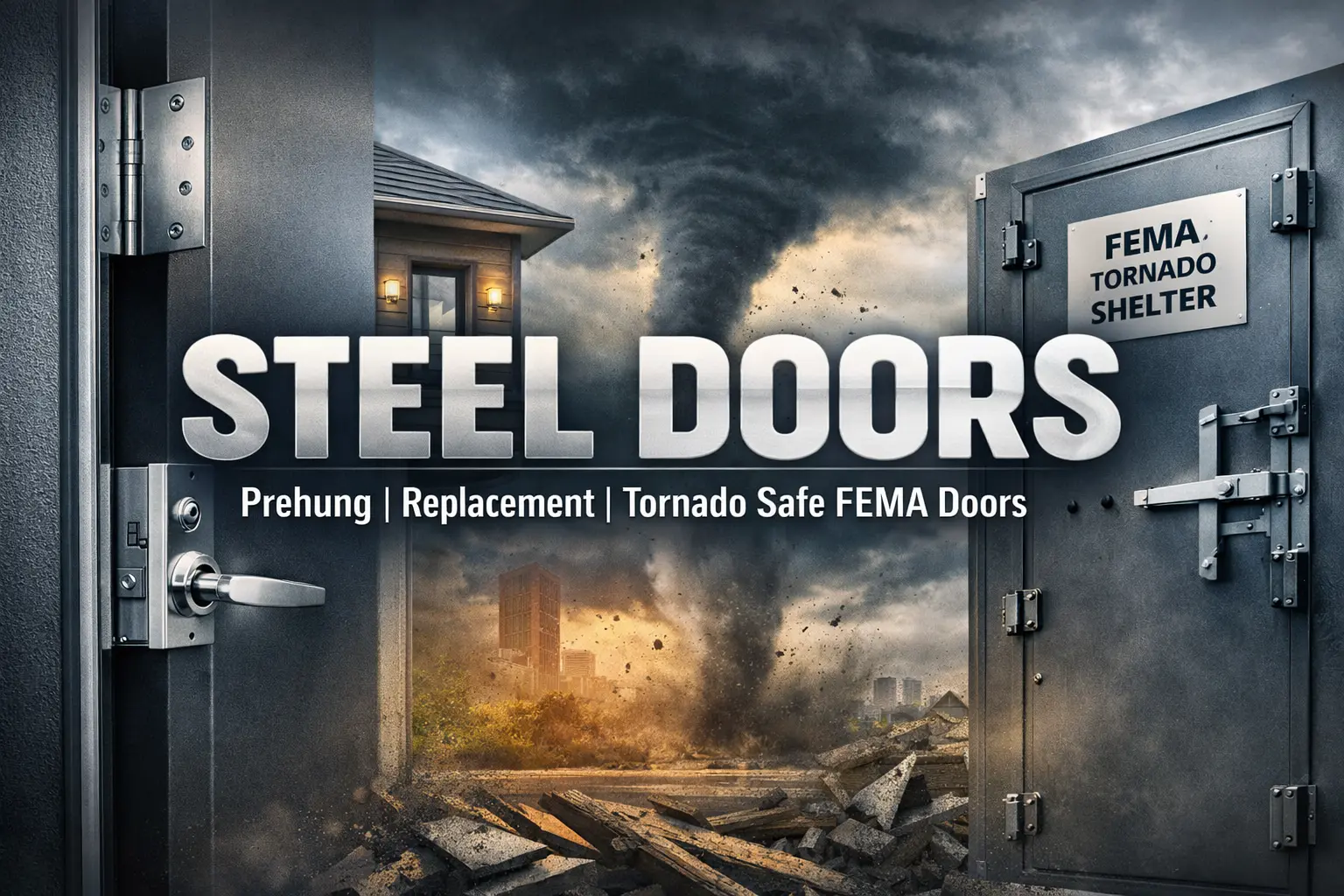
When safety, durability, and long-term value matter, steel doors consistently outperform other door materials. From residential entryways and commercial facilities to storm shelters and high-risk environments, steel doors are engineered to deliver unmatched strength, security, and compliance with modern building standards.
In this guide, we’ll break down prehung steel doors, replacement steel doors, and FEMA-rated tornado safe steel doors, explaining how each option serves different structural and safety needs. Whether you’re upgrading an existing opening or building for extreme weather protection, this expert-level overview will help you make an informed, code-compliant decision.
Why Steel Doors Are the Industry Standard for Strength and Safety
Steel doors are trusted across residential, industrial, and government applications for one primary reason: performance under pressure.
Unlike wood doors that warp or fiberglass doors that crack under impact, steel doors are designed to resist:
- Forced entry and intrusion
- Extreme wind pressure
- Flying debris during storms
- Fire exposure (when fire-rated)
- Long-term wear in high-traffic environments
Modern steel doors are not just slabs of metal they’re engineered systems with reinforced cores, heavy-gauge steel skins, and precision hardware alignment. This makes them ideal for security doors, exterior entry doors, safe rooms, and storm shelters.
Prehung Steel Doors: Precision, Performance, and Proper Installation
A prehung steel door comes factory-assembled within its frame, complete with hinges and precise alignment. This is the preferred choice for new construction or major renovations where accuracy and long-term performance matter.
What Makes Prehung Steel Doors Superior?
Prehung systems eliminate many common installation problems that occur with slab doors, including misalignment, air leakage, and improper sealing.
Key advantages include:
- Factory-installed steel frame for structural integrity
- Tight tolerances for better insulation and security
- Faster installation with fewer field errors
- Improved weather sealing and longevity
Because everything is pre-aligned, prehung steel doors perform better against wind load, moisture infiltration, and repeated daily use.
Ideal Applications for Prehung Steel Doors
Prehung steel doors are widely used in:
- New residential homes
- Commercial and industrial buildings
- Storage facilities and warehouses
- Storm shelters and safe rooms
- High-security access points
When installed correctly, a prehung steel door becomes a structural component not just a closure.
Replacement Steel Doors: Upgrading Security Without Structural Changes
If you’re replacing an existing door but keeping the original frame, a replacement steel door (also known as a slab replacement) is a cost-effective solution.
These doors are designed to fit into existing openings while dramatically improving strength, security, and durability compared to wood or fiberglass alternatives.
When Replacement Steel Doors Make Sense
Replacement steel doors are ideal when:
- The existing frame is structurally sound
- You want to upgrade security quickly
- Energy efficiency needs improvement
- An old wood door has warped or deteriorated
While replacement doors require precise measurements, they allow property owners to enhance protection without extensive construction work.
Performance Considerations
Expert installers ensure proper fit, hinge alignment, and weather sealing. When done right, replacement steel doors deliver:
- Enhanced resistance to forced entry
- Better insulation and reduced air leakage
- Improved durability in harsh environments
For many facilities, replacement steel doors offer the best balance of cost, performance, and speed.
Tornado Safe FEMA-Rated Steel Doors: Built for Extreme Survival
When human safety is on the line, not all steel doors are equal. Tornado safe FEMA-rated steel doors are purpose-built for life-safety applications and must meet strict federal and engineering standards.
These doors are commonly used in:
- Tornado shelters
- Safe rooms
- Schools and hospitals
- Emergency response facilities
- Critical infrastructure buildings
What Does FEMA-Rated Actually Mean?
A FEMA-rated tornado door complies with FEMA P-320 or FEMA P-361 guidelines, often alongside ICC-500 standards. These doors are tested to withstand:
- Wind speeds exceeding 250 mph
- Impact from large, high-velocity debris
- Extreme pressure differentials
This is not cosmetic strength, it’s engineered survivability.
Engineering Features of Tornado Safe Steel Doors
True tornado-rated steel doors include:
- Heavy-gauge reinforced steel construction
- Multi-point locking systems
- Reinforced frames anchored to concrete
- Tested hardware and hinges
- Inward-swing configurations for debris resistance
Every component from the door leaf to the anchoring system must work together to maintain structural integrity during catastrophic events.
Steel Door Construction: What Separates Quality from Marketing
Not all steel doors deliver the same performance. Experts evaluate steel doors based on engineering, not appearance.
Critical construction factors include:
- Steel gauge thickness – Heavier gauge steel offers greater impact resistance
- Core material – Options include polystyrene, polyurethane, or reinforced composite cores
- Frame reinforcement – Especially critical for storm-rated doors
- Hardware compatibility – Locks, hinges, and closers must match the door’s rating
For tornado-safe and high-security doors, improper hardware selection can compromise the entire system.
Energy Efficiency and Insulation Performance
Modern steel doors are also designed with energy efficiency in mind. Insulated steel doors help reduce heat transfer, improve indoor comfort, and lower energy costs.
High-quality steel doors feature:
- Insulated cores with high R-values
- Tight perimeter seals
- Precision-fit frames that reduce air infiltration
For commercial buildings and residential homes alike, this translates into long-term operational savings.
Code Compliance, Safety Standards, and Professional Installation
Steel doors, especially FEMA-rated and security doors must comply with local and national building codes. Professional installation is not optional; it’s essential.
Expert installers ensure:
- Proper anchoring to structural substrates
- Correct swing direction for safety compliance
- Verified clearance tolerances
- Compliance with FEMA, ICC-500, and local regulations
A certified steel door system is only as strong as its installation.
Choosing the Right Steel Door for Your Application
Selecting the right steel door depends on how and where it will be used.
- Prehung steel doors are best for new construction and full upgrades
- Replacement steel doors work well for existing frames and quick security improvements
- Tornado safe FEMA-rated steel doors are mandatory for life-safety and storm protection
An expert evaluation of your structure, risk exposure, and compliance requirements ensures you invest in the right solution not an under-engineered product.
Final Thoughts: Steel Doors Are an Investment in Safety and Longevity
Steel doors are not just entry points, they are critical safety systems. Whether you’re installing a prehung steel door for daily use, upgrading with a replacement steel door, or protecting lives with a FEMA-rated tornado safe door, quality engineering and expert installation make all the difference.
When chosen correctly, steel doors deliver:
- Long-term durability
- Superior security
- Compliance with modern safety standards
- Peace of mind in extreme conditions
For homes, businesses, and emergency shelters alike, steel doors remain the gold standard for protection and performance.