
US Hazmat Storage designs and manufactures engineered lithium battery storage solutions for small, medium, and large-volume applications, tailored to:
- Battery chemistry
- Storage quantity
- Charging activity
- Risk classification
- Local and national code requirements
Whether you need storage for damaged batteries, charging stations, bulk palletized inventory, or containerized energy storage, our solutions are engineered to contain, detect, isolate, and suppress lithium battery incidents before they become disasters.
Why Lithium Battery Storage Requires Specialized Design
Lithium batteries are fundamentally different from traditional flammable or combustible materials. Fires do not behave like Class A, B, or C hazards.
Unique Lithium Battery Hazards
- Thermal runaway: A self-heating, chain reaction that releases extreme heat, toxic gases, and explosive pressure
- Re-ignition risk: Batteries can reignite hours or days after suppression
- High heat release rate (HRR): Exceeds traditional fuel fires
- Toxic off-gassing: Hydrogen fluoride (HF), carbon monoxide, and corrosive vapors
- Propagation risk: One cell failure can cascade through entire battery arrays
Because of these characteristics, standard flammable storage lockers or warehouses are not sufficient for lithium battery storage.
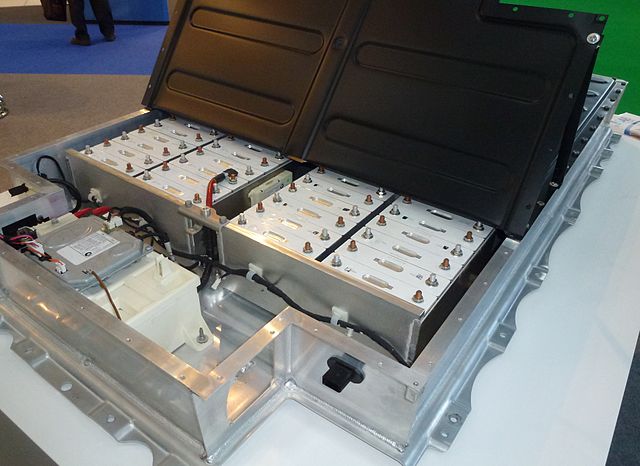
Lithium Battery Storage Applications We Engineer For
US Hazmat Storage provides custom solutions across all storage scales:
Small-Volume Lithium Battery Storage
- Handheld tools
- Laptop and device batteries
- Medical equipment batteries
- Small EV or mobility batteries
- Maintenance spare inventory
Medium-Volume Lithium Battery Storage
- Forklift and material handling batteries
- Commercial EV fleet batteries
- Telecom and data center UPS batteries
- E-bike and scooter fleets
- Charging rooms and battery swap areas
Large-Volume & Industrial Lithium Battery Storage
- Battery Energy Storage Systems (BESS)
- Warehouse palletized battery inventory
- Manufacturing and assembly plants
- Utility-scale installations
- Recycling and damaged battery staging
Each volume tier requires different fire separation, detection, ventilation, and suppression strategies — all of which are engineered into our systems.
Lithium Battery Storage Codes & Compliance Framework
Our lithium battery storage buildings are engineered to meet or exceed applicable regulations, including:
Key Codes & Standards
- NFPA 855 – Standard for the Installation of Stationary Energy Storage Systems
- NFPA 13 – Fire sprinkler system requirements
- NFPA 30 – Flammable and combustible liquids (when applicable)
- NFPA 400 – Hazardous materials code
- IFC / IBC – International Fire & Building Codes
- OSHA – Worker safety and hazard communication
- EPA – Environmental containment and spill control
- UL 9540 / UL 9540A – Battery system safety and fire testing
- Local AHJ amendments
Our engineering team works directly with Authorities Having Jurisdiction (AHJs), fire marshals, insurers, and environmental agencies to ensure permitting and approval.
Early Detection Systems for Lithium Battery Storage
Early detection is the most critical factor in preventing catastrophic lithium battery incidents.
Advanced Detection Technologies
We engineer storage buildings with layered detection systems, including:
- Thermal imaging sensors
- Heat rate-of-rise detectors
- Off-gas detection (CO, HF, VOCs)
- Smoke and particulate detection
- Battery management system (BMS) integration
- Gas concentration monitoring
Early detection allows operators to:
- Identify failing cells
- Isolate affected batteries
- Shut down charging
- Activate suppression systems before thermal runaway escalates
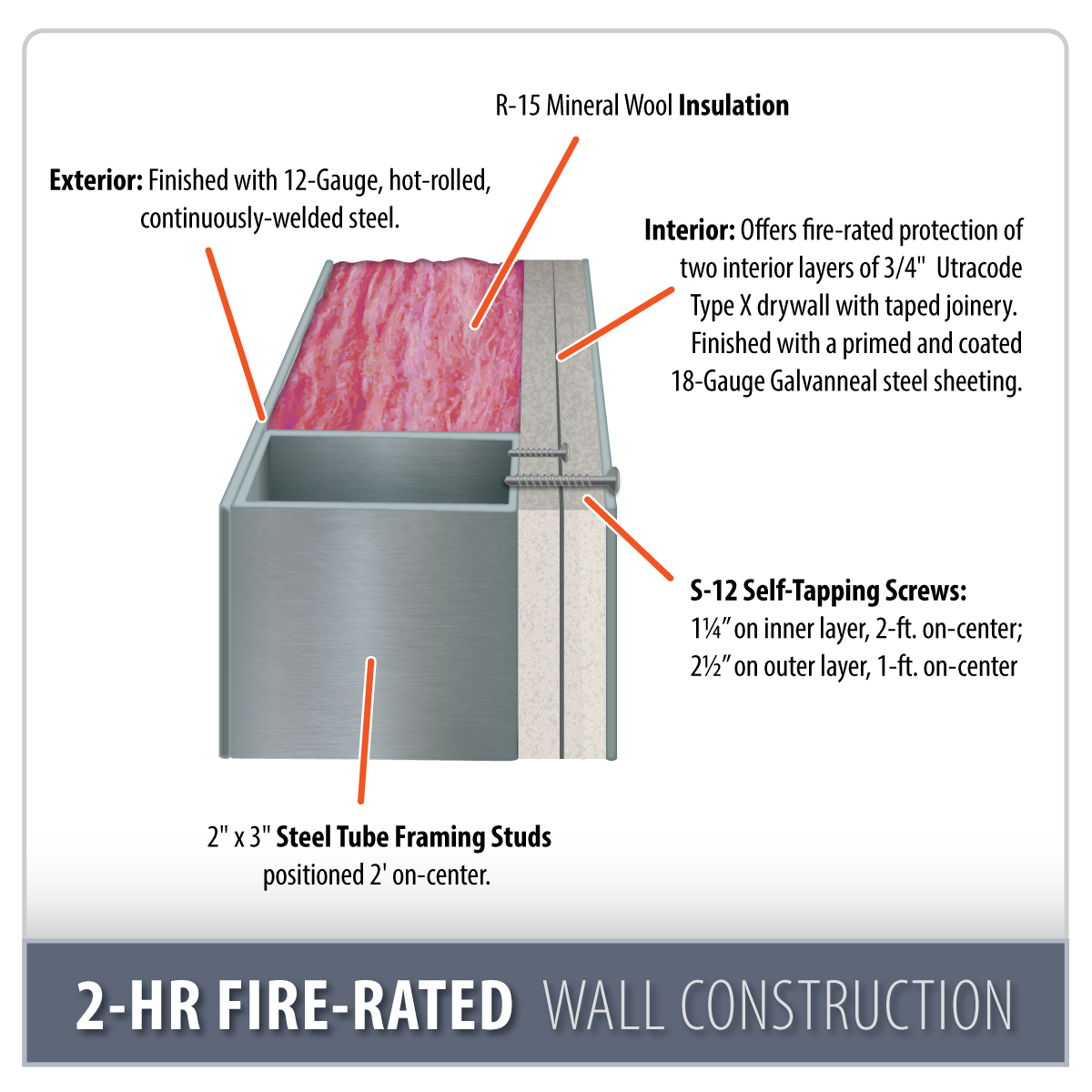
Thermal Runaway Prevention & Containment Design
Structural Isolation
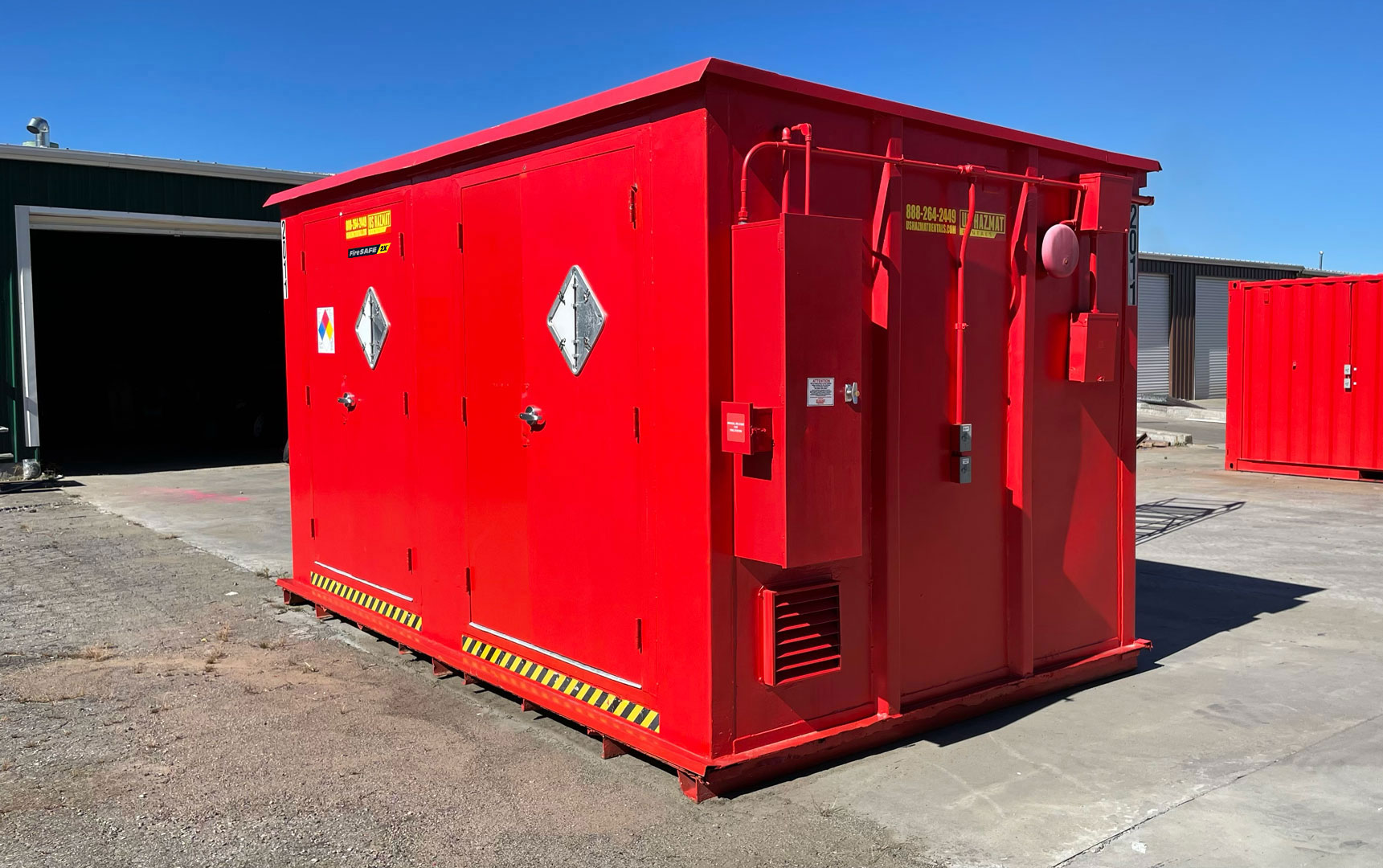
US Hazmat Storage buildings are designed to contain thermal events, not spread them.
Key design strategies include:
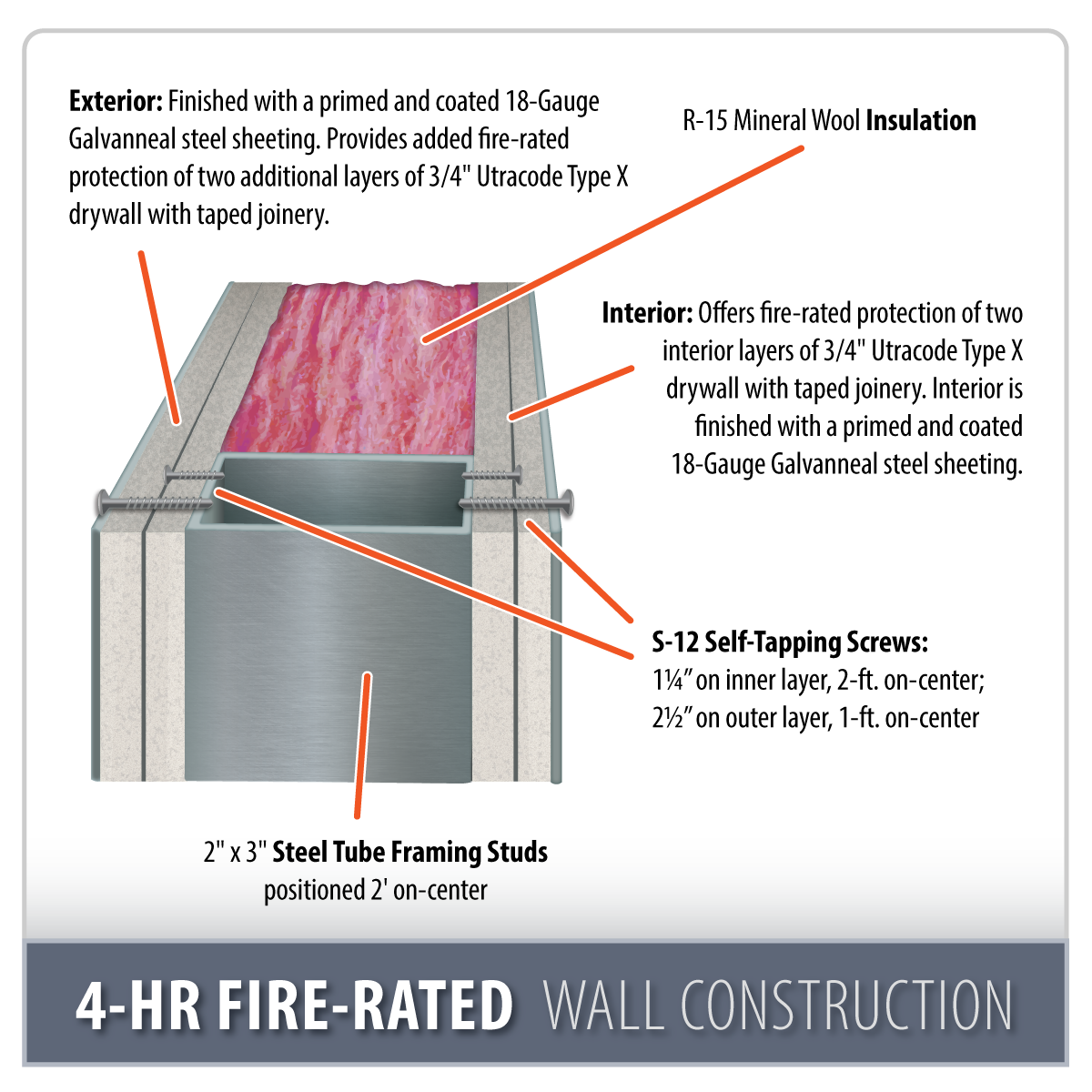
- Fire-rated wall assemblies
- Compartmentalized storage zones
- Physical separation distances
- Blast-relief venting
- Pressure-relief panels
- Heat-resistant interior linings
Passive Fire Resistance
- Non-combustible steel construction
- Fire-rated doors and penetrations
- Insulated wall and roof assemblies
- Thermal barriers between battery arrays
Remote Monitoring & Smart Safety Controls
Modern lithium battery storage demands real-time visibility.
Our systems support:
- Remote temperature monitoring
- Alarm notifications
- Cloud-based dashboards
- Automated shutdown triggers
- Integration with facility safety systems
- Fire department notification readiness
Remote monitoring allows operators to respond immediately, even after hours or during unmanned operation.
Damaged & Defective Lithium Battery Isolation
One of the highest-risk scenarios is damaged, recalled, swollen, or defective batteries.
Dedicated Damaged Battery Storage Solutions
We engineer standalone isolation units specifically for:
- Impact-damaged batteries
- Overheated batteries
- Recalled product inventory
- Failed charging batteries
- End-of-life recycling staging
Features include:
- Individual fire compartments
- Enhanced ventilation
- Specialized suppression systems
- Secondary containment
- Clear labeling and access control
Fire Suppression Options for Lithium Battery Storage
No single suppression method works for all lithium battery hazards. We engineer systems based on battery type, volume, and risk profile.
Common Suppression Strategies
Water-Based Systems
- Deluge systems
- Pre-action sprinklers
- Cooling-focused designs
- Re-ignition prevention
Clean Agent Systems
- Used in electronics or low-fuel environments
- Not standalone for thermal runaway
- Often paired with cooling systems
Aerosol & Condensed Agents
- Targeted compartment suppression
- Localized deployment
- Integrated with detection systems
Hybrid Suppression Designs
- Multi-stage response
- Cooling + oxygen displacement
- Gas + water mist combinations
All systems are engineered to specification, tested, and documented for AHJ approval.
Ventilation & Off-Gas Management
Lithium battery incidents release toxic and corrosive gases.
Our designs include:
- Mechanical exhaust ventilation
- Explosion-relief venting
- Corrosion-resistant ducting
- Air exchange rate calculations
- Gas dispersion modeling
This protects:
- Personnel
- First responders
- Facility infrastructure
- Surrounding environment
Environmental Protection & Secondary Containment
Lithium battery fires often involve:
- Firewater runoff
- Electrolyte leakage
- Heavy metal contamination
Our buildings incorporate:
- Liquid-tight floors
- Sump systems
- Spill containment
- Environmental isolation
- EPA-aligned design practices
Modular & Scalable Lithium Battery Storage Buildings
US Hazmat Storage specializes in modular, relocatable, and permanent structures, allowing you to scale as your battery program grows.
Benefits
- Rapid deployment
- Custom sizes and layouts
- Indoor or outdoor placement
- Long-term or transitional use
- Expansion-ready designs
Industries We Serve
- Manufacturing
- Warehousing & logistics
- Utilities & energy
- EV fleet operators
- Recycling facilities
- Healthcare
- Government & municipalities
- Data centers
- Defense & critical infrastructure
Why Choose US Hazmat Storage for Lithium Battery Storage
- Engineered-to-order solutions
- Compliance-first design philosophy
- Deep experience with high-risk materials
- AHJ-friendly documentation
- Nationwide deployment capability
- Integration with fire protection engineers
- Long-term safety lifecycle support
Frequently Asked Questions (FAQ)
Yes. Lithium batteries are classified as hazardous due to fire, explosion, and toxic gas risks.
Yes, when stored in properly engineered, fire-rated, ventilated storage buildings.
A self-sustaining reaction where battery cells rapidly overheat and ignite.
Yes. Re-ignition is common without proper cooling and containment.
No. Lithium battery hazards require specialized suppression strategies.
No. Damaged batteries must be isolated.
NFPA 855, IFC, IBC, OSHA, EPA, and local AHJ requirements.
Yes. Modular designs allow relocation or expansion.
Yes. We coordinate directly with AHJs nationwide.
Yes, when engineered for charging risks.
Timelines vary by size and specification, but modular solutions can deploy rapidly.
Yes. Full integration is supported.