
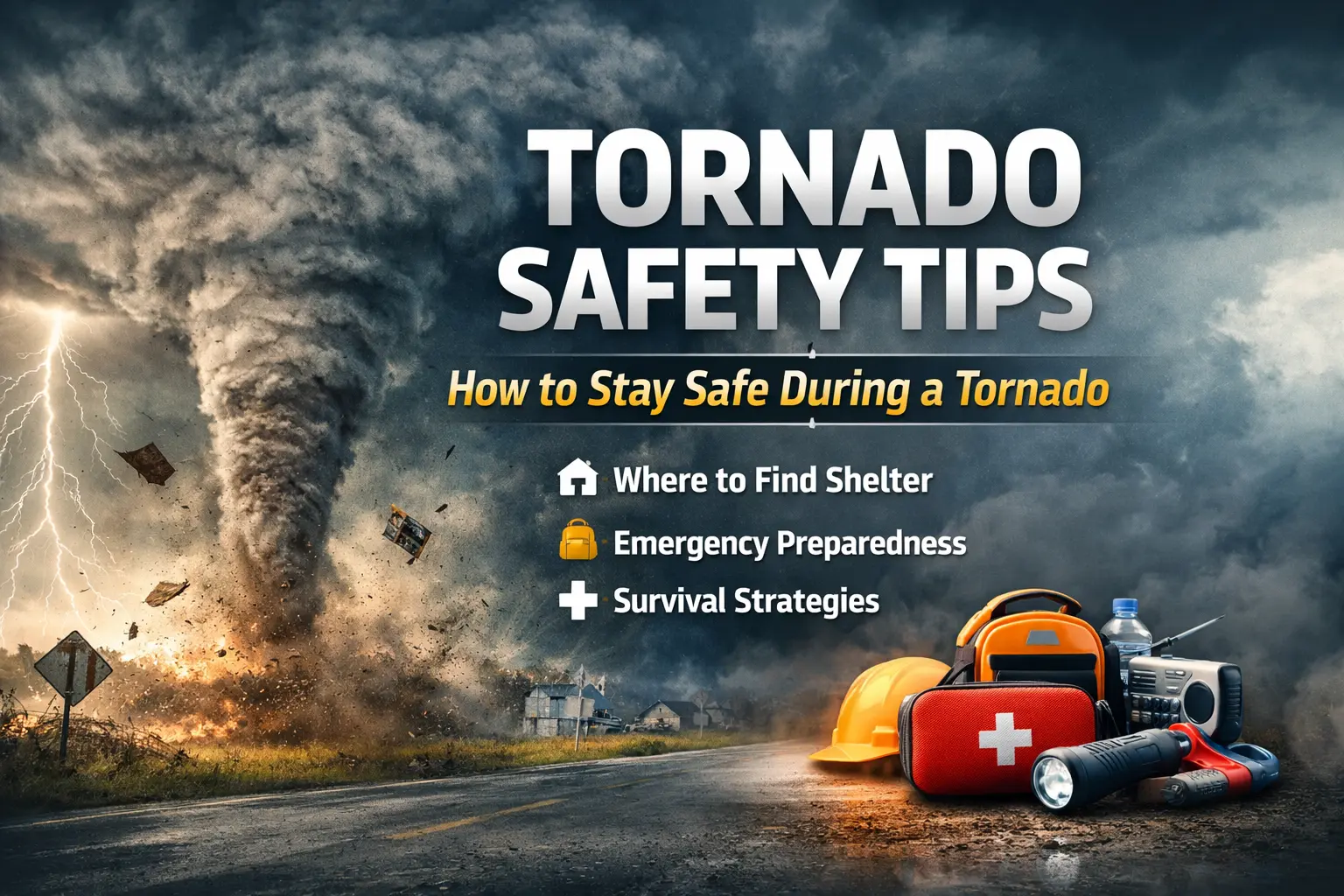
Tornadoes are among the most violent and unpredictable natural disasters on Earth. With wind speeds that can exceed 200 mph, even a short-lived tornado can cause catastrophic damage within minutes. Knowing how to prepare, where to shelter, and what actions to take before, during, and after a tornado can mean the difference between life and death.
This guide provides practical, expert-backed tornado safety tips designed to help individuals, families, and businesses stay safe when tornado conditions threaten.
Understanding Tornado Risks and Warning Signs
Before diving into safety steps, it’s important to understand how tornadoes develop and how warnings work.
Common Tornado Warning Signs
- Dark, greenish skies
- Large, low-hanging clouds (wall clouds)
- Loud roaring sound, similar to a freight train
- Large hail or sudden calm after a storm
- Rapidly rotating clouds or funnel shapes
⚠️ Important: Tornadoes can occur with little visual warning. Always rely on official alerts, not just what you see outside.
Tornado Watch vs Tornado Warning: Know the Difference

Many injuries occur because people misunderstand alerts.
- Tornado Watch:
Conditions are favorable for tornado formation. Stay alert and prepared. - Tornado Warning:
A tornado has been spotted or detected by radar. Take shelter immediately.
When a warning is issued, do not wait to confirm it visually.
Tornado Safety Tips: What to Do Before a Tornado
Preparation is your strongest defense.
1. Create a Tornado Emergency Plan
- Identify the safest shelter location in your home or workplace
- Establish a family communication plan
- Practice tornado drills regularly, especially with children
2. Prepare an Emergency Kit
Your tornado safety kit should include:
- Water and non-perishable food (3 days minimum)
- Flashlight and extra batteries
- First aid supplies
- Important documents (weather-protected)
- Whistle, helmet, sturdy shoes
- Fully charged phone and power bank
3. Secure Your Property
- Anchor outdoor furniture and equipment
- Reinforce garage doors if possible
- Store hazardous materials in approved safety storage
Where to Take Shelter During a Tornado
Choosing the right shelter location is critical.
Safest Places to Shelter
- Basement or storm cellar (best option)
- Interior room on the lowest floor
- Bathroom, closet, or hallway without windows
- FEMA-rated safe rooms or reinforced structures
Where NOT to Shelter
- Near windows or glass doors
- In large open rooms (gyms, auditoriums)
- Under bridges or overpasses
- Inside mobile homes (even tied down)
Tornado Safety Tips for Different Situations
If You’re at Home
- Get to the lowest level immediately
- Cover your head and neck with your arms
- Use mattresses or heavy blankets for protection
If You’re in a Mobile Home
- Leave immediately if time allows
- Go to a nearby storm shelter or permanent building
- If no shelter is available, lie flat in a ditch and protect your head
If You’re at Work or School
- Follow emergency procedures
- Move to designated shelter areas
- Avoid elevators and exterior walls
If You’re Driving
- Do NOT try to outrun a tornado in traffic
- Pull over, leave the vehicle, and find low ground
- Stay away from overpasses and bridges
How to Stay Safe During a Tornado
Once sheltering:
- Stay low and face down if possible
- Protect your head and neck at all times
- Avoid windows and doors
- Remain sheltered until officials say it’s safe
Even after the storm quiets, secondary tornadoes may occur.
Tornado Safety Tips After the Storm Passes
Survival doesn’t end when the tornado does.
After-Tornado Safety Checklist
- Watch for downed power lines
- Avoid damaged buildings
- Use flashlights instead of candles
- Check for gas leaks
- Provide first aid if trained
- Monitor emergency broadcasts
If your home or facility stored hazardous materials, inspect containment systems carefully before re-entry.
Tornado Safety for Businesses and Facilities
Businesses should implement formal tornado preparedness plans, especially in high-risk regions.
Key considerations:
- Employee training and drills
- Clearly marked shelter locations
- Emergency communication systems
- Secure storage for chemicals and flammable materials
- FEMA-rated or engineered storm shelters
Prepared facilities reduce injuries, downtime, and liability risks.
Why Tornado Preparedness Saves Lives
According to emergency management data, most tornado-related injuries occur due to flying debris, not wind itself. Simple actions like wearing helmets, sheltering properly, and preparing in advance dramatically increase survival rates.
Preparedness is not fear, it’s responsibility.
Final Thoughts: Stay Alert, Stay Prepared, Stay Safe
Tornadoes strike fast and without mercy, but knowledge and preparation save lives. By understanding warning systems, identifying proper shelter, and following proven tornado safety tips, you protect yourself, your family, and your community.
If you live or operate a business in tornado-prone areas, preparedness isn’t optional, it’s essential.