
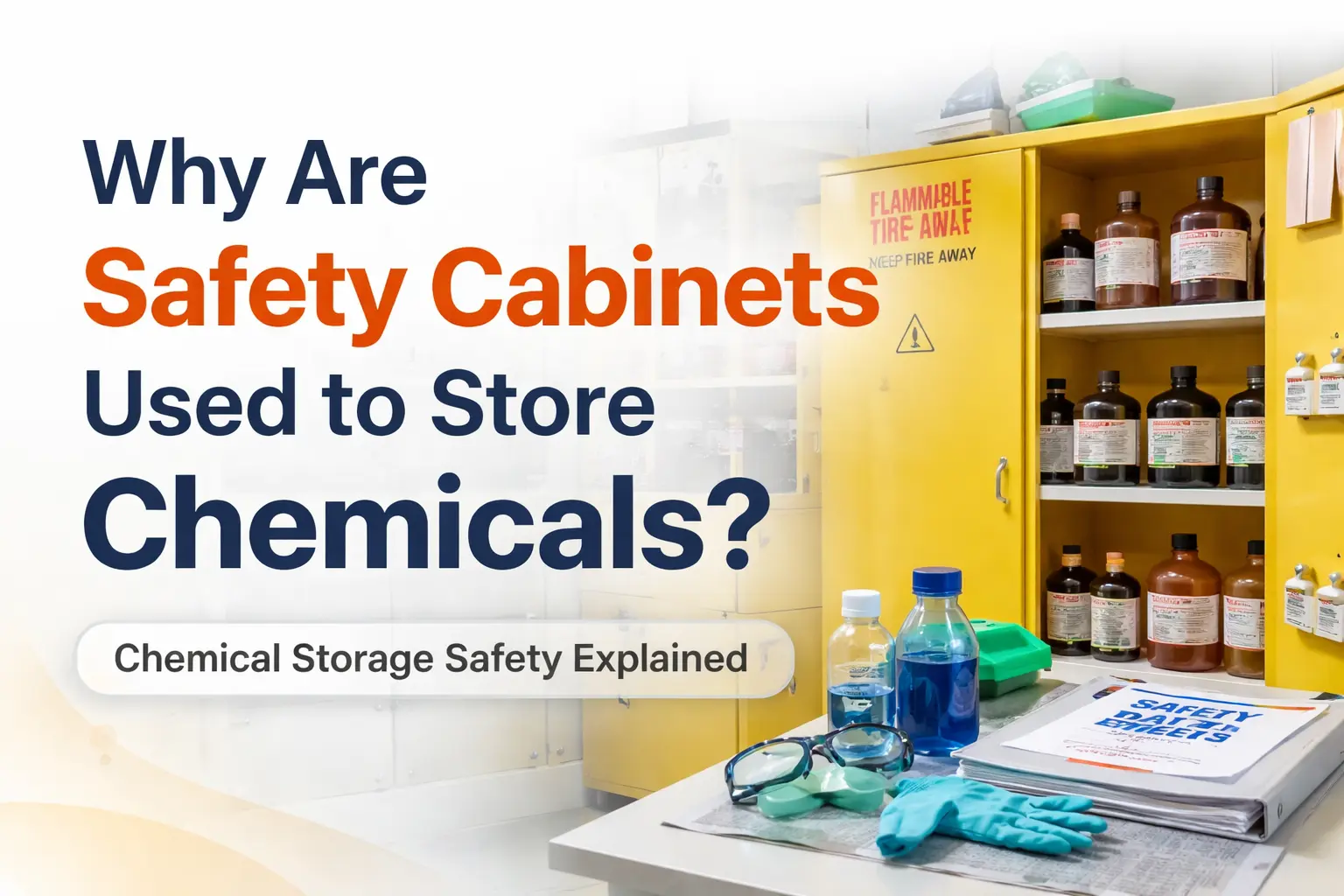
Storing chemicals is not just a matter of organization, it is a critical safety responsibility. In laboratories, manufacturing facilities, warehouses, hospitals, and industrial sites, improper chemical storage can lead to fires, toxic exposure, environmental damage, regulatory violations, and even loss of life. This is why safety cabinets are used to store chemicals: they are engineered to control risk, protect people, and ensure regulatory compliance.
Unlike ordinary storage units, chemical safety cabinets are purpose-built to contain hazardous materials safely. They reduce fire hazards, prevent chemical reactions, control spills, and help facilities meet OSHA, NFPA, and EPA requirements. Understanding why safety cabinets are necessary and how they work is essential for anyone responsible for chemical handling or workplace safety.
What Are Safety Cabinets for Chemicals?
Safety cabinets are specialized storage enclosures designed to store hazardous chemicals such as flammable liquids, corrosives, toxics, and reactive substances. These cabinets are constructed using fire-resistant materials and include features like spill containment sumps, self-closing doors, grounding points, and ventilation compatibility.
Their primary purpose is risk mitigation protecting personnel, property, and the environment from chemical-related incidents.
Common types of chemical safety cabinets include:
- Flammable liquid safety cabinets
- Corrosive (acid and base) storage cabinets
- Toxic chemical cabinets
- Pesticide and agrochemical cabinets
- Combination or multi-hazard safety cabinets
Each type is designed to address the unique hazards associated with specific chemical classes.
The Primary Reasons Safety Cabinets Are Used to Store Chemicals
1. Fire Prevention and Fire Protection
One of the most critical reasons safety cabinets are used is fire safety.
Flammable chemicals such as solvents, fuels, alcohols, and paints can ignite easily when exposed to sparks, heat, or static electricity. Safety cabinets are designed to:
- Withstand external fire exposure for a specified time (typically 10-30 minutes or more)
- Slow the internal temperature rise, giving occupants time to evacuate
- Reduce the chance of stored chemicals contributing to a fire’s intensity
NFPA 30 (Flammable Liquids Code) specifically recognizes approved flammable storage cabinets as a key fire-prevention measure in industrial and laboratory environments.
-
Protection Against Chemical Spills and Leaks
Chemical spills are a common cause of workplace injuries and environmental contamination. Safety cabinets help prevent and contain spills through:
- Built-in liquid-tight sumps that capture leaks
- Sealed construction to prevent chemicals from spreading
- Shelving designed to hold containers securely
By containing leaks at the source, safety cabinets reduce cleanup costs, exposure risks, and regulatory consequences.
-
Compliance With Safety Regulations and Codes
Regulatory compliance is a major reason organizations invest in chemical safety cabinets.
Safety cabinets help meet requirements set by:
- OSHA (Occupational Safety and Health Administration)
- NFPA (National Fire Protection Association)
- EPA (Environmental Protection Agency)
- Local fire marshals and building authorities
Failure to store chemicals correctly can result in fines, shutdowns, insurance issues, and legal liability. Using approved safety cabinets demonstrates due diligence and a commitment to workplace safety.
-
Segregation of Incompatible Chemicals
Many chemical accidents occur not because a chemical is dangerous on its own, but because incompatible substances are stored together.
Safety cabinets allow facilities to:
- Separate acids from bases
- Isolate oxidizers from flammables
- Store toxics away from general-use chemicals
Proper segregation reduces the risk of dangerous reactions, toxic gas release, and fires caused by accidental mixing.
-
Protection of Workers and Occupants
Employee safety is at the core of chemical storage best practices.
Safety cabinets reduce risks such as:
- Inhalation of toxic vapors
- Skin or eye contact from leaks
- Burns from fires or explosions
By limiting exposure and providing controlled storage, safety cabinets contribute to a safer working environment and support occupational health programs.
How Safety Cabinets Are Engineered for Hazard Control
Fire-Resistant Construction
High-quality safety cabinets are typically made from double-wall steel with an air gap between walls. This design helps insulate the interior during a fire and slows heat transfer to stored chemicals.
Self-Closing and Self-Latching Doors
Many safety cabinets feature self-closing doors that automatically shut during a fire or emergency, helping to isolate chemicals and limit oxygen supply.
Grounding and Static Control
Flammable liquid safety cabinets include grounding points to safely dissipate static electricity, reducing ignition risks during dispensing or container handling.
Ventilation Compatibility
Some cabinets are designed to connect to exhaust systems when required, helping control chemical vapors without compromising fire protection.
Where Chemical Safety Cabinets Are Commonly Used
Safety cabinets are essential in environments where hazardous chemicals are present, including:
- Laboratories (research, clinical, educational)
- Manufacturing and industrial facilities
- Chemical processing plants
- Pharmaceutical and biotech facilities
- Warehouses and distribution centers
- Hospitals and healthcare facilities
- Automotive and aerospace industries
In each of these settings, safety cabinets play a critical role in daily operations and emergency preparedness.
Safety Cabinets vs. Regular Storage Cabinets
A common mistake is assuming any metal cabinet is suitable for chemical storage. This is not true.
| Feature | Safety Cabinet | Standard Cabinet |
| Fire resistance | Yes | No |
| Spill containment | Yes | No |
| Regulatory approval | Yes | No |
| Chemical compatibility | Engineered | Not designed |
| Worker protection | High | Minimal |
Using non-approved cabinets for chemical storage can increase risk and violate safety regulations.
Choosing the Right Safety Cabinet for Chemicals
Selecting the correct cabinet depends on several factors:
- Type of chemical (flammable, corrosive, toxic)
- Quantity and container size
- Regulatory requirements
- Indoor vs. outdoor use
- Need for ventilation or explosion resistance
Consulting safety data sheets (SDS) and working with experienced chemical storage professionals ensures the right solution is chosen.
The Role of Safety Cabinets in Risk Management
From a risk management perspective, safety cabinets are not optional accessories-they are critical control measures.
They help organizations:
- Reduce accident probability
- Limit damage during emergencies
- Protect assets and infrastructure
- Maintain insurance eligibility
- Demonstrate safety leadership
In many cases, safety cabinets are the difference between a manageable incident and a catastrophic event.
Final Thoughts: Why Safety Cabinets Are Essential for Chemical Storage
Safety cabinets are used to store chemicals because they save lives, prevent disasters, and ensure compliance. They are a foundational element of chemical safety, designed through decades of engineering, regulatory guidance, and real-world incident analysis.
For any facility handling hazardous materials, investing in proper chemical safety cabinets is not just a best practice, it is a responsibility. When chemicals are stored correctly, workplaces become safer, operations run smoother, and regulatory risks are minimized.
In chemical safety, prevention always costs less than recovery and safety cabinets are one of the most effective preventive tools available.