
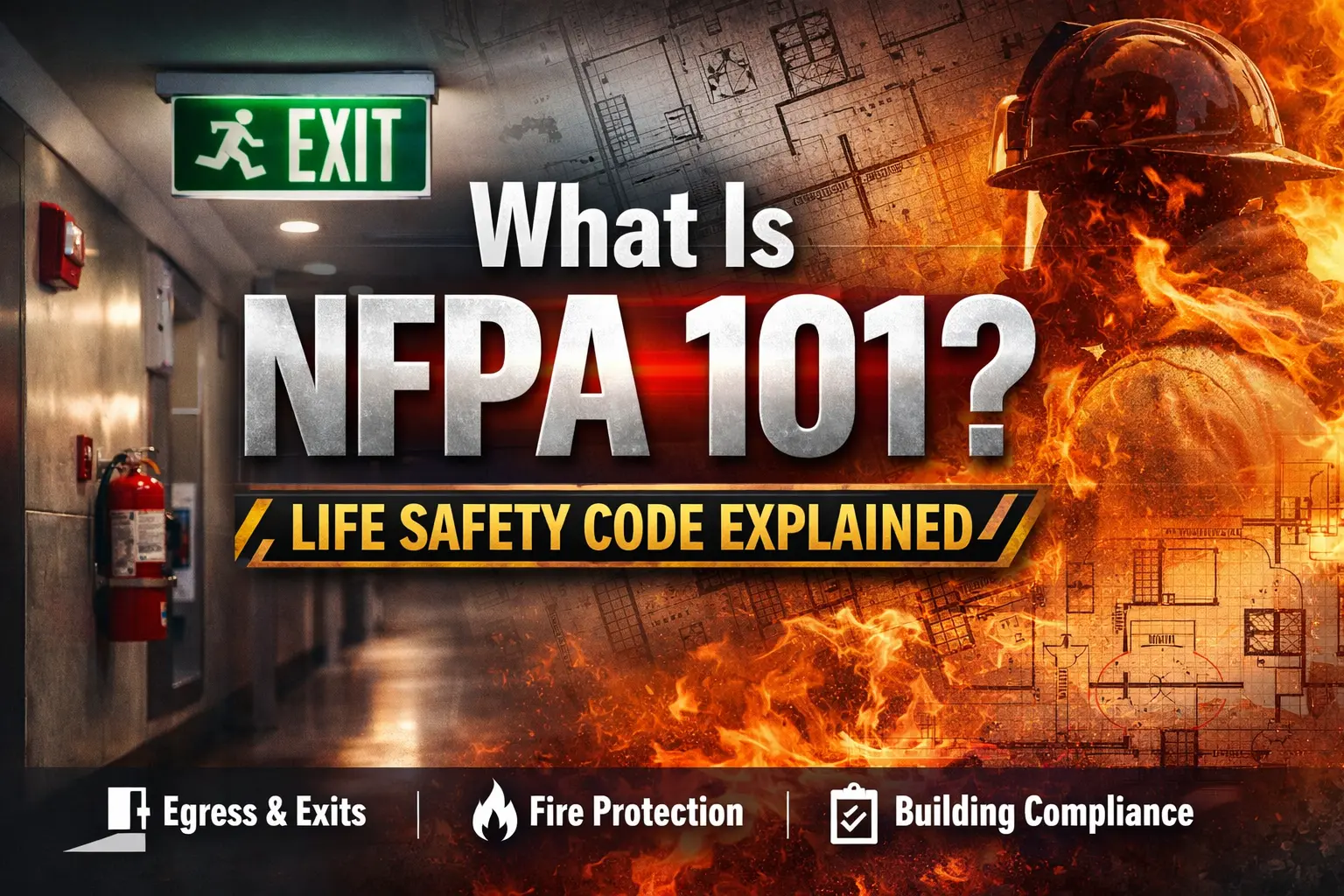
Fire safety is not just a regulatory checkbox, it is a life-preserving system built on decades of real-world lessons, engineering failures, and hard-earned standards. One of the most critical frameworks governing this area is NFPA 101, commonly known as the Life Safety Code. Whether you manage a commercial facility, design industrial buildings, oversee compliance, or are simply responsible for occupant safety, understanding NFPA 101 is essential.
This guide explains what NFPA 101 is, why it exists, how it works, and who must comply, written from a practical and professional safety perspective not theory alone.
What Is NFPA 101 (Life Safety Code)?
NFPA 101: Life Safety Code is a widely adopted safety standard developed by the National Fire Protection Association (NFPA). Its primary purpose is to minimize the risk of death and injury from fire, smoke, and related hazards by regulating how buildings are designed, constructed, occupied, and maintained.
Unlike many fire codes that focus heavily on suppression systems or fire department access, NFPA 101 is centered on people specifically how occupants:
- Detect fire or emergencies
- Receive warnings
- Move safely through exit routes
- Evacuate or defend in place
In short, NFPA 101 is about life safety first, not property protection.
Why NFPA 101 Was Created
The Life Safety Code has its roots in tragic historical fires, including:
- The Iroquois Theatre Fire (1903)
- The Triangle Shirtwaist Factory Fire (1911)
- Multiple hospital and assembly occupancy fires
These disasters revealed a common problem:
Buildings often failed not because fires started but because people couldn’t escape.
Locked exits, confusing layouts, inadequate lighting, combustible interiors, and poor emergency planning all contributed to unnecessary loss of life. NFPA 101 was created to ensure that human behavior, building design, and fire dynamics are addressed together.
What NFPA 101 Covers (Core Scope)
NFPA 101 applies to both new and existing buildings and regulates safety through a performance-based and prescriptive approach. Its scope includes:
1. Means of Egress
One of the most critical components of NFPA 101, covering:
- Number of exits
- Exit width and capacity
- Exit access travel distance
- Exit discharge requirements
- Door swing direction and hardware
- Emergency lighting and exit signage
2. Occupancy Classifications
NFPA 101 classifies buildings based on how they are used, such as:
- Assembly (stadiums, theaters)
- Business (offices)
- Industrial
- Storage
- Healthcare
- Educational
- Residential (hotels, apartments)
Each occupancy type has specific life safety requirements based on risk profile and occupant familiarity.
3. Fire Protection Features
Including:
- Fire alarm systems
- Smoke detection
- Automatic sprinklers
- Smoke control and compartmentation
4. Interior Finish and Furnishings
Controls the flame spread and smoke development of:
- Wall and ceiling finishes
- Floor coverings
- Decorative materials
5. Emergency Planning & Maintenance
NFPA 101 also requires:
- Emergency action plans
- Fire drills
- Inspection, testing, and maintenance (ITM)
- Staff training and responsibilities
NFPA 101 vs Other Fire Codes (Common Confusion)
A frequent question is how NFPA 101 differs from codes like NFPA 1 or the International Fire Code (IFC).
Code |
Primary Focus |
| NFPA 101 | Life safety & occupant evacuation |
| NFPA 1 | Fire prevention & general fire code |
| IFC | Fire safety + building enforcement |
| NFPA 13 | Sprinkler system design |
NFPA 101 is unique because it is occupant-centric, not equipment-centric. Many jurisdictions adopt NFPA 101 alongside other fire and building codes.
Who Must Comply with NFPA 101?
NFPA 101 is adopted at the state or local level, often referenced by:
- Fire marshals
- Health departments
- OSHA-regulated workplaces
- CMS (Centers for Medicare & Medicaid Services)
- Insurance authorities
Industries commonly required to comply include:
- Hospitals and healthcare facilities
- Manufacturing plants
- Chemical storage and processing sites
- Warehouses
- Schools and universities
- Commercial offices
- Multi-tenant residential buildings
If your facility undergoes fire inspections, accreditation reviews, or insurance audits, NFPA 101 likely applies.
New vs Existing Buildings Under NFPA 101
One of the most important features of NFPA 101 is that it distinguishes between new and existing buildings.
- New construction must meet the latest life safety requirements.
- Existing buildings may comply with alternative provisions to avoid unreasonable hardship, as long as life safety is not compromised.
This approach balances practical feasibility with safety, which is why NFPA 101 is widely accepted by regulators.
Means of Egress: The Heart of Life Safety
If there is one area where NFPA 101 is uncompromising, it is egress safety.
Key requirements include:
- At least two remote exits in most occupancies
- Exit paths free from obstructions
- Doors that unlock in the direction of egress
- Clearly marked, illuminated exit signage
- Emergency lighting with backup power
Failures in egress design remain one of the most common code violations and a major contributor to fatalities during emergencies.
Healthcare and High-Risk Occupancies
NFPA 101 is especially strict for healthcare, detention, and industrial occupancies, where evacuation may not be immediate or straightforward.
For example:
- Hospitals rely heavily on defend-in-place strategies
- Chemical facilities require compartmentation and controlled evacuation
- Laboratories and storage buildings must limit smoke and toxic exposure
These provisions are critical in environments where occupants cannot self-evacuate.
How NFPA 101 Is Enforced
Enforcement typically occurs through:
- Fire inspections
- Building plan reviews
- Licensing and accreditation audits
- Insurance risk assessments
Non-compliance can result in:
- Fines
- Operational shutdowns
- Loss of occupancy permits
- Increased insurance premiums
- Legal liability after an incident
More importantly, non-compliance puts human lives at risk.
Why NFPA 101 Matters More Than Ever
Modern buildings are more complex than ever open floor plans, lightweight construction, energy-efficient materials, and higher occupant loads all introduce new risks.
NFPA 101 continues to evolve to address:
- Smoke toxicity
- Human behavior during emergencies
- Modern construction methods
- Integrated fire protection systems
It remains one of the most respected and life-saving codes in the world.
Final Thoughts: Life Safety Is Not Optional
NFPA 101 is not just a code it is a philosophy built around a simple principle:
People must be able to escape alive.
Understanding and applying the Life Safety Code is a responsibility shared by owners, designers, safety managers, and authorities having jurisdiction (AHJs). Compliance is not about passing inspections, it is about ensuring that when an emergency occurs, systems perform, exits function, and lives are protected.
If your facility houses people, NFPA 101 matters.