
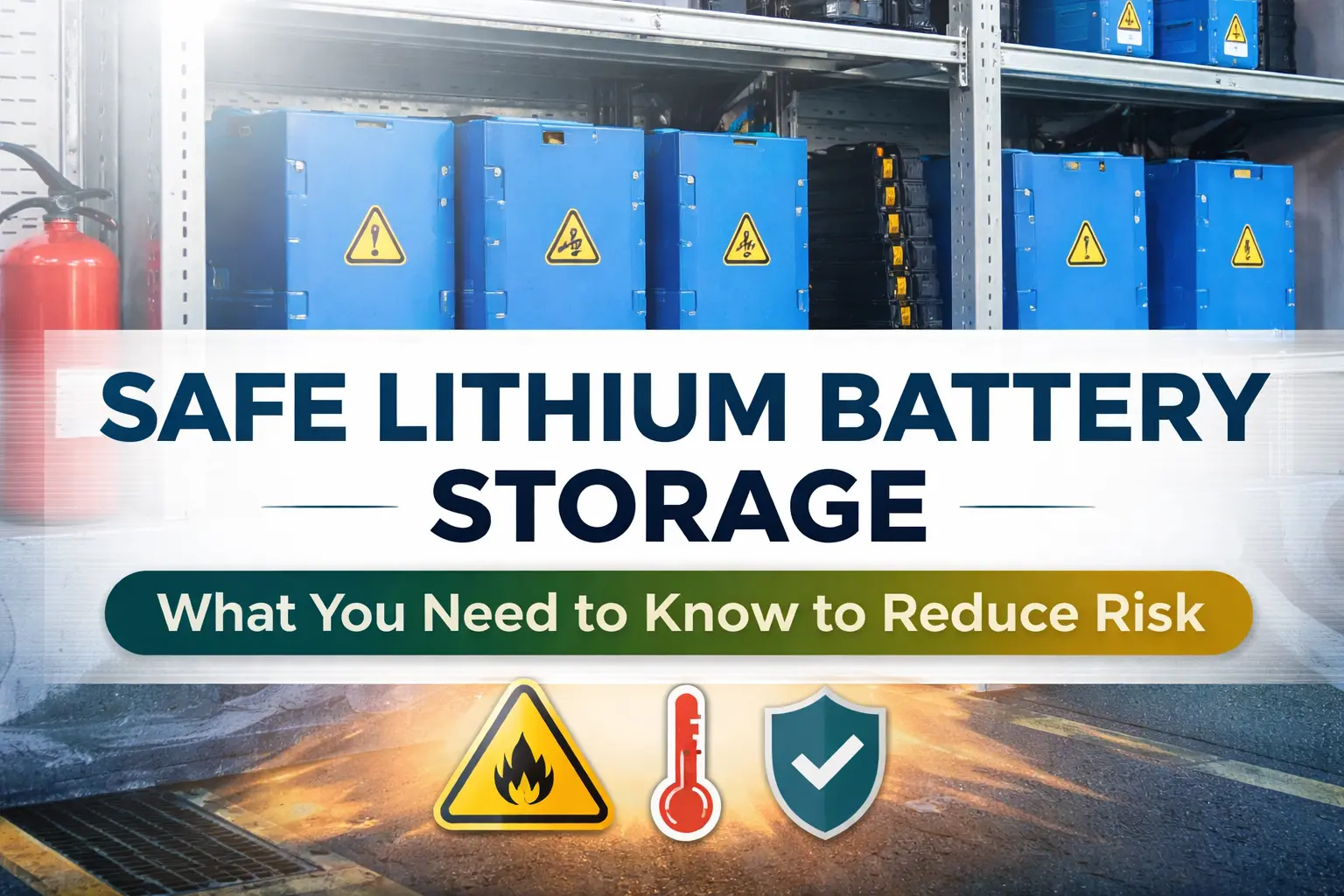
Lithium batteries are everywhere, from handheld electronics and power tools to industrial equipment and large energy storage systems. While they offer high efficiency and performance, they also introduce specific safety risks when stored improperly. Fires, thermal runaway, and toxic gas release are not theoretical issues; they are real-world incidents that continue to affect homes, businesses, and facilities.
Understanding how lithium battery storage works and how risks can be reduced is essential for anyone responsible for handling or storing these batteries.
Why Lithium Battery Storage Is a Safety-Critical Issue
Lithium batteries store a large amount of energy in a compact space. When something goes wrong, that stored energy can be released rapidly and violently. Unlike traditional batteries, lithium batteries can ignite without an external flame and may continue burning even after fire suppression efforts begin.
Storage is often overlooked because batteries are “not in use.” In reality, most lithium battery incidents occur during storage, not operation. This makes storage design, handling practices, and awareness critical elements of risk prevention.
How Lithium Batteries Behave in Storage Environments
Energy Density and Thermal Sensitivity
Lithium batteries are highly sensitive to temperature changes. Excess heat accelerates chemical reactions inside the battery, increasing the likelihood of failure. Cold environments can also degrade battery performance and integrity over time.
What Happens When a Lithium Battery Fails
When a lithium battery fails, it may enter a state known as thermal runaway. This process generates intense heat, fire, and gas release, often spreading to nearby batteries. Stored batteries positioned too closely together can amplify this effect.
The Most Common Lithium Battery Storage Hazards
In environments where ignition or pressure release is a concern, explosion-resistant storage solutions may be considered to reduce the impact of battery failure.
Thermal Runaway and Fire Propagation
Thermal runaway can spread rapidly when batteries are stored in bulk or without separation. One failing cell can trigger a chain reaction.
Damage Caused by Improper Handling or Stacking
Physical damage such as crushing, puncturing, or bending significantly increases failure risk. Improper stacking or unsecured storage areas are common contributors.
Environmental and Temperature-Related Risks
Poor ventilation, excessive heat, humidity, or exposure to direct sunlight all elevate storage hazards.
Lithium Battery Types and How Storage Needs Differ
Lithium-Ion Batteries Used in Equipment and Electronics
These are the most common and are used in consumer devices, tools, and machinery. They require controlled temperatures and protection from physical damage.
Lithium Metal Batteries and Elevated Reactivity
Lithium metal batteries are more reactive and often subject to stricter storage practices due to increased fire risk.
Large-Format and Industrial Battery Systems
Energy storage systems and industrial battery packs contain higher energy loads and typically require dedicated storage areas or structures designed to limit fire spread.
Core Principles of Safe Lithium Battery Storage
In many facilities, lithium batteries are stored within fire-rated storage buildings designed to limit fire spread and protect surrounding operations.
Temperature Control and Heat Management
Batteries should be stored in cool, stable environments away from heat sources.
Physical Separation and Fire Load Reduction
Separating batteries into smaller groups reduces the likelihood of large-scale incidents.
Ventilation and Gas Release Considerations
Adequate airflow prevents heat buildup and limits the accumulation of hazardous gases.
Fire-Resistant Storage Areas and Enclosures
Using fire-resistant storage solutions helps contain incidents and protect surrounding spaces.
Indoor vs. Outdoor Lithium Battery Storage Considerations
Risks and Requirements for Indoor Storage Areas
Indoor storage must account for fire-rated construction, monitoring systems, and controlled access. These environments require careful planning to minimize risk to people and infrastructure.
When Outdoor Storage Is the Safer Option
Outdoor storage is often preferred for larger quantities, as it reduces exposure to occupied buildings. Weather protection and security remain essential considerations.
Lithium Battery Storage Challenges for Businesses and Facilities
Warehouses, Manufacturing, and Energy Facilities
Facilities handling lithium batteries at scale face additional complexity, including inventory management, inspection routines, and emergency planning.
Training, Monitoring, and Ongoing Risk Management
Staff awareness plays a major role in safety. Facilities that invest in training and regular inspections are better equipped to identify issues before incidents occur.
Safety Standards and Guidance That Influence Storage Practices
Lithium battery storage is typically addressed within broader fire and safety frameworks. These guidelines focus on reducing ignition sources, limiting fire spread, and protecting people and property. While requirements vary by location and application, alignment with recognized safety principles is a common goal across industries.
Best Practices for Long-Term Lithium Battery Storage
Facilities often combine battery storage with secondary containment systems to help isolate damaged units and reduce environmental exposure.
Recommended State of Charge for Storage
Storing batteries at a partial charge helps preserve battery health and reduces failure risk.
Inventory Rotation and Battery Aging
Batteries degrade over time. Rotating inventory prevents long-term storage of aging or compromised units.
Inspection and Early Warning Signs
Swelling, leakage, corrosion, or unusual odors should be treated as warning signs. Damaged batteries should be isolated immediately.
Preparing for Lithium Battery Storage Emergencies
Emergency planning may also involve access to protective shelter structures for personnel during severe or unpredictable events.
Fire Response and Evacuation Planning
Facilities should plan for worst-case scenarios, including evacuation routes and coordination with local fire authorities.
Why Lithium Battery Fires Require Special Attention
Lithium battery fires behave differently than conventional fires. They can reignite and burn at higher temperatures, making preparedness essential.
Why Awareness and Proper Storage Design Matter
Many lithium battery incidents occur because risks are underestimated. Awareness, combined with thoughtful storage design, dramatically reduces the likelihood of accidents. Safe storage is not about reacting to emergencies, it’s about preventing them.
Final Thoughts on Reducing Lithium Battery Storage Risk
Lithium batteries are an essential part of modern technology, but they must be managed responsibly. Safe lithium battery storage protects people, facilities, and operations by addressing risks before they escalate.
With proper planning, awareness, and storage practices, lithium batteries can be stored safely and reliably over the long term.
FAQ: Lithium Battery Storage
Q1. Is it dangerous to store lithium batteries?
Lithium batteries can be safely stored when proper temperature control, separation, and handling practices are followed. Risk increases when batteries are damaged, overheated, or improperly stored.
Q2. What is the safest way to store lithium batteries long term?
The safest approach is to store batteries in a cool, dry environment at a partial charge, with regular inspections and physical separation to reduce fire spread risk.
Q3. Can lithium batteries catch fire while in storage?
Yes. Lithium batteries can ignite during storage due to thermal runaway, physical damage, or environmental factors such as excessive heat.
Q4. Should lithium batteries be stored indoors or outdoors?
Small quantities are often stored indoors with fire-resistant measures, while larger quantities are typically safer outdoors to reduce risk to occupied buildings.
Q5. How do you store damaged lithium batteries safely?
Damaged batteries should be isolated immediately in a designated area away from other batteries and combustible materials and handled according to safety guidance.