
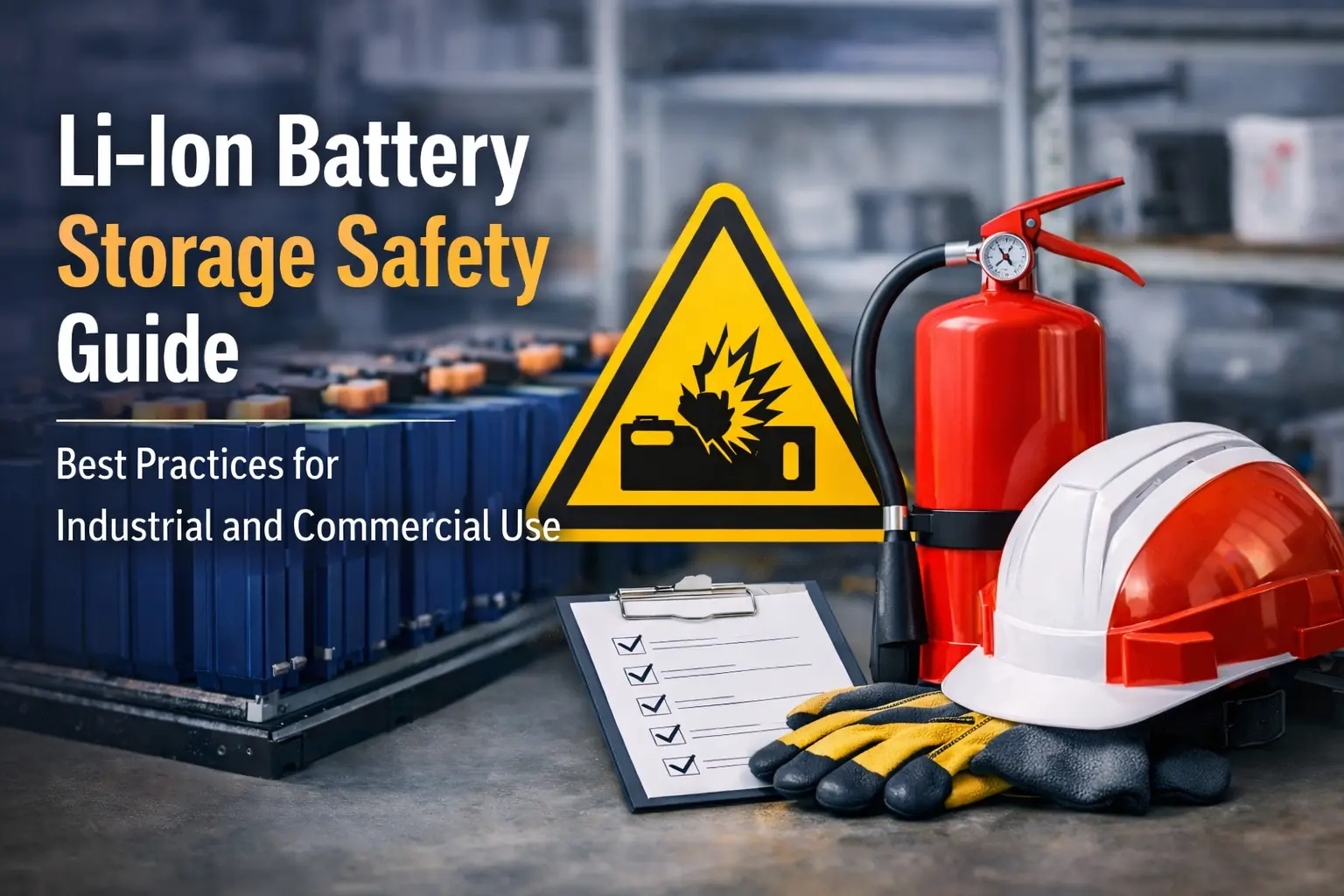
Lithium-ion (Li-ion) batteries are widely used in modern technology, from electric vehicles to renewable energy storage. While they are highly efficient and long-lasting, improper storage or handling can lead to safety hazards, equipment damage, and financial losses. Understanding the best practices for Li-ion battery storage is critical for industrial facilities, commercial operations, and even home setups managing multiple batteries.
This guide will explore practical strategies, safety measures, and regulatory considerations to ensure your lithium-ion batteries remain safe, functional, and compliant.
Why Proper Lithium-Ion Battery Storage Matters
Li-ion batteries are sensitive to environmental factors such as temperature, humidity, and physical stress. Improper storage can cause:
- Thermal runaway: Batteries overheating and catching fire
- Capacity loss: Reduced performance over time
- Leakage or chemical hazards: Risk of toxic or corrosive exposure
- Regulatory non-compliance: Violating fire and safety codes
For industrial operations that store multiple batteries for energy systems or electric fleets, the stakes are even higher. Following storage standards protects both people and assets.
Key Principles of Li-Ion Battery Storage
-
Temperature Control
Temperature is the most critical factor in Li-ion battery longevity. Ideal storage conditions:
- 15–25°C (59–77°F) for long-term storage
- Avoid high heat (>30°C/86°F), which accelerates chemical degradation
- Avoid freezing conditions (<0°C/32°F), which can permanently damage the cells
For large-scale storage, consider temperature-controlled storage rooms or cabinets equipped with ventilation and monitoring systems.
-
Proper Humidity Levels
High humidity can lead to condensation and short circuits. Best practices:
- Maintain 40–60% relative humidity
- Use sealed containers or storage racks for high-humidity areas
- Avoid direct exposure to rain, leaks, or flood-prone environments
Humidity monitoring is especially critical in warehouse or industrial storage where batteries are stacked in bulk.
-
Segregation of Batteries
Not all Li-ion batteries are the same. Segregation reduces risk:
- Separate by type or manufacturer to avoid voltage and chemistry mismatches
- Store charged and discharged batteries separately
- Isolate damaged, swollen, or aged batteries immediately
Physical separation and containment reduce the chance of thermal propagation in case of an incident.
-
Use of Fire-Resistant Storage Solutions
Industrial Li-ion battery storage should employ fire-rated cabinets or enclosures. Features to look for:
- Explosion-proof ventilation to prevent pressure build-up
- Fire suppression systems integrated with storage rooms
- Bunded or secondary containment trays to collect electrolyte leaks
Fire-rated solutions are critical for facilities storing dozens or hundreds of batteries.
-
Labeling and Inventory Management
Clear identification reduces errors and improves safety:
- Use labels indicating charge status, type, and installation date
- Implement first-in, first-out (FIFO) practices
- Maintain digital inventory systems to track battery age, usage, and condition
This approach not only prevents accidental use of faulty batteries but also ensures regulatory compliance.
Safe Handling Practices
Proper storage alone isn’t enough; handling is equally important:
- Always wear protective gear (gloves, eye protection) when moving batteries
- Avoid dropping, puncturing, or crushing batteries
- Transport batteries in approved containers to prevent short-circuits
- Do not store batteries near metal objects that can bridge terminals
Following these steps minimizes fire hazards and extends the operational lifespan of your Li-ion batteries.
Charging and Storage Recommendations
For long-term storage:
- Store batteries at ~40–60% charge; fully charged batteries can degrade faster
- Do not leave batteries fully discharged for extended periods
- Use manufacturer-recommended chargers and avoid rapid charging while in storage
These guidelines help maintain capacity and prevent safety incidents.
Regulatory and Compliance Considerations
Many jurisdictions regulate Li-ion battery storage due to fire risk. Key points include:
- NFPA 855: Standard for the installation of stationary energy storage systems
- UL 9540: Safety certification for energy storage systems
- Local fire codes: May require fire-rated storage rooms or cabinets
Compliance ensures not only legal adherence but also reduced liability and insurance premiums.
Industrial Applications of Li-Ion Battery Storage
Li-ion batteries are used in:
- Renewable energy systems (solar, wind)
- Electric vehicle fleets (EV charging stations, logistics)
- Data centers (backup energy storage)
- Manufacturing facilities (forklifts, robotics, and energy storage)
Each application requires tailored storage strategies depending on battery volume, environment, and safety protocols.
Tips for Extending Li-Ion Battery Life
- Regular inspection: Look for swelling, leaks, or corrosion
- Environment monitoring: Ensure storage conditions remain consistent
- Rotation: Use older batteries first to maintain healthy lifecycle
- Avoid overcharging: Use smart chargers with cut-off features
- Professional guidance: Consult battery manufacturers for specific storage recommendations
These practices reduce degradation, increase lifespan, and prevent hazards.
Conclusion
Proper Li-ion battery storage is essential for safety, performance, and compliance. By controlling temperature and humidity, segregating batteries, using fire-rated solutions, and following handling best practices, industrial and commercial facilities can minimize risk and maximize battery life.
Implementing these practices ensures that your Li-ion energy storage solutions remain efficient, reliable, and safe over time.