
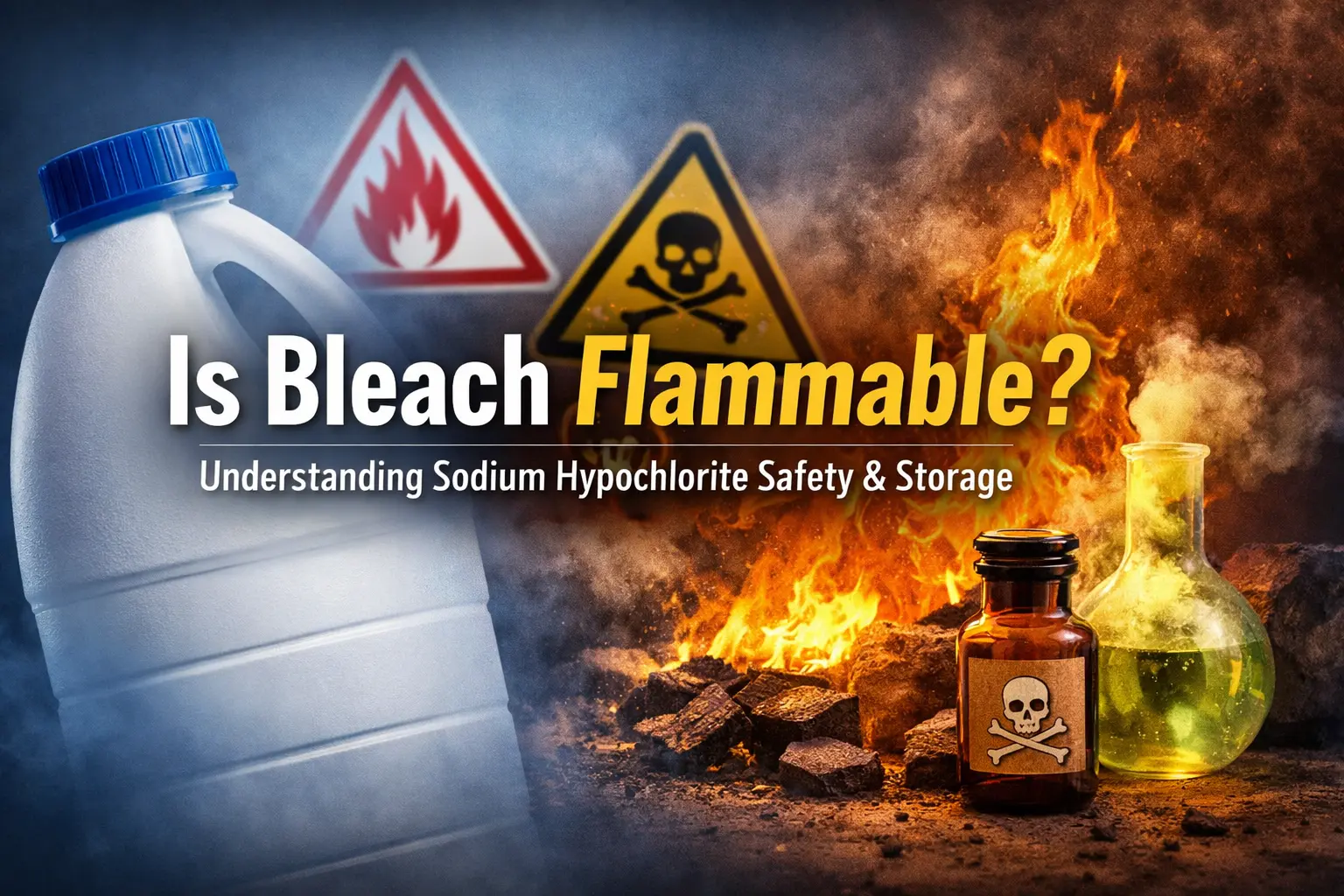
Bleach is one of the most widely used chemical products in homes, healthcare, water treatment, and industrial facilities. Despite its common presence, many people still ask an important safety question: Is bleach flammable? Closely tied to this is a deeper concern around sodium hypochlorite safety, especially when bleach is stored or handled in larger quantities.
This guide provides a clear, expert explanation of bleach flammability, chemical behavior, storage requirements, and real-world safety risks helping facility managers, safety officers, and informed users understand how to manage sodium hypochlorite responsibly.
What Is Bleach (Sodium Hypochlorite)?
Household and industrial bleach is primarily a solution of sodium hypochlorite (NaOCl) diluted in water. It is commonly used for:
- Disinfection and sanitization
- Water and wastewater treatment
- Surface cleaning and mold control
- Industrial sanitation processes
Sodium hypochlorite is a strong oxidizer, which plays a major role in how it behaves during fires or chemical reactions.
Is Bleach Flammable? (Clear Answer)
No – bleach is not flammable.
Sodium hypochlorite solutions do not ignite or burn under normal conditions. They contain a high percentage of water and lack the chemical properties required to support combustion.
However, “not flammable” does not mean “risk-free.” Bleach presents other serious hazards that are often misunderstood or underestimated.
Why Bleach Is Still Considered a Fire Hazard
Although bleach itself does not burn, it can intensify fires under certain conditions due to its oxidizing nature.
Oxidizing Behavior Explained
- Sodium hypochlorite releases oxygen when heated or decomposed
- Oxygen supports combustion of other materials
- This can make nearby fires burn hotter and faster
In fire scenarios, bleach containers exposed to heat may:
- Decompose and release toxic gases
- Build internal pressure and rupture
- Accelerate surrounding fires involving organic materials
Can Bleach Explode?
Bleach is not explosive, but dangerous reactions can occur when it is:
- Exposed to high heat
- Mixed with incompatible chemicals
- Stored in sealed, unventilated containers
Decomposition under heat can generate:
- Chlorine gas
- Oxygen gas
- Corrosive vapors
These conditions can cause containers to burst, creating a serious safety incident.
Dangerous Chemical Reactions Involving Bleach
One of the biggest sodium hypochlorite risks comes from chemical incompatibility.
Never Mix Bleach With:
- Ammonia → Produces toxic chloramine gases
- Acids → Releases chlorine gas
- Alcohols or solvents → Can form explosive compounds
- Hydrogen peroxide → Violent oxygen release
These reactions are responsible for many household and workplace chemical injuries.
Health Risks of Sodium Hypochlorite Exposure
Bleach exposure risks depend on concentration, duration, and environment.
Inhalation Risks
- Respiratory irritation
- Coughing and chest tightness
- Lung injury at high concentrations
Skin and Eye Contact
- Chemical burns
- Severe eye damage
- Dermatitis with repeated exposure
Ingestion
- Corrosive injury to mouth, throat, and stomach
- Requires immediate medical attention
Is Household Bleach Different From Industrial Bleach?
Yes – and this distinction matters for safety.
Type |
Typical Concentration |
| Household bleach | 5–6% sodium hypochlorite |
| Commercial bleach | 8–12% |
| Industrial bleach | 12–15% or higher |
Higher concentrations:
- Increase corrosion risk
- Increase toxic gas release potential
- Require stricter storage and handling controls
Proper Storage Guidelines for Bleach
Safe sodium hypochlorite storage is essential in both residential and industrial settings.
Best Storage Practices
- Store in a cool, well-ventilated area
- Keep away from direct sunlight and heat
- Use corrosion-resistant containers
- Never store near acids or ammonia
- Keep containers loosely vented if recommended by manufacturer
Temperature Considerations
- Heat accelerates bleach decomposition
- Ideal storage temperature is below 77°F (25°C)
Is Bleach Considered a Hazardous Material?
Yes. While bleach is not flammable, it is often regulated as a hazardous or corrosive substance, especially in bulk quantities.
Common Regulatory Considerations
- OSHA Hazard Communication Standard
- EPA chemical handling and disposal rules
- Local fire codes for oxidizers and corrosives
- Spill containment requirements in industrial facilities
Large-scale storage may require:
- Secondary containment
- Ventilated storage areas
- Spill response planning
Fire Response: What Happens If Bleach Is Involved in a Fire?
Firefighters treat bleach-involved incidents cautiously.
Key Fire Risks
- Release of chlorine gas when heated
- Container rupture from pressure buildup
- Enhanced combustion of nearby materials
Firefighting Approach
- Use water spray to cool containers
- Avoid breathing vapors
- Full protective equipment required
Environmental Risks of Bleach
Improper disposal of sodium hypochlorite can:
- Harm aquatic life
- Disrupt wastewater treatment systems
- Damage soil chemistry
Bleach should never be dumped into storm drains or natural waterways.
Common Myths About Bleach Safety
❌ “Bleach can catch fire”
False – bleach does not ignite.
❌ “Bleach is safe to mix with cleaners”
False – mixing is the leading cause of bleach injuries.
❌ “Bleach is harmless because it’s common”
False – concentration and exposure matter.
Best Practices for Safe Bleach Handling
- Train employees on SDS information
- Use PPE when handling concentrated bleach
- Store separately from incompatible chemicals
- Inspect containers regularly for corrosion
- Label storage areas clearly
Why Bleach Safety Still Matters
Because bleach is so familiar, it’s often handled casually. This is where risk increases. Most serious sodium hypochlorite incidents result from:
- Improper storage
- Poor ventilation
- Chemical mixing
- Heat exposure
Understanding bleach behavior helps prevent:
- Toxic gas exposure
- Chemical burns
- Facility shutdowns
- Environmental violations
Final Answer: Is Bleach Flammable?
No – bleach is not flammable.
But sodium hypochlorite is still hazardous and must be treated with care.
Proper storage, ventilation, chemical segregation, and training are essential to using bleach safely, especially in commercial and industrial environments.
FAQ’s:
- Is bleach flammable or combustible?
No, bleach is not flammable or combustible. Sodium hypochlorite solutions are water-based and do not ignite, but they can increase fire intensity by releasing oxygen when heated.
- Can bleach catch fire under any conditions?
Bleach itself cannot catch fire. However, when exposed to high heat or fire, it can decompose and release oxygen and toxic gases, which may worsen surrounding fires.
- Is sodium hypochlorite considered a fire hazard?
Sodium hypochlorite is not a fire hazard by ignition, but it is considered a chemical hazard because it is a strong oxidizer and can intensify fires involving other materials.
- Can bleach explode if heated?
Bleach does not explode, but heating can cause pressure buildup inside containers, potentially leading to rupture and release of chlorine gas and corrosive vapors.
- What happens if bleach is mixed with other chemicals?
Mixing bleach with ammonia, acids, or solvents can produce toxic gases such as chlorine or chloramines, which can be dangerous or fatal in enclosed spaces.
- Is household bleach safer than industrial bleach?
Yes, household bleach has a lower sodium hypochlorite concentration than industrial bleach. Industrial-grade bleach requires stricter handling, storage, and ventilation controls.
- How should bleach be stored safely?
Bleach should be stored in a cool, well-ventilated area, away from heat, sunlight, acids, and ammonia, in corrosion-resistant containers with proper labeling.
- Does bleach release toxic gas during a fire?
Yes. When heated or involved in a fire, bleach can release chlorine gas, which is toxic and requires emergency response precautions.
- Is bleach regulated as a hazardous material?
In large quantities, bleach is regulated as a hazardous chemical due to its corrosive and oxidizing properties, especially in industrial and commercial environments.
- Can bleach be stored near flammable liquids?
Bleach should not be stored near flammable or combustible liquids because it can intensify fires if a spill or fire occurs nearby.