
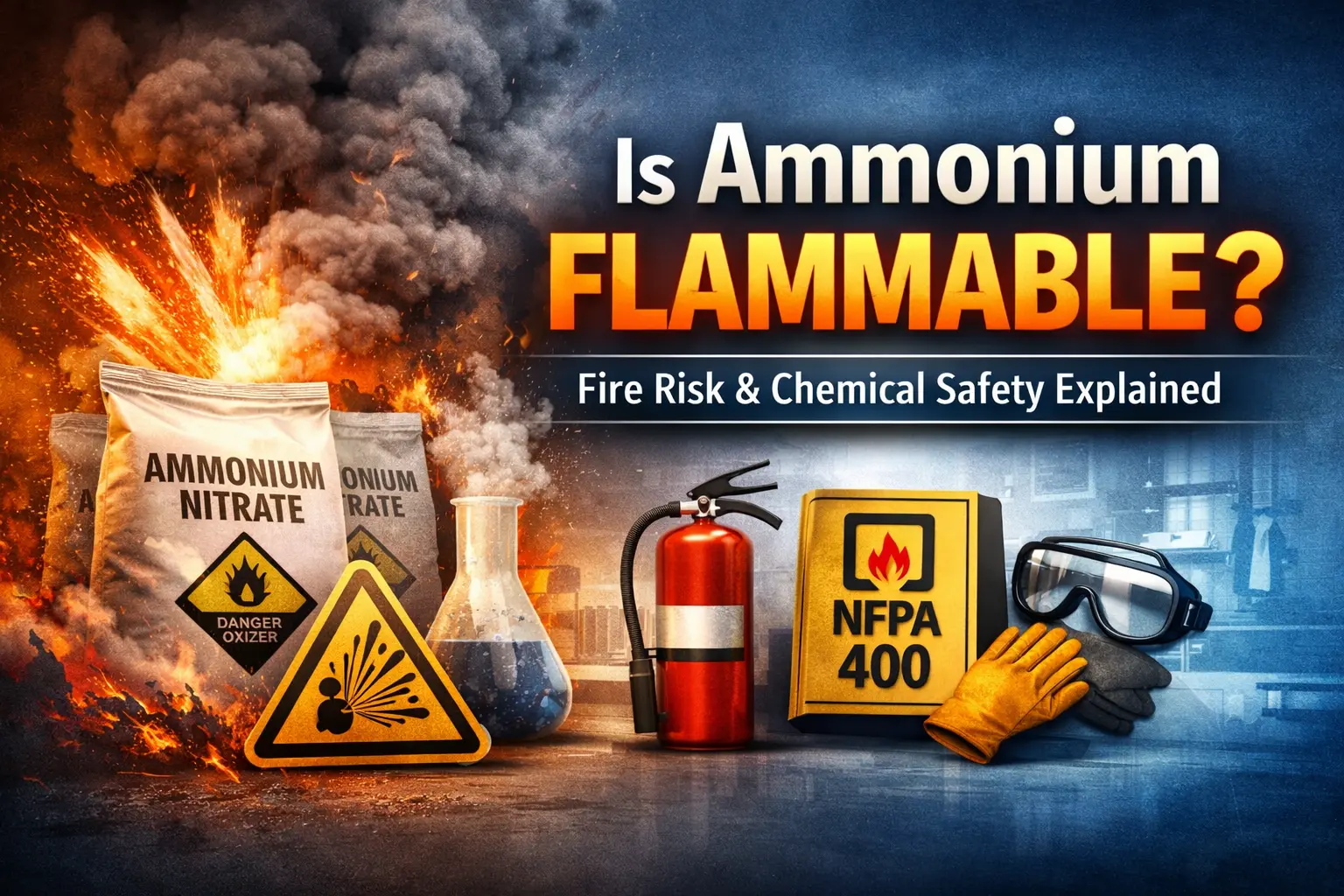
Ammonium compounds are commonly used in industries ranging from agriculture to cleaning products. However, many people wonder: Is ammonium flammable? Understanding the fire risk and chemical safety is crucial for anyone handling these substances. This article breaks down ammonium’s properties, fire hazards, and safety measures to ensure proper handling in industrial, laboratory, and domestic settings.
What is Ammonium?
Ammonium (NH₄⁺) is a positively charged ion formed when ammonia (NH₃) combines with a hydrogen ion. It is not a single chemical but forms salts and compounds, such as:
- Ammonium nitrate (NH₄NO₃) – widely used as fertilizer and in explosives
- Ammonium chloride (NH₄Cl) – common in cleaning products and labs
- Ammonium sulfate ((NH₄)₂SO₄) – primarily used as fertilizer
Each ammonium compound has unique properties, including flammability and reactivity.
Is Ammonium Flammable?
The short answer: Ammonium itself is not flammable.
Most ammonium salts, like ammonium chloride or ammonium sulfate, do not ignite easily. However, some compounds, particularly ammonium nitrate, can pose significant fire and explosion risks under specific conditions:
- Oxidizing properties: Ammonium nitrate can supply oxygen to fuel fires
- Heat sensitivity: It may decompose violently when heated above 210°C (410°F)
- Contamination risks: Mixing with combustible materials can create explosive hazards
So, while simple ammonium compounds are generally safe, certain ammonium derivatives can be hazardous.
Fire Risk Factors of Ammonium Compounds
Several factors affect the fire risk of ammonium compounds:
1. Type of Compound
- Ammonium chloride: Stable, non-flammable
- Ammonium sulfate: Safe under normal conditions
- Ammonium nitrate: Highly reactive under heat or contamination
2. Storage Conditions
- Store in cool, dry, ventilated areas
- Avoid confined spaces and proximity to combustible materials
- Segregate oxidizers from flammables
3. Contamination
- Impurities like oil, metal powders, or fuel can trigger reactions
- Contaminated ammonium salts can decompose at lower temperatures
4. Environmental & Mechanical Factors
- High humidity, friction, or impact can increase instability
- Mechanical processes like grinding or crushing may trigger decomposition
Chemical Safety Guidelines
1. Labeling & Identification
- Clearly label all ammonium compounds
- Keep up-to-date Material Safety Data Sheets (MSDS)
2. Storage Best Practices
- Store reactive salts in cool, dry, ventilated areas
- Avoid storing in confined spaces near combustibles
- Follow NFPA 400 standards for ammonium nitrate
3. Personal Protective Equipment (PPE)
- Gloves, goggles, and lab coats for handling
- Respirators in industrial or dusty environments
4. Fire Prevention
- Install fire extinguishers rated for chemical fires
- Prohibit open flames, sparks, and smoking near chemicals
- Train staff in emergency response
5. Regulatory Compliance
- Follow OSHA chemical handling guidelines
- Adhere to NFPA and local fire codes
Emergency Response for Ammonium Fires
Fire Containment
- Small fires: Water or foam may suffice
- Large fires: Specialized chemical fire suppression needed
Evacuation
- Evacuate personnel if smoke, heat, or decomposition occurs
- Maintain a safe perimeter
Spill Management
- Use non-combustible tools
- Avoid sweeping dust into the air
- Dispose of materials per hazardous waste regulations
Common Myths About Ammonium Flammability
- All ammonium compounds are explosive. – False; only specific salts like ammonium nitrate are dangerous.
- Ammonium ignites like gasoline. – False; most salts are stable.
- Small amounts are always safe. – False; reactive compounds require caution, regardless of quantity.
Key Takeaways
- Ammonium is generally not flammable, but some salts (ammonium nitrate) can pose fire hazards.
- Proper storage, contamination control, and temperature management are essential.
- Always follow regulatory guidelines (OSHA, NFPA) and use appropriate PPE.
- Emergency planning and fire suppression measures minimize risk.
Conclusion
Ammonium compounds are essential in multiple industries, but their safety depends on understanding the chemical type, handling requirements, and storage precautions. While most ammonium salts are safe, reactive compounds like ammonium nitrate require vigilance. Following expert safety protocols ensures a secure environment for both industrial and laboratory applications.
Expert Tip: Always check the MSDS and NFPA guidelines before handling ammonium compounds. Knowledge, preparation, and adherence to safety standards are your best protection against fire hazards.