
Lessons Learned from Hazardous Material Storage and Industrial Accident Prevention
In the world of industrial operations, the storage of hazardous materials is a critical concern. The potential for accidents is ever-present, and the consequences can be severe, ranging from environmental damage to significant financial penalties. For safety directors, EHS managers, and facility operators, understanding compliance and implementing effective storage solutions is not just a regulatory obligation but a necessity for operational safety and efficiency.
Why Compliance Matters
Compliance with regulations such as those from OSHA, EPA, NFPA, and IFC is crucial in preventing industrial accidents. Non-compliance can lead to fines, operational shutdowns, and increased liability in the event of an incident. For example, failing to adhere to OSHA’s requirements for hazardous material handling can result in penalties and increased scrutiny during inspections.
Key Regulatory Frameworks
Several key frameworks guide the storage of hazardous materials:
- OSHA: The Occupational Safety and Health Administration sets standards for safe working conditions, including the handling and storage of hazardous substances.
- EPA: The Environmental Protection Agency regulates the environmental impact of hazardous materials, focusing on proper containment and disposal.
- NFPA: The National Fire Protection Association provides guidelines on fire safety, including the storage of flammable liquids (NFPA 30).
- IFC: The International Fire Code outlines fire safety requirements for buildings, including those storing hazardous materials.
Common Compliance Failures
Common compliance failures in hazardous material storage include inadequate containment systems, improper indoor storage, and insufficient fire-rated separation. For instance, failing to use proper secondary containment systems as per 40 CFR §264.175 can lead to environmental contamination and hefty fines.
Lithium Battery and ESS Risks
When storing lithium batteries and energy storage systems (ESS), the risks of thermal runaway are significant. Compliance with NFPA 855 and IFC 1207 is essential to mitigate these risks. Proper storage solutions must address both storage and charging scenarios to prevent overheating and potential fires.
Fire-Rated Storage Explained
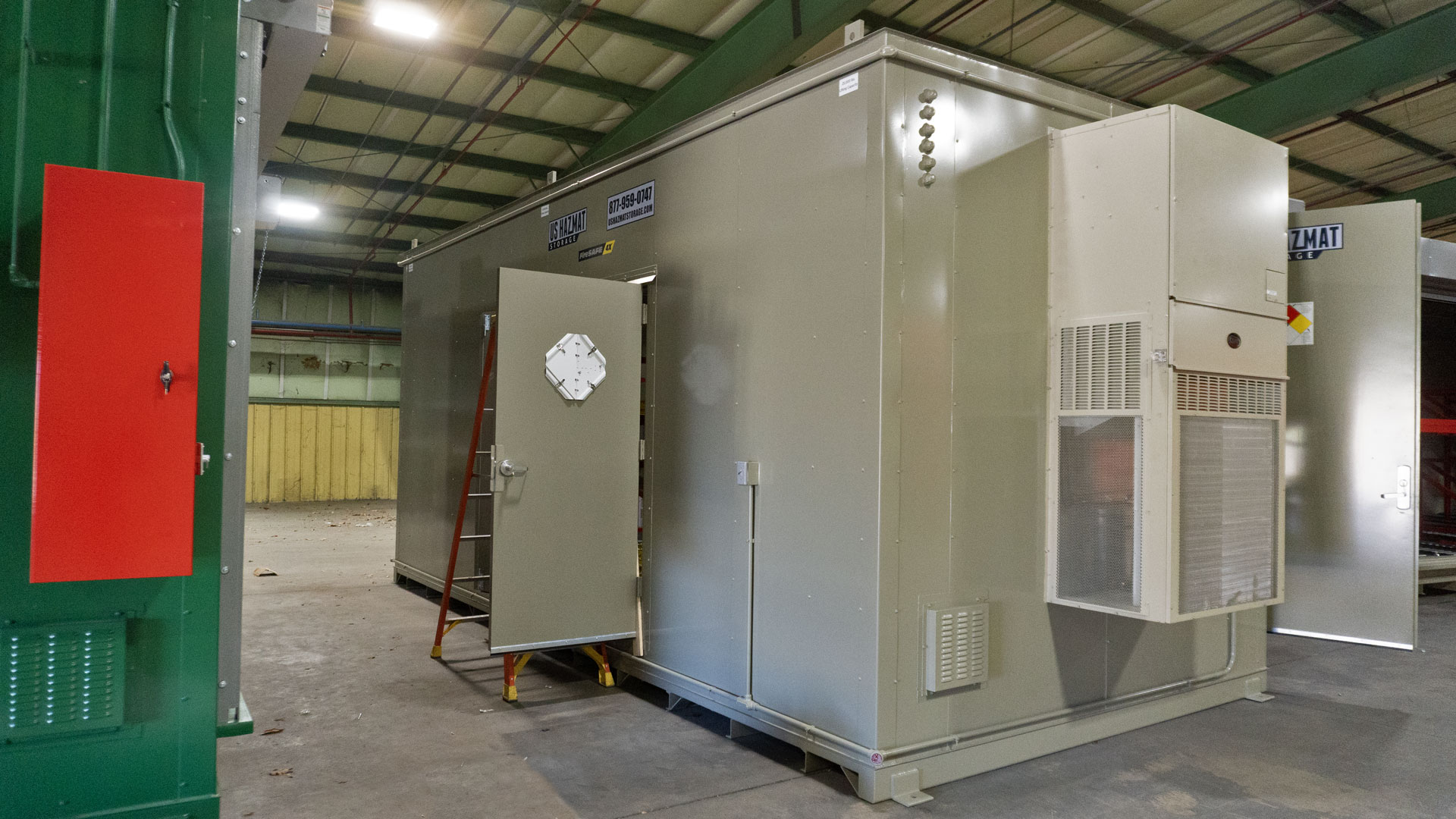
Fire-rated storage buildings are essential for safely housing hazardous materials. These structures are designed to withstand fire exposure for a specified period, typically 2-hour or 4-hour ratings. The choice between these depends on the distance to exposure and insurance requirements.
Inspection and Insurance Readiness
Being prepared for inspections by fire marshals and insurance carriers is crucial. This involves maintaining proper documentation, ensuring all storage solutions meet regulatory standards, and having an inspection checklist ready. This readiness not only ensures compliance but also facilitates smoother inspections.
Damage Control and Emergency Systems
Effective damage control and emergency response systems are vital. These include sumps for spill containment, ventilation systems, and fire suppression systems. Monitoring systems can also provide early warnings of potential issues, allowing for prompt action to prevent accidents.
US Hazmat Storage Systems vs Custom Construction
Choosing between US Hazmat Storage systems and custom construction can significantly impact compliance and operational efficiency. US Hazmat offers turnkey solutions that are engineered, manufactured, and installed with compliance in mind, ensuring faster deployment and adherence to regulations. Our nationwide delivery and compliance-first design provide a seamless solution compared to the lengthy and often complex process of custom construction.
Explore our Chemical Storage Buildings and Fire Rated Chemical Storage Buildings for more information.
Use Case Scenarios
Consider the following scenarios where US Hazmat Storage solutions can be applied:
- Manufacturing: Safe storage of raw materials and chemicals used in production processes.
- Construction Jobsite: Temporary storage solutions for hazardous materials on-site.
- Utility/Energy: Secure storage of lithium batteries and ESS to prevent thermal runaway incidents.
Call to Action
For a comprehensive solution to your hazardous material storage needs, request a quote or schedule a compliance consultation today. Visit our Hazmat Storage App for more insights into our offerings.
Conclusion
Ensuring compliance with hazardous material storage regulations is not just about avoiding fines; it’s about safeguarding your operations and the environment. With US Hazmat Storage, you can achieve compliance, enhance safety, and expedite your project timelines. Act now to secure your facility’s future.