
Hazardous Material Storage Rentals: A Complete Guide to Compliant, Flexible Chemical Storage Solutions
Introduction: Why Hazardous Material Storage Rentals Matter More Than Ever
This guide explains:
- What hazardous storage rentals are
- When rentals make more sense than permanent buildings
- How compliance is achieved under OSHA, EPA, and NFPA
- What types of materials can be stored
- How to select the right rental provider
And most importantly — how to avoid the costly mistakes that lead to citations, shutdowns, or environmental liability.
What Are Hazardous Material Storage Rentals?
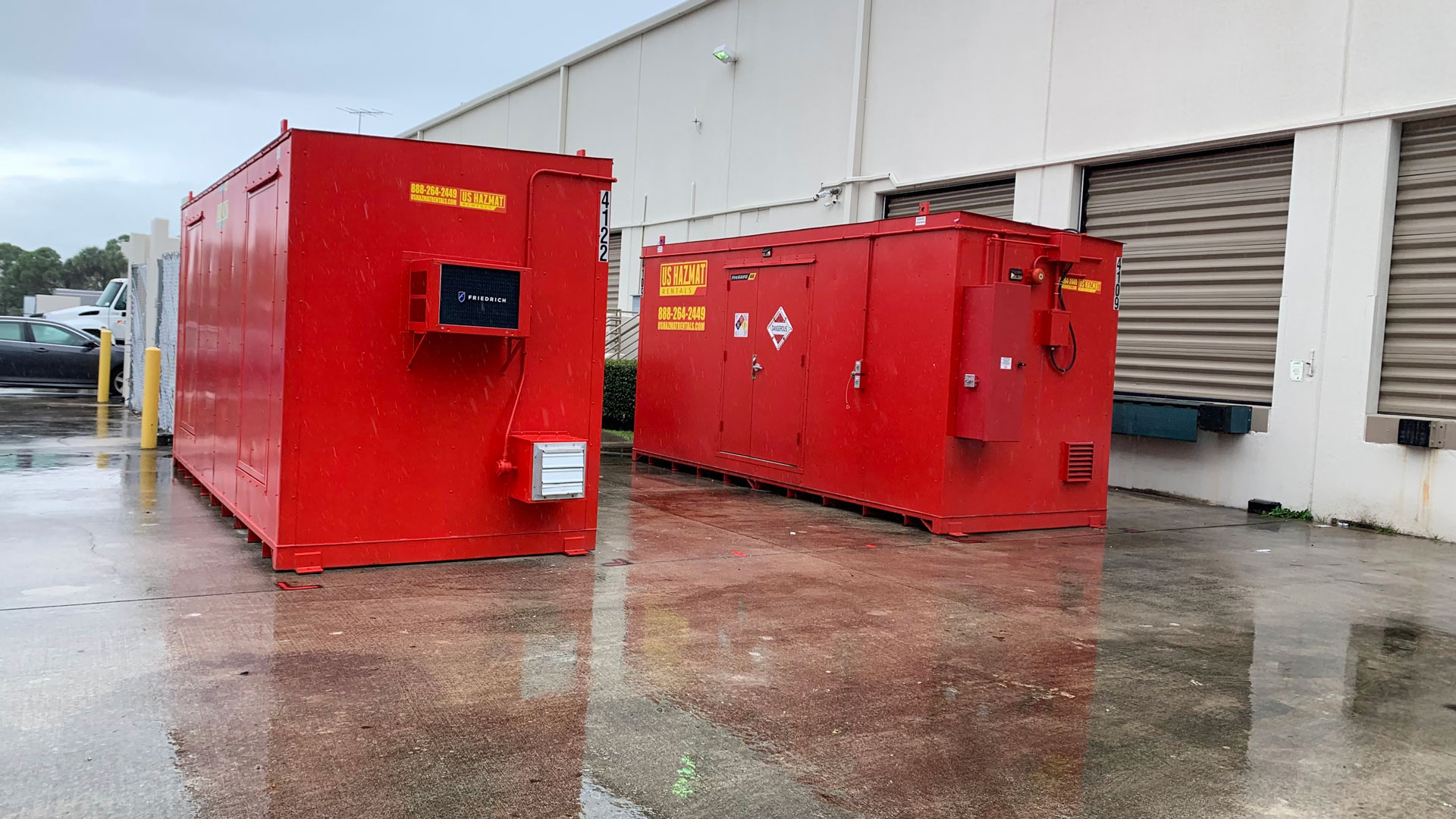
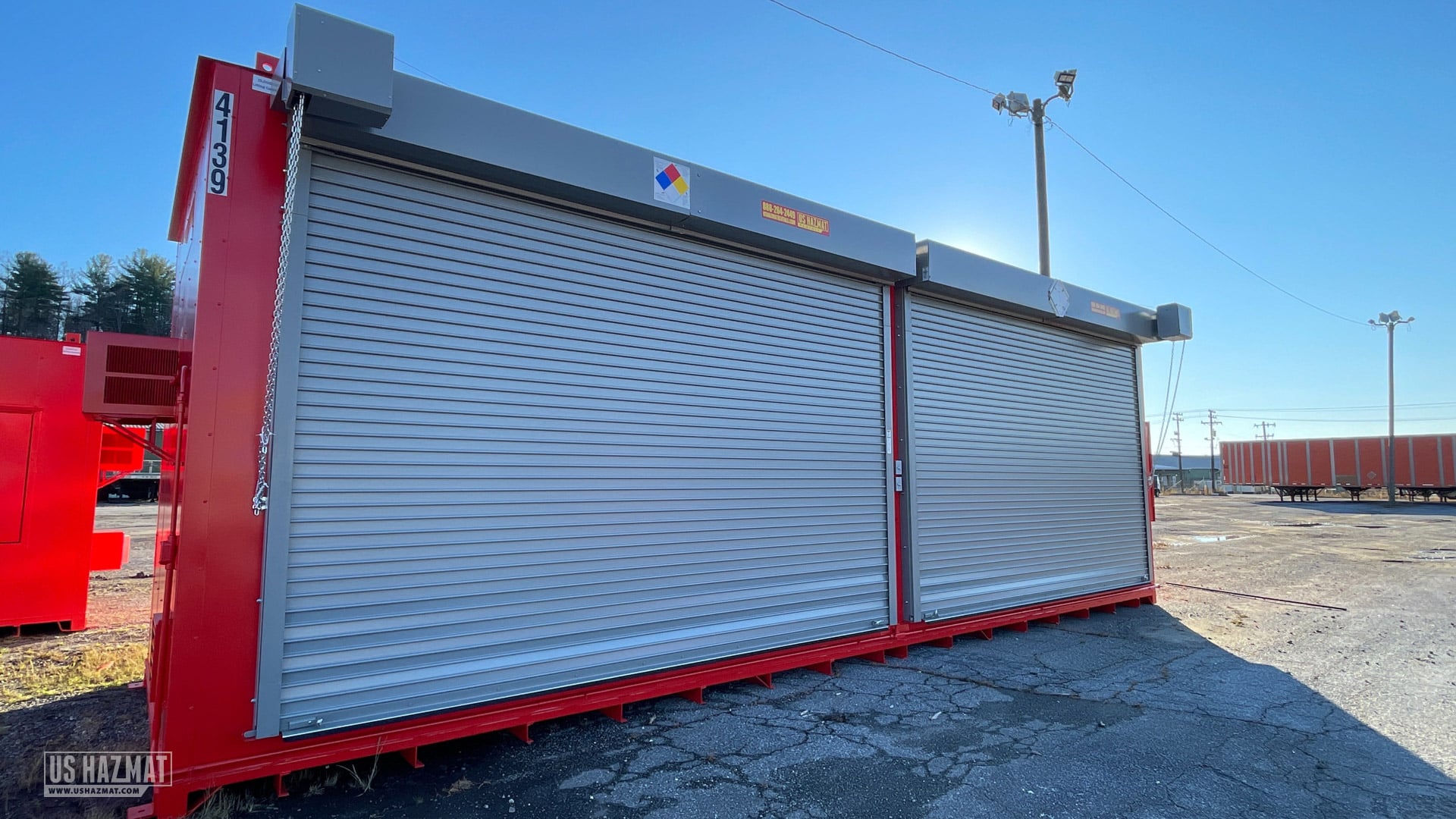
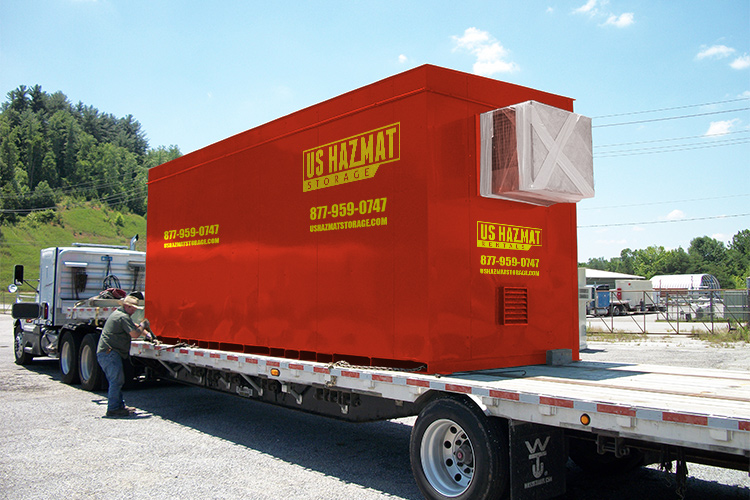
Hazardous material storage rentals are engineered, transportable storage buildings designed specifically for the compliant storage of chemicals, flammable liquids, hazardous waste, and regulated materials.
Unlike shipping containers, sheds, or modified trailers, these units are purpose-built to meet regulatory requirements such as:
- OSHA 29 CFR 1910
- EPA hazardous waste and spill containment rules
- NFPA fire codes (NFPA 30, 400, 45, 855, and others)
Rental storage buildings are delivered to your site ready for use, often within days — not months.
Typical Applications Include:
- Chemical manufacturing and processing
- Industrial maintenance operations
- Paint, coatings, and solvent storage
- Utilities and infrastructure projects
- Construction and remediation sites
- Emergency spill response staging
- Agricultural chemical storage
- Battery and energy storage support
For many organizations, renting is the fastest and most defensible way to achieve compliance.
Why Companies Choose Storage Rentals Instead of Permanent Buildings
Permanent hazardous storage buildings absolutely have their place — but they aren’t always the best choice.
Key Reasons Companies Rent:
1. Speed to Compliance
Permitting, engineering, and construction of permanent buildings can take months. Rental units can often be deployed in days or weeks, helping facilities immediately resolve compliance gaps.
2. Lower Upfront Cost
Rentals avoid:
- Capital expenditure
- Engineering and design fees
- Long construction timelines
- Uncertain future capacity needs
This makes rentals ideal for temporary, transitional, or scalable operations.
3. Flexibility for Changing Operations
Projects end. Production volumes change. Regulations evolve.
Rental storage allows companies to:
- Scale up or down
- Relocate units
- Adjust storage types without rebuilding
4. Insurance and Risk Management
Insurance carriers often prefer engineered storage buildings over improvised solutions. Renting compliant units can help:
- Reduce premiums
- Address underwriting concerns
- Demonstrate proactive risk control
Types of Hazardous Storage Buildings Available for Rent
Not all hazardous materials are the same — and neither are storage requirements.
A qualified rental provider will offer multiple configurations designed around material class, quantity, and regulatory requirements.
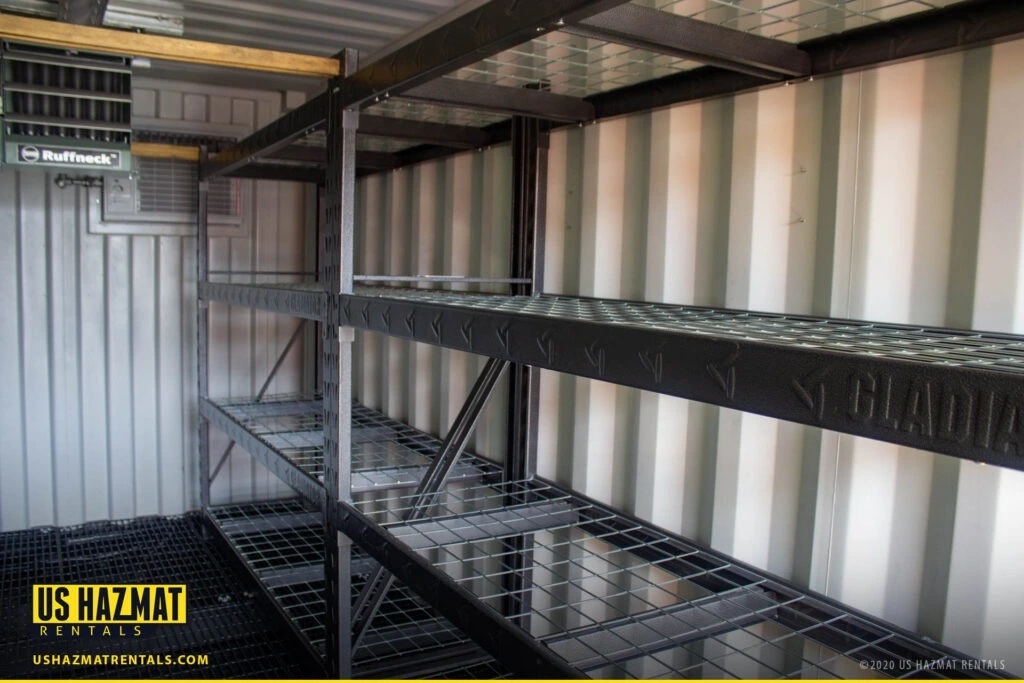
Chemical Storage Building Rentals
Designed for general hazardous chemicals, corrosives, and industrial materials.
Common features include:
- Spill containment floors
- Chemical-resistant coatings
- Ventilation systems
- Climate-controlled heating and cooling
- Secure access control
- Fire-rated construction (where required)
- Code compliant fire-suppression
Flammable Material Storage Rentals
Used for flammable and combustible liquids such as fuels, solvents, and coatings.
Typically compliant with NFPA 30, these units may include:
- Explosion-relief panels
- Classified electrical systems
- Enhanced ventilation
- Separation distances per fire code
- Grounding and bonding provisions
Hazardous Waste Storage Units
Used for temporary accumulation of regulated waste streams prior to disposal.
Designed to support:
- EPA container storage rules
- Satellite accumulation
- Proper segregation and labeling
- Secondary containment capacity requirements
Specialty Storage Applications
Some rental units are configured for:
- Flammable, combustible, and corrosives storage
- Lithium battery storage
- Aerosols and compressed gases
- Agricultural chemicals and fertilizers
- Laboratory chemicals
- Mixed-use storage with internal segregation
Regulatory Compliance: OSHA, EPA, and NFPA Explained
One of the most common mistakes companies make is assuming that “temporary” storage has fewer requirements.
It doesn’t.
OSHA Compliance
OSHA governs worker safety, including:
- Proper storage of hazardous chemicals
- Ventilation
- Fire protection
- Access and egress
- Hazard communication
Rental storage buildings must support compliance with OSHA standards applicable to your industry and materials.
EPA Requirements
EPA rules focus on:
- Environmental protection
- Spill prevention and control
- Hazardous waste storage
- Secondary containment
- Stormwater and runoff protection
Rental units with integrated spill containment floors help satisfy EPA expectations.
NFPA Fire Codes
NFPA standards govern fire risk and protection, including:
- NFPA 30 (Flammable & Combustible Liquids)
- NFPA 400 (Hazardous Materials)
- NFPA 45 (Laboratories)
- Local fire code adoption and amendments
A compliant storage rental is engineered with these standards in mind — not retrofitted after the fact.
The Hidden Risks of Non-Compliant Storage
Facilities often rely on:
- Shipping containers
- Pole barns
- Modified sheds
- Open-air pallet storage
These approaches may seem convenient, but they introduce serious risk.
Common Consequences:
- Fire marshal citations
- OSHA violations
- EPA enforcement actions
- Insurance claim denial
- Environmental cleanup liability
- Facility shutdowns
In contrast, renting a compliant hazardous storage building creates a documentable, defensible compliance position.
Temporary vs Long-Term Rentals: How Long Can You Rent?
Another misconception is that storage rentals are only short-term.
In reality, many companies rent units for:
- 6 months
- 12 months
- Multiple years
Long-term rentals are often used when:
- Permanent construction is delayed
- Site ownership is uncertain
- Operations are expected to change
- Capital budgets are constrained
Rental agreements can often be structured to align with project timelines and operational needs.
Deployment and Installation: What to Expect
A professional storage rental provider handles far more than delivery.
Typical Deployment Process:
- Needs assessment (materials, quantities, codes)
- Unit selection based on compliance requirements
- Site coordination
- LAHJ advisement
- Onsite access
- Delivery & placement
- Installation
- Delivery and placement
- Final setup and readiness
Many rental units are designed to sit on:
- Concrete
- Asphalt
- Gravel
This minimizes disruption to your facility.
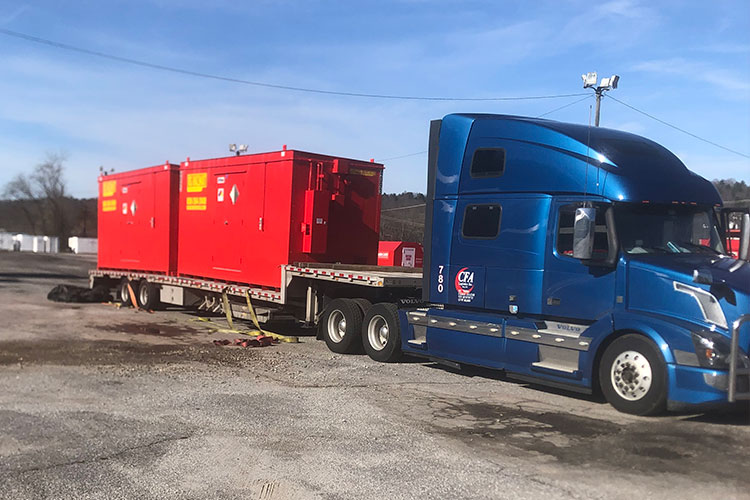
Emergency and Rapid-Response Storage Rentals
Some of the most critical use cases for hazardous storage rentals involve unexpected events:
- Chemical spills
- Fire damage
- Regulatory enforcement actions
- Natural disasters
- Supply chain disruptions
Having access to rapidly deployable storage allows organizations to:
- Stabilize the situation
- Protect workers and the environment
- Resume operations faster
- Demonstrate immediate corrective action to regulators
This is where rental providers with available inventory and national reach stand apart.
Who Uses Hazardous Storage Rentals?
These solutions are used across nearly every industrial sector:
- Manufacturing and fabrication
- Utilities and energy
- Construction and infrastructure
- Agriculture and agribusiness
- Food and beverage industrial operations
- Paint and coatings contractors
- Government and municipal operations
- Environmental remediation firms
What they all have in common is the need for safe, compliant, and flexible storage.
Choosing the Right Hazardous Storage Rental Provider
Not all providers are equal.
When evaluating rental options, look for:
- Compliance-Driven Design
Units should be purpose-built — not modified containers. - Code Knowledge
Your provider should understand OSHA, EPA, and NFPA requirements and help guide compliance decisions. - Multiple Configurations
Different materials require different solutions. - National Deployment Capability
If your operations span multiple sites or states, consistency matters. - Support Beyond Delivery
Look for guidance, documentation, and responsiveness — not just equipment.
How Storage Rentals Support Long-Term Compliance Strategy
Many organizations start with rentals — and that’s not a weakness.
In fact, rentals often become part of a phased compliance strategy:
- Immediate risk reduction
- Operational stabilization
- Long-term planning
- Potential transition to permanent storage later
Because rentals are scalable and adaptable, they support smarter decision-making over time.
Internal Resource Connections
To explore specific solutions, compliance details, and available inventory, visit:
- Storage Rentals – Overview of available hazardous material storage rental options
- Chemical Storage Rentals – Purpose-built chemical storage buildings
- Flammable Storage Rentals – NFPA-aligned flammable material solutions
- Hazardous Material Storage – Compliance-focused storage guidance
- US Hazmat Rentals – National provider of compliant storage rentals
Final Thoughts: Compliance Without Compromise
Hazardous material storage rentals are no longer a stopgap solution — they are a strategic tool.
When engineered correctly and deployed professionally, rental storage buildings:
- Reduce risk
- Improve compliance
- Protect people and property
- Preserve operational flexibility
Whether you’re responding to an immediate need or planning for evolving operations, compliant storage rentals offer a smarter path forward.
If you’re evaluating options, start with compliance — and work with a provider that treats safety, engineering, and regulatory alignment as non-negotiable.