
What Is Hazmat Container Storage?
Hazmat container storage refers to dedicated, code-compliant buildings or enclosures designed to store hazardous materials that are packaged in:
- 55-gallon drums
- Small chemical containers
- Palletized containers
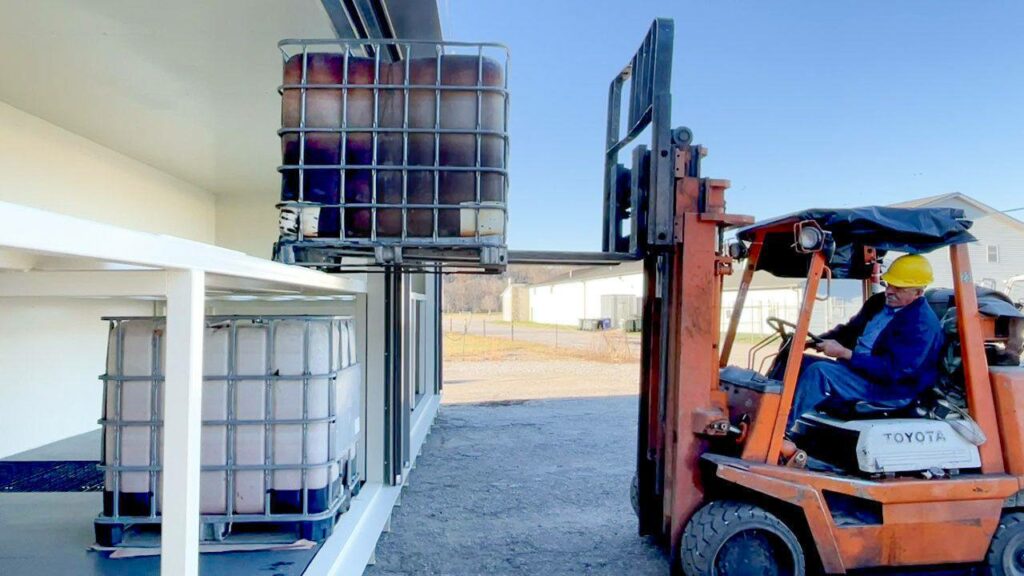
- Intermediate Bulk Containers (IBCs)
- Totes and composite containers
- Specialized chemical vessels
These storage buildings provide secondary containment, ventilation, fire protection, access control, and environmental safeguards that standard warehouses, sheds, or shipping containers cannot legally or safely provide.
Container Types Supported
US Hazmat Storage designs buildings to accommodate virtually all hazardous container formats, including:
Drum Storage
- Single-drum containment
- 1–4 drum configurations
- 1–100+ drum layouts
- Vertical drum racking
- Spill containment sump integration
- Drum dispensing and pumping stations
Palletized Container Storage
- Forklift-accessible pallet bays
- Mixed chemical pallet storage
- Segregated incompatibility zones
- Reinforced floors for heavy pallet loads
IBC Tote Storage
- 275-gallon and 330-gallon IBCs
- Small and Large Inventory Management Options
- Single-stack and double-stack layouts
- High-capacity secondary containment
- Bulk chemical transfer areas
Bulk & Mixed Containers
- Combined drum, pallet, and tote storage
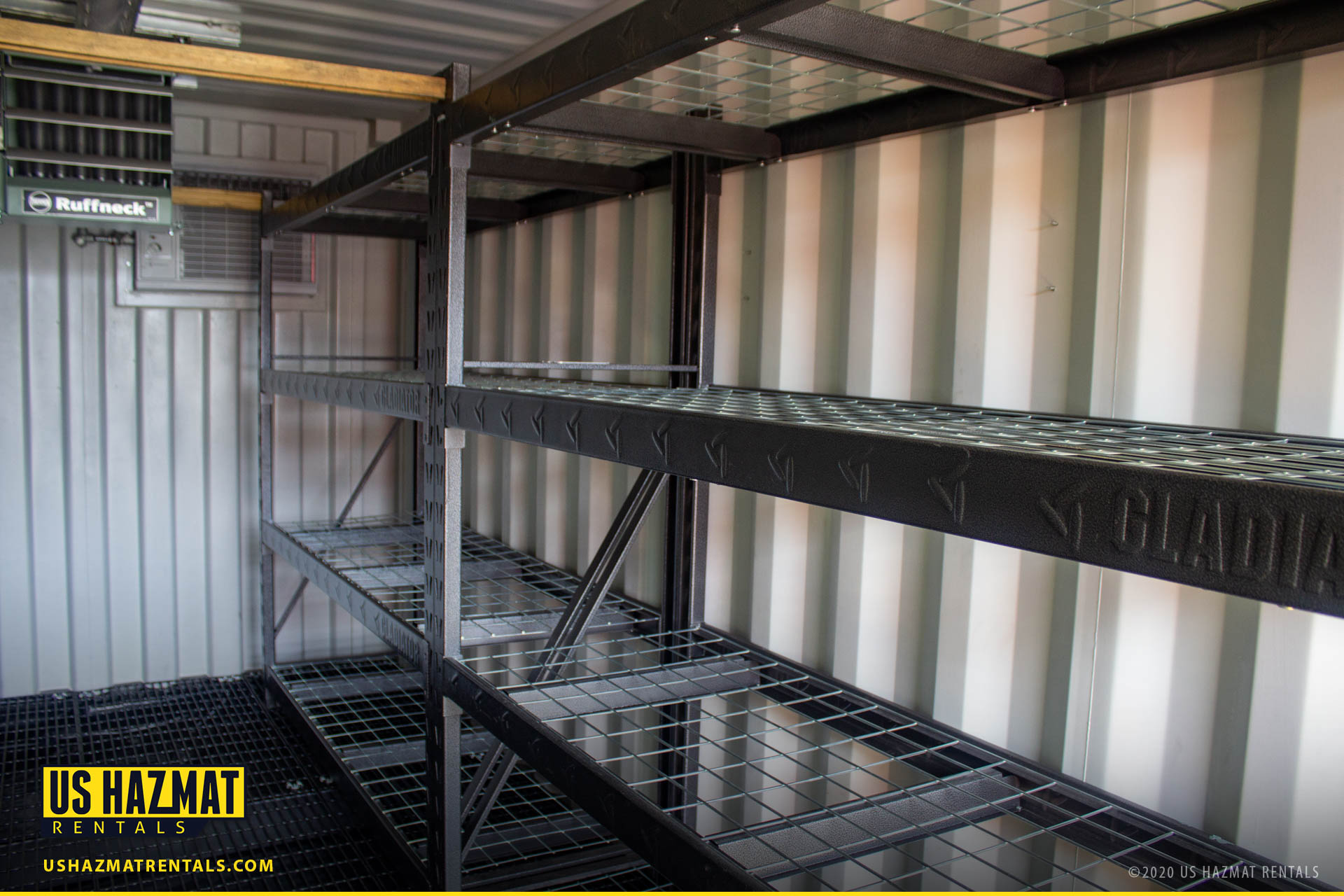
- Custom racking systems
- Integrated material handling workflows
Standard & Custom Hazmat Container Storage Buildings
US Hazmat Storage offers both standard container storage units and fully custom-engineered buildings, depending on volume and application.
Small-Scale Container Storage
Ideal for facilities with limited chemical quantities or daily-use materials:
- Compact outdoor units
- 1–4 drum or container configurations
- Integrated spill containment
- Natural or mechanical ventilation
- Lockable access doors
Medium-Scale Container Storage
Designed for industrial operations managing ongoing chemical inventory:
- 1–50 drum buildings
- Palletized container storage
- IBC tote containment
- Climate control options
- Forklift access and roll-up doors
Large-Scale & Bulk Container Storage
Engineered solutions for high-volume chemical operations:
- 1–500+ drums
- Multiple IBC totes
- Segregated chemical bays
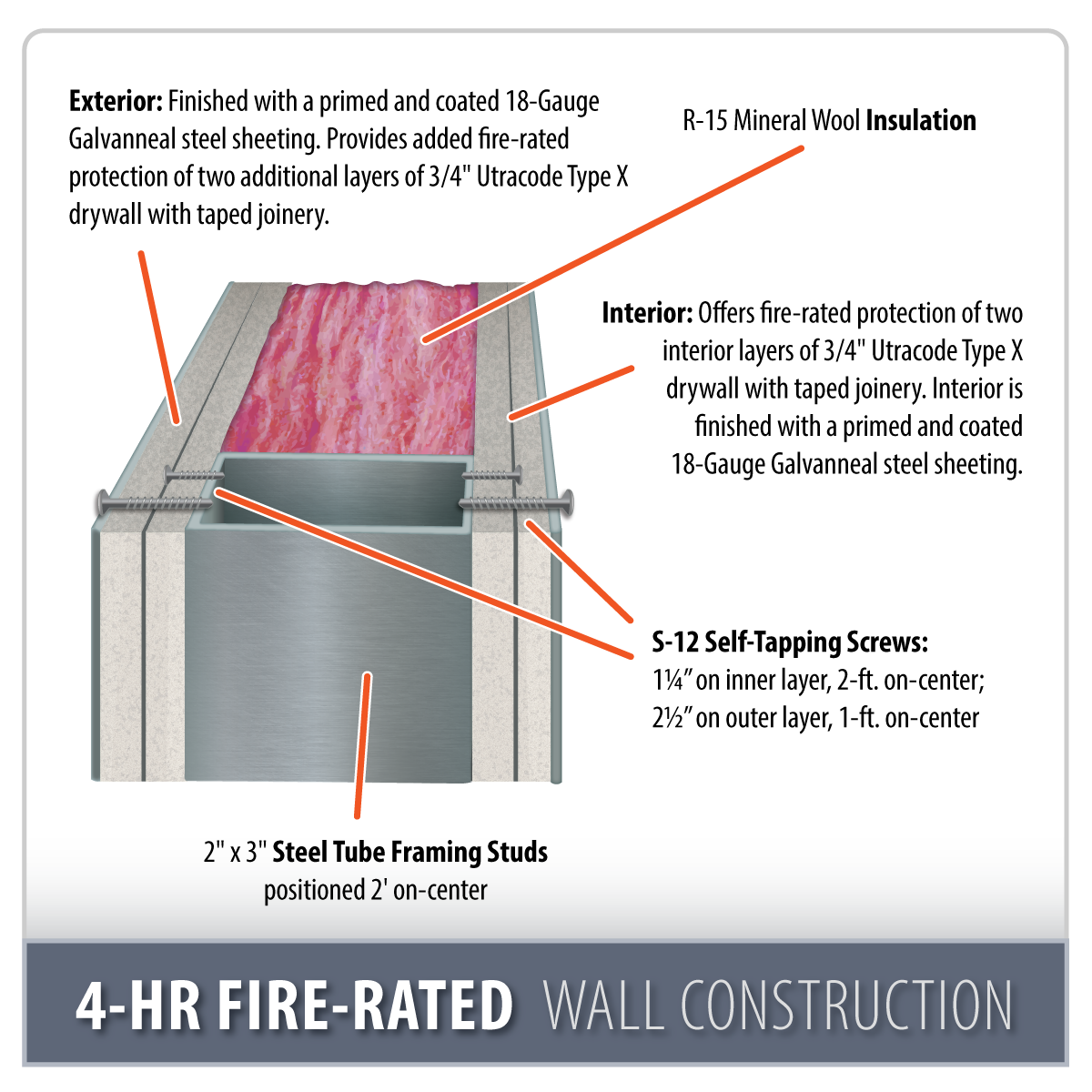
- Fire-rated wall assemblies
- Explosion-proof electrical systems
- Integrated loading and transfer zones
If your operation requires custom workflows, US Hazmat Storage engineers buildings around how chemicals are actually used—not just stored.
Fire-Rated & Non-Fire-Rated Options
Hazmat container storage buildings are available in:
- Non-fire-rated configurations for lower-risk materials
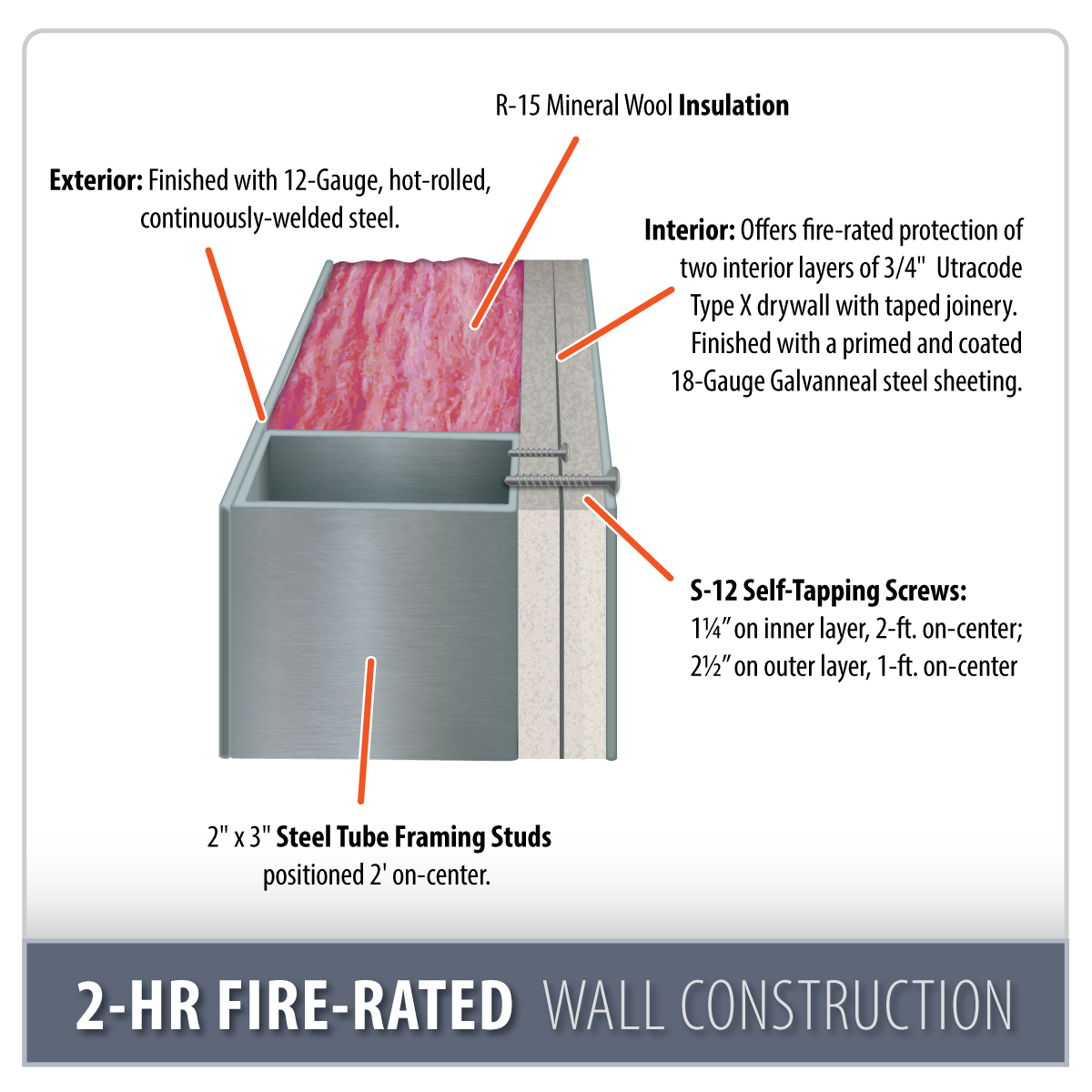
- 2-hour fire-rated construction
- 4-hour fire-rated construction for high-hazard environments
Fire-rated buildings are constructed using UL-classified wall and roof assemblies, providing critical protection for flammable and combustible materials while maintaining separation from occupied structures.
Spill Containment & Environmental Protection
Every hazmat container storage building includes engineered secondary containment sized to meet or exceed regulatory requirements.
Containment features include:
- Integrated steel sumps
- Galvanized grating floors
- Sealed welds and leak-tight construction
- SPCC-compliant containment volumes
- Optional epoxy or chemical-resistant coatings
Containment capacity is calculated based on the largest container plus freeboard, ensuring compliance during worst-case spill scenarios.
Ventilation, Mechanical & Electrical Systems
Hazmat container storage buildings can be equipped with:
- Passive or mechanical ventilation
- Explosion-proof exhaust fans
- Electrical system compatibility design
- LED or hazardous-rated lighting
- HVAC and temperature control
- Dehumidification systems
- Gas detection and alarm systems
- Fire suppression or sprinkler tie-ins
All systems are designed to meet both code requirements and insurance carrier expectations.
Chemical Compatibility & Segregation
US Hazmat Storage engineers buildings to safely manage:
- Flammable liquids
- Combustible liquids
- Corrosive acids and bases
- Oxidizers
- Reactive chemicals
- Pesticides
- Paints, coatings, and solvents
- Industrial cleaning chemicals
- Lithium battery containers (with optional enhancements)
Where required, we design segregated bays, firewalls, and containment zones to prevent incompatible chemical interactions.
Durable Industrial Construction
Every hazmat container storage building is constructed using:
- Heavy-gauge steel framing
- Welded base structures
- Insulated or non-insulated wall systems
- Corrosion-resistant finishes
- Forklift pockets or skid bases
- High-security access hardware
These buildings are designed for long-term outdoor exposure and continuous industrial use.
Delivery, Placement & Turnkey Support
US Hazmat Storage provides end-to-end project support including:
- Engineering and layout design
- Fabrication and quality control
- Factory testing
- Nationwide delivery
- Placement guidance
- AHJ documentation support
- Optional commissioning assistance
Buildings arrive ready for service, minimizing site disruption.
Common Applications
Hazmat container storage buildings are used by:
- Manufacturing facilities
- Chemical processors
- Paint and coatings manufacturers
- Utilities and power plants
- Government and military installations
- Transportation and logistics hubs
- Universities and laboratories
- Public works departments
- Construction and infrastructure projects
Frequently Asked Questions (FAQ)
OSHA 29 CFR 1910, EPA 40 CFR, NFPA 30, NFPA 400, IFC, and local fire codes.
Yes. Secondary containment is mandatory for most hazardous materials.
Yes. Mixed-container storage is common and fully supported.
Many units are skid-mounted and relocatable while remaining compliant.
Yes. Heating, cooling, and humidity control are available.