
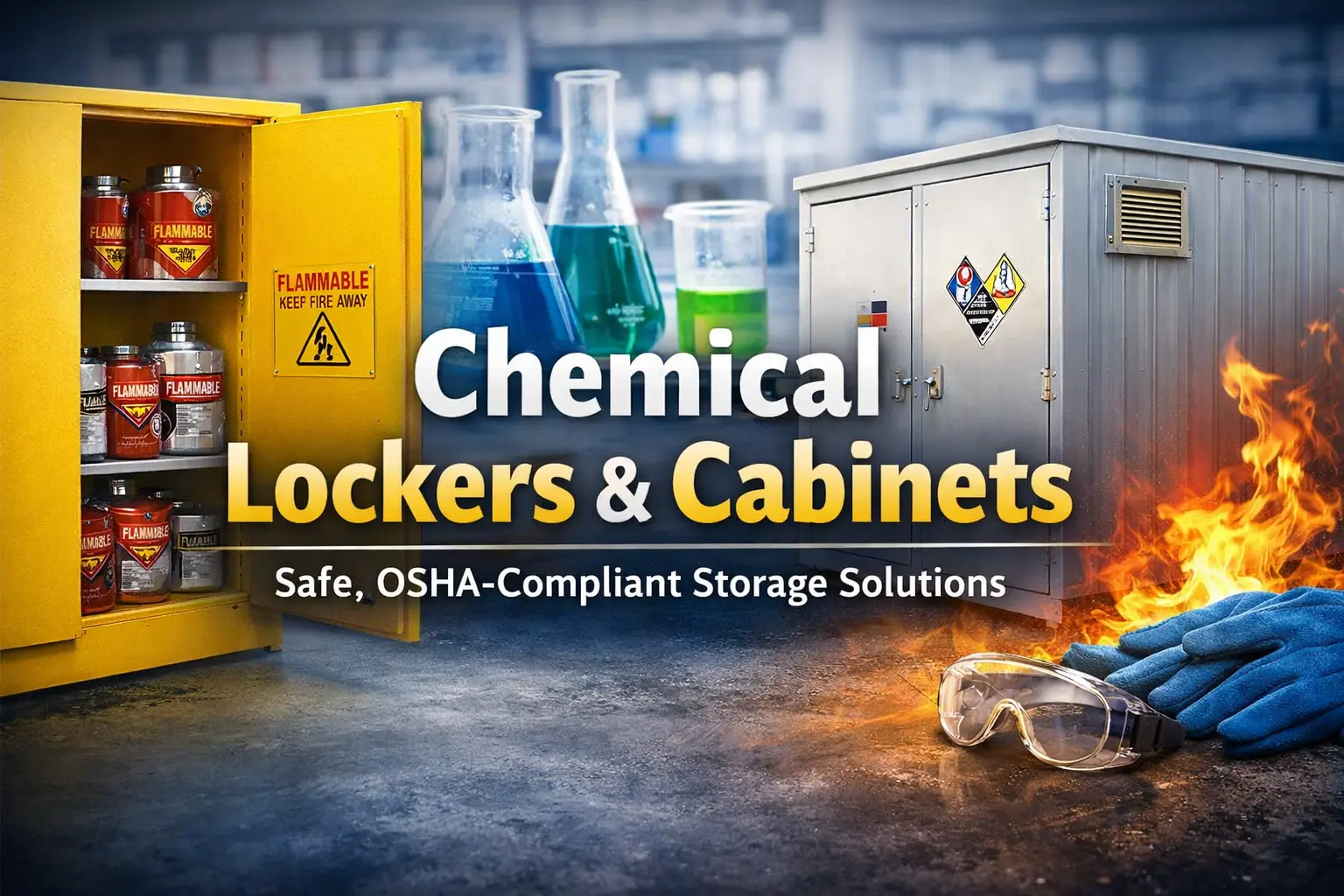
Storing chemicals safely is not optional; it is a critical responsibility for any facility handling hazardous substances. From industrial plants and laboratories to warehouses, hospitals, and manufacturing sites, chemical lockers and cabinets play a vital role in protecting people, property, and compliance status.
Poor chemical storage can lead to spills, fires, toxic exposure, regulatory penalties, and even catastrophic incidents. That’s why modern organizations don’t treat chemical storage as an afterthought. They invest in purpose-built chemical storage lockers and safety cabinets designed to meet strict safety, fire, and environmental standards.
In this guide, we’ll break down what chemical lockers and cabinets are, how they differ, why they matter, and how to choose the right solution based on chemical type, risk level, and regulatory requirements.
What Are Chemical Lockers and Cabinets?
Chemical lockers and cabinets are engineered storage units specifically designed to house hazardous materials in a controlled and compliant manner. Unlike standard storage furniture, these units are built to withstand chemical corrosion, prevent leaks, contain fumes, and reduce fire and explosion risks.
They are commonly used to store:
- Flammable liquids
- Corrosive chemicals (acids and bases)
- Toxic substances
- Oxidizers
- Pesticides and industrial chemicals
While the terms are sometimes used interchangeably, chemical lockers and chemical cabinets serve different operational needs.
Chemical Lockers vs. Chemical Cabinets: Key Differences
Understanding the distinction is essential for selecting the right storage system.
Chemical Lockers
Chemical lockers are typically larger, heavier-duty units designed for industrial or outdoor environments. They are often used in facilities that store higher volumes of hazardous materials or require segregated storage.
Key characteristics include:
- High-capacity storage
- Strong ventilation options
- Lockable, reinforced doors
- Suitable for indoor or outdoor use
- Often modular or customizable
Chemical Cabinets
Chemical cabinets are compact, indoor storage units, commonly used in labs, workshops, hospitals, and maintenance areas.
They are ideal for:
- Point-of-use storage
- Smaller chemical quantities
- Controlled indoor environments
- Compliance with OSHA and NFPA storage limits
Both solutions are essential. What matters is matching the unit to the risk profile and usage scenario.
Why Proper Chemical Storage Is Non-Negotiable
Chemical hazards are not theoretical. Improper storage causes real-world incidents every year, ranging from workplace injuries to large-scale fires.
High-quality chemical lockers and cabinets help address critical safety challenges:
1. Protection Against Fire and Explosion
Flammable chemicals require storage systems that limit ignition sources, control vapor buildup, and provide fire resistance. Fire-rated chemical cabinets significantly reduce the risk of flash fires and explosions.
2. Spill and Leak Containment
Integrated spill containment sumps prevent leaked chemicals from spreading across floors, drains, or soil protecting workers and the environment.
3. Regulatory Compliance
Agencies such as OSHA, NFPA, EPA, and IFC mandate specific storage practices. Using compliant chemical cabinets and lockers reduces inspection risks and liability exposure.
4. Worker Health and Safety
Proper storage minimizes exposure to toxic fumes, corrosive contact, and accidental mixing of incompatible substances.
Types of Chemical Lockers and Cabinets
Different chemicals require different storage solutions. One-size-fits-all storage is not safe or compliant.
Flammable Chemical Cabinets
Designed for solvents, fuels, and combustible liquids, these cabinets typically feature:
- Double-wall steel construction
- Fire-rated insulation
- Self-closing doors
- Flame arrestor vents
- Grounding points for static control
These are essential for facilities storing Class I, II, or III flammable liquids.
Corrosive Storage Cabinets
Used for acids and bases, these cabinets are often constructed from:
- Polyethylene or corrosion-resistant steel
- Non-reactive interior coatings
- Acid-resistant shelving
- Leak-proof containment basins
They prevent cabinet degradation and chemical reactions caused by corrosion.
Toxic and Hazardous Material Cabinets
These cabinets are designed to limit exposure and unauthorized access, commonly featuring:
- Tight-sealing doors
- Advanced ventilation
- Locking mechanisms
- Clear hazard labeling
Outdoor Chemical Lockers
Outdoor chemical lockers are weather-resistant and often include:
- Insulated panels
- Mechanical or passive ventilation
- Secondary containment
- Fire-rated construction
- Compliance with environmental regulations
They are ideal for industrial sites, refineries, and construction zones.
Compliance Standards You Must Consider
Chemical storage is governed by strict standards. Ignoring them can result in fines, shutdowns, or legal action.
Key standards include:
- OSHA 29 CFR 1910 – Workplace safety and chemical storage limits
- NFPA 30 – Flammable and combustible liquids code
- NFPA 45 – Fire protection for laboratories
- EPA SPCC – Spill prevention and containment
- International Fire Code (IFC) – Local fire safety compliance
High-quality chemical lockers and cabinets are engineered to align with these regulations, reducing compliance risk for facility operators.
Choosing the Right Chemical Locker or Cabinet
Selecting the right unit requires more than guessing size or price. You must evaluate real-world operational factors.
Chemical Type and Compatibility
Never store incompatible chemicals together. Acids, flammables, oxidizers, and toxics often require separate, purpose-built storage units.
Storage Volume
Overloading cabinets is a common violation. Choose a unit that comfortably accommodates current and future storage needs without exceeding limits.
Ventilation Requirements
Some chemicals require active or passive ventilation to prevent vapor buildup. Improper ventilation can create serious fire and health hazards.
Fire Rating
For flammable storage, fire resistance is critical. Look for cabinets tested and labeled for fire performance.
Security and Access Control
Lockable doors and restricted access reduce the risk of theft, misuse, or accidental exposure.
Installation and Placement Best Practices
Even the best cabinet fails if installed incorrectly.
Best practices include:
- Keeping cabinets away from ignition sources
- Maintaining clear aisle spacing
- Avoiding direct sunlight or heat exposure
- Securing cabinets to prevent tipping
- Clearly labeling stored chemicals
Placement should always align with local fire codes and safety plans.
Maintenance and Inspection: Often Overlooked, Always Critical
Chemical lockers and cabinets require ongoing inspection and maintenance to remain effective.
Routine checks should include:
- Door seals and hinges
- Ventilation openings
- Spill containment integrity
- Corrosion or material degradation
- Label visibility and accuracy
Regular inspections not only improve safety but also demonstrate due diligence during audits.
The Role of Chemical Lockers in Risk Management Strategy
Chemical storage is not just a safety issue, it’s a risk management decision. Proper lockers and cabinets reduce:
- Workplace injuries
- Environmental contamination
- Fire damage
- Regulatory penalties
- Insurance exposure
Facilities that invest in compliant storage solutions consistently experience fewer incidents and smoother inspections.
Future Trends in Chemical Storage Solutions
Modern chemical lockers and cabinets are evolving with safety technology. Emerging trends include:
- Smart ventilation monitoring
- Integrated spill detection
- Modular storage expansion
- Enhanced fire-resistant materials
- Improved ergonomic access
These advancements support safer operations and long-term compliance.
Final Thoughts: Why Chemical Lockers and Cabinets Matter
Chemical lockers and cabinets are not optional accessories, they are core safety infrastructure. Whether you manage a laboratory, industrial plant, warehouse, or manufacturing facility, investing in the right chemical storage solution protects your people, your operations, and your reputation.
Choosing compliant, well-designed chemical lockers and cabinets is one of the most effective steps an organization can take to reduce risk, improve safety culture, and meet regulatory expectations.
If you’re serious about chemical safety, proper storage isn’t just recommended, it’s essential.