

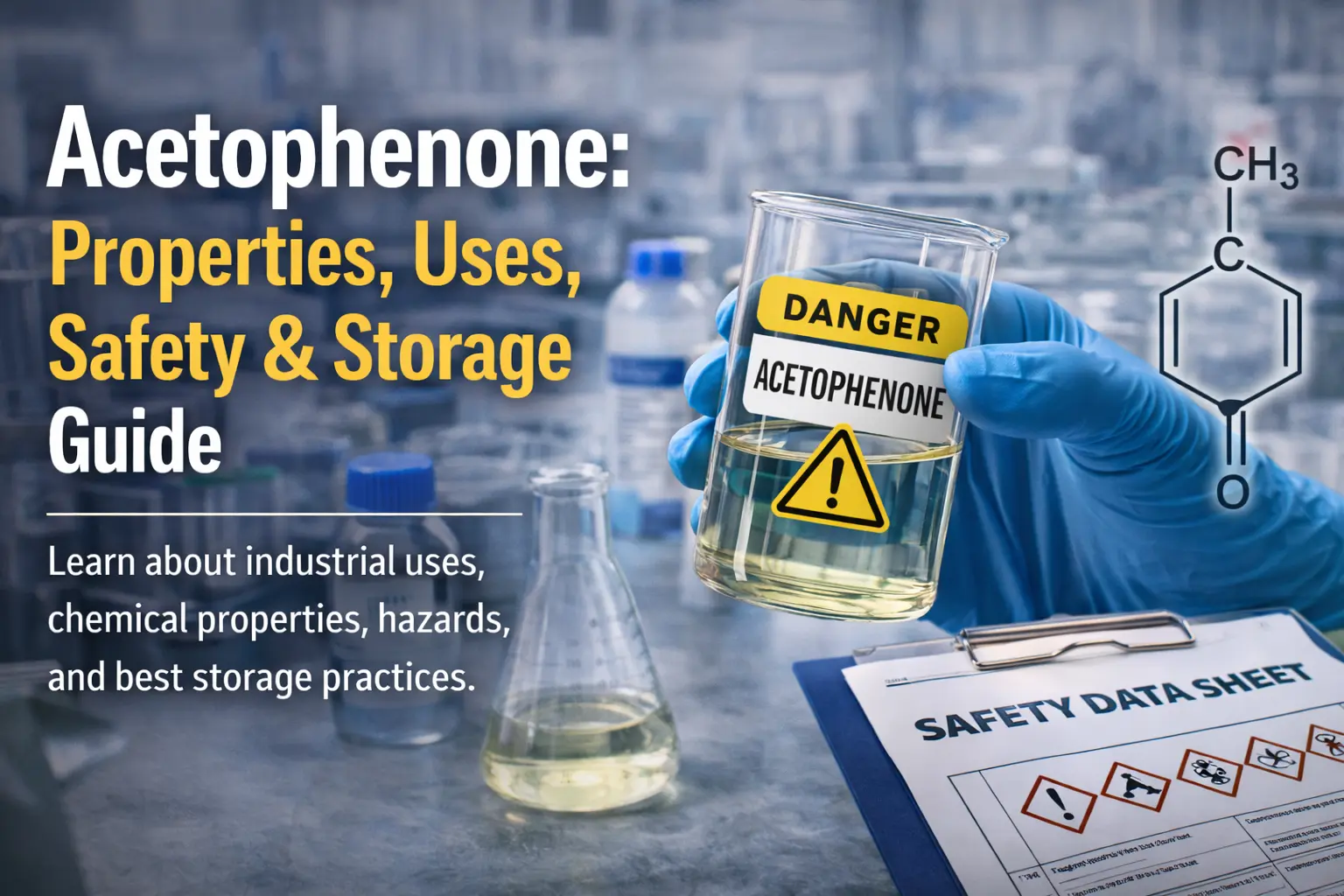
Acetophenone is a widely used organic compound found across industries such as pharmaceuticals, fragrances, resins, coatings, and specialty chemicals. While it plays a valuable role in manufacturing and formulation, acetophenone also requires careful handling, storage, and regulatory awareness due to its chemical nature.
This in-depth guide explains what acetophenone is, how it’s used, its physical and chemical properties, health and safety considerations, and best practices for industrial storage and compliance helping engineers, safety managers, procurement teams, and facility operators make informed decisions.
What is Acetophenone?
Acetophenone is an aromatic ketone with the chemical formula C₆H₅COCH₃. It appears as a colorless to pale yellow liquid with a sweet, almond-like odor. Due to its stability and solvent compatibility, acetophenone is frequently used as an intermediate chemical in industrial processes.
It occurs naturally in small amounts in foods such as apples, apricots, and bananas, but commercial acetophenone is synthetically produced for consistency and purity.
Chemical Properties of Acetophenone
Understanding acetophenone’s properties is essential for safe handling and application.
Key Physical Properties
- Molecular weight: 120.15 g/mol
- Appearance: Clear to light yellow liquid
- Odor: Sweet, floral, almond-like
- Boiling point: ~202°C (396°F)
- Melting point: ~20°C (68°F)
- Solubility: Slightly soluble in water, highly soluble in alcohols and organic solvents
Chemical Behavior
- Stable under normal conditions
- Compatible with many organic solvents
- Reacts with strong oxidizing agents
- Classified as a combustible liquid, not highly flammable but still a fire risk under certain conditions
Common Industrial Uses of Acetophenone
Acetophenone’s versatility makes it valuable across multiple sectors.
1. Pharmaceutical Manufacturing
Acetophenone is used as:
- An intermediate in drug synthesis
- A precursor in sedatives and hypnotics
- A stabilizing agent in formulations
2. Fragrance and Flavor Industry
Because of its pleasant aroma, acetophenone is widely used in:
- Perfumes and colognes
- Soaps and detergents
- Cosmetic formulations
It acts as both a fragrance component and a solvent for scent blends.
3. Resins, Plastics, and Coatings
Acetophenone is used in:
- Synthetic resins
- Acrylic coatings
- Polymer processing
It improves flow, stability, and finish quality.
4. Specialty Chemicals and Laboratories
In research and industrial labs, acetophenone serves as:
- A reagent
- A solvent
- A benchmark compound in organic chemistry
Is Acetophenone Hazardous?
While acetophenone is not classified as highly toxic, exposure risks still exist, particularly in industrial environments.
Health Effects of Exposure
- Inhalation: Dizziness, headache, irritation
- Skin contact: Mild irritation with prolonged exposure
- Eye contact: Temporary irritation
- Ingestion: Harmful if swallowed in large quantities
Repeated or prolonged exposure without proper controls may lead to central nervous system effects.
Acetophenone Safety Data Overview (SDS Highlights)
Key safety classifications typically include:
- Combustible liquid (higher flash point than many solvents)
- Requires proper ventilation during handling
- PPE recommended: gloves, goggles, protective clothing
Although acetophenone is not among the most dangerous industrial chemicals, regulatory compliance and risk mitigation are still critical.
Fire and Reactivity Considerations
Fire Behavior
- Flash point: ~82°C (180°F)
- Can burn when exposed to sufficient heat
- Produces carbon monoxide and carbon dioxide when combusted
Incompatible Materials
- Strong oxidizers
- Strong acids or bases under certain conditions
Fire suppression typically involves:
- Foam
- Dry chemical
- Carbon dioxide (CO₂)
Proper Storage Requirements for Acetophenone
Industrial storage plays a major role in safety, compliance, and operational efficiency.
Recommended Storage Conditions
- Cool, well-ventilated area
- Away from ignition sources
- Tightly sealed containers
- Secondary containment to prevent spills
Temperature Control
Acetophenone should be stored below its flash point and protected from excessive heat, especially in bulk quantities.
Regulatory and Compliance Considerations
Acetophenone storage and handling may fall under multiple regulatory frameworks depending on volume and application.
Common Compliance Areas
- OSHA Hazard Communication Standard
- EPA chemical storage requirements
- Local fire codes
- NFPA combustible liquid guidelines
Facilities storing acetophenone in significant quantities often require:
- Proper labeling
- Spill response planning
- Fire-rated or compliant storage solutions
Best Practices for Industrial Handling
To minimize risk and improve operational safety:
- Use closed transfer systems where possible
- Train employees on SDS awareness
- Implement spill containment procedures
- Conduct regular inspections of storage areas
- Maintain proper documentation
Acetophenone in Modern Industrial Operations
With growing emphasis on chemical safety, regulatory compliance, and risk management, acetophenone handling is increasingly tied to:
- Purpose-built chemical storage systems
- Segregation of combustible liquids
- Engineered ventilation and fire protection
Industries are moving away from improvised storage toward engineered chemical storage solutions that align with modern safety standards.
Environmental Considerations
Acetophenone has moderate environmental persistence. Improper disposal can:
- Contaminate soil
- Affect water sources
- Harm aquatic life
Always dispose of acetophenone according to:
- Local hazardous waste regulations
- EPA disposal guidelines
- Approved waste management vendors
Frequently Asked Questions About Acetophenone
Is acetophenone flammable?
It is classified as a combustible liquid, meaning it can burn at elevated temperatures but is not highly flammable under normal conditions.
Is acetophenone naturally occurring?
Yes, in trace amounts but industrial acetophenone is synthetically produced.
Can acetophenone be stored indoors?
Yes, when stored in approved containers, ventilated spaces, and compliant storage systems.
Is acetophenone regulated?
Yes, under various workplace safety and chemical handling regulations depending on quantity and use.
Final Thoughts: Why Acetophenone Safety Matters
Acetophenone may not be the most dangerous chemical in industrial use, but complacency leads to risk. Proper understanding of its properties, hazards, and storage requirements is essential for:
- Worker safety
- Regulatory compliance
- Facility risk reduction
- Long-term operational reliability
Organizations that treat acetophenone with the same diligence as other combustible chemicals are better positioned to avoid incidents, fines, and downtime.